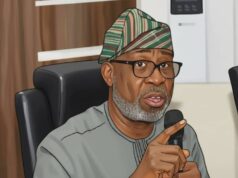




Jumoke Fajemirokun is senior partner at ENR Advisory, a law firm providing legal and ancillary services to companies and governments operating in the extractive industry. She spoke with TheMiners on why investors need professionals to help them navigate the intricacies of the sector. Excerpts:
A: What would you say was the attraction point for you to move into mining advisory?
A: As a young lawyer, around the time I started practice, I had a privilege of working with seniors on the development of what is now known as the Mineral and Mining Act. I was able to work on soms aspect of the document. Shortly after that, I also started working on a mining transaction, which was a joint venture that involved an Australian Company that was doing exploration in the field.
Those early introductions into mining law and mining projects and mining joint ventures sparked my interest. As at that time, and even till now, the sector is still relatively an untapped area. So, seeing the potentials that could come out of mining, and with my first-hand experience working on those projects were the eye-opener for me.
Q: Nigeria is still wooing many foreign companies to come into the mining sector in the country. You spoke about the Australian company…
A: The primary attraction for them was they came into a project that had a critically solid geological data. So, they could see the potentials of what they were coming into. It was a Brown and not Green Field Project. It was clear that this had high potential. And that was why they came in.
Secondly, that was also the beginning of the work that gave birth to the Mineral and Mining Act 2007. And part of that development processes was being taken round every part of the country, conducting effective stakeholders consultations. And it brought in new innovation like the first come first serve principle for acquiring mineral mining titles, then the mining cadastral system, and there was provision for safety and security measures, ensuring security of title, which is what investors look out for.
A: Are those investors still around or the project has ended?
B: That particular project did not end. It continued. But the investor we supported left. So, there were several other investors afterwards.
Q: Do do you want to share some of the challenges that led to the exit of those investors?
A: One major challenge was the general challenge of doing business in Nigeria. And the lack of coordination between the various government agencies that touched and concerned mining. We have Customs, Ministry of Environment, and several other agencies who are not talking to each other. This created a lot of concerns for investors.
Q: Would you say your foray into the sector has been worth your time and efforts so far?
A: I think so. Particularly because between when I started practicing law and now, even though the development has been slow, we are still seeing progress. And just to note that we are sitting on something that can bring immense economic values to the country. Staying in there, and continuing to contribute, either through supporting investors coming in, operators that are locally present, or government’s policy development, that has been a worthy development for us. And we hope that one fine day, we would see good result from this sector.
Q: In advisory, what sets you apart from other firms and what unique benefits do you offer your clients?
A: What sets us apart is that we are a firm that is wholly dedicated and focused on the natural resources sector. We cover Oil and Gas, Mining, Electricity and Renewables. Having that focus approach helped us to hone our expertise and professionalism in those sectors. We have, as a matter of strategy, focused on the areas where our skills are most valuable. And a lot of our lawyers have experience, both in government and from the private sector. We are able to blend two perspectives together to give our client robust solutions to their needs. We are also interacting daily with the operators and the business people. So, we understand how these businesses are operated. And that informs the kind of legal support that we are able to give them. We already understand them and their needs even before they come to us for help.
Q: What are the most common issues that your clients talk about when they meet you?
A: The most common issue, I think, is the regulatory regime. The regulatory environment and how to navigate the complexities to ensure that they are compliant and their investment is protected. Usually, there are concerns around the several agencies involved, particularly now when you have state governments jumping into the sector. It further creates issues and confusions. That is one big area.
When it comes to joint ventures and all that, the complexities around engaging Title Holders that are not very knowledgeable about the sector, it makes deal-making difficult, when expectations are set too high, on their part, and the road between the available reality, while we try to structure something that works.
Q: Or could it be that the big investors with the money comes in, bully the small title holders out of the way and that becomes a problem for the ecosystem?
A: That is very correct, in a way. But I think other aspect that we must understand is that this is not a sector that you must come in today and make your money the next day. That basic understanding is what is lacking.
Q: Looking at the mining sector, it is still largely dominated by informal activities of artisanal miners. From your experience, why have we not been able to scale up?
A: There are many factors responsible for this. The underlining factor is that the industry has not been sufficiently de-risked enough for the larger investments to come in and in other to de-risk the industry, what we need, first and foremost, is credible Geological Data. Access to geological data that are credible and sufficient enough for investors to base an investment decision on is very important. This would help them visualize the cost-benefit analysis of the investment and say yes, we should be able to put our money into this.
Secondly, security is another major concern, especially in the areas where some of these minerals are concentrated and the kind of armed conflicts going on here.
This is followed by access to finance, which is another critical dimension to the equation. All of the three factors are tied-in, in a way. Because the availability of geological data and safe and secure environment is an enabling factor for access to finance.
Then, the regulatory enforcement as well. Investors want to know that if people come to mine in my field, illegally, they can be sanctioned and prosecuted. And the sanctions are real. It is important that we see more of the agencies concern mining focusing on enforcing the rules.
Because to be honest, the rules are there. And the existing laws are credible and address all the developmental challenges. It is the enforcement part of it that is lacking.

*Fajemirokun
Q: There are scenarios like this one: “I pay for license. On moving to my field, I realize illegal miners have moved in, mining on my field. I take them to court. The proceeding takes forever. Meanwhile the illegal miners continue to mine on my field. And I am not able to do anything.” How do we address issues like this?
A: The government needs to act. And thank God we have the Mining Marshals, which is a dedicated taskforce to support the ministry in enforcing the laws. So, we really should not have a situation where you have gone to court for illegal mining activities on your field and they are still there while court is still sitting on the matter. And they have not been arrested. Why? That is an offence. So, we need the security operatives and agencies to really partner with the ministry to ensure that the sector is viable.
Q: Talking about the ongoing reforms, which one of them has been the most impactful from your point of view?
A: In the recent reforms, the most impactful, I would say, though still work in progress, but I believe one that would help us achieve our industrialization goal, is the Value Addition Policy. That is the policy that say no mineral should be exported in raw form. That there should be some form of value addition in the country before that. That, in a way, would help push our industrialization goal because the implication is that the policy is trying to mandate the establishment of a set of industries that would provide these value addition services. However, it is important that the policy is implemented in the right way that supports investments in the core mining. Because it is not all miners that would build processing plants. And not all minerals benefit from that policy as well. There are minerals that is more economically beneficial to export it raw. Work needs to be done in identifying those minerals and ensuring that there is focus in supporting these mainstream companies that we have built.
I am not sure that we should mandate the miners to be the ones to build the processing plants. It is like asking a Cocoa farmer to start making Chocolate. There should be clear invitation and incentives for those that would come and set up this new line of business.
Q: If you had your way, which other reforms would you like to see?
A: The reform I am looking up to is the establishment of an Independent Regulator. This is a very unique perspective and strategy. Rather than having the ministry responsible for regulating the sector, because the ministry is also into policy development and investment promotion, and they also own MCO and others. So, if you want the sector to be regulated properly, you will realize that a separate agency like a NERC –National Electricity Regulatory Commission (NERC) or NUPRC should be established in the mining sector to discharge this responsibility. It would be the agency’s job to provide the planning, funding and mobilization of professionals to protect the sector properly. And allow the ministry to do the policy development and investment promotions properly. That way, you are regulating a sector in a manner that ensures it is handled more professionally, and there is more focus on investment in capacity building.
We have seen this model work successfully elsewhere. It has also worked in the nation’s petroleum industry. Before, it was just DPR. It is now, NUPRC. You can see the difference now. And it really makes the whole difference.
This is one reform I would like to see happen in the mining sector because it has worked elsewhere. It is also potent because its work is not truncated by change in political administration. It enjoys continuity.
Q: The EIA and CDA remediation plans are key to securing expression of mining licenses. But many investors are trying to avoid this. Is it that the process is too difficult to navigate or people don’t just care?
A: The EIA and CDAs come after the license. Not before the license. You must have the license before you even start exploration. And before you start mining, you must have CDA. I would not say it is key to securing a mining license but it is definitely important to mining operation.
So, I would say the cost is one thing. People don’t like to spend money so this could be one of the factors. I think EIA is also a critical component. Non-compliance causes serious degradation to the environment. Morally, you should feel bad if you are taking something away from the environment and you are not putting something back to make it better. And I think it is just the will to do it that is the problem with most people.
Is the process cumbersome? I can’t speak to that because many companies have been complying, so there is no excuse. It is not the cumbersomeness but the will to want to do it. It could also be lack of enforcement that is making companies not to do it. But it is very important that there is compliance with responsible mining practices – EIA is done, CDA is concluded. This is what helps you secure the goodwill of the community you are working. It is called the Social License to operate.
And when we talk about cumbersomeness, the ministry has made the process simpler, issuing guidelines some two years ago, that set-out what one needs to do, providing the template. So, for me the process is not difficult. It is now about enforcement so people know they have to do it. It is also important that we sensitise the operators that doing this thing is what helps your operate in peace in those host community. It also helps you raise money because financiers are looking at these things.
Q: Your company was prominent at the recent Nigeria Mining Week. What did your partnership with the organisers mean for your work?
A: The Nigeria Mining Week has grown to become the foremost convergence point for policy makers, investors, operators, and other stakeholders in the Nigeria mining sector. It provided platform for everybody to come together, share conversations, the prospects, projections, procedures, challenges, and all other issues around them.
And we thought it was important that we contribute to such an event that contribute so significantly to the industry so that our voice can also be heard and we can also have access in shaping these conversations and make our own inputs also.
That was the motivation behind our support and partnership of the event.
Q: What advice do you have for someone newly coming into the mining sector?
A: My advice is that it requires patience. It is a long-term investment. Hence it is a long-term gain also. One has to be aware that this is not a get-rich-quick place. Yes, it holds a lot of promises and potentials. So the end result, if done right, can be really big. But that patience, capacity, and the ability to see it through is very important. There are complexities within the sector. And Nigeria comes with its own unique experiences. But if you are dogged and patient enough to see it through, you can be a Segilola and other big brands in the sector.
Also importantly, seek the right support from your technical advisers, lawyers, engineers, e.t.c. It is important you get things right and put important structures in place to attract the kind of funding you will be needing to work on the kind of project that would yield good economic returns.
Q: A bit about yourself and the value that drives your work ethics?
A: I am an optimistic person. That is why I have stayed within this sector for quite a while now. I am driven by excellence, integrity, and the desire to use the skills that I have – my legal skill – to shape policies that result in economic development. I find myself in transactions and projects that have capacity and ability to bring significant developments to the communities where we operate. That is what continues to drive me.