


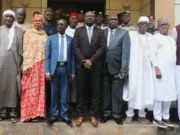

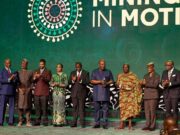


At the recent Nigeria Mining Week, Mr. Bassel Mourad, Chief Executive Officer, and Engr. Samson Enama, Deputy Managing Director of Rapidlink Resources Limited, one of Nigeria’s foremost mineral exploration companies, spoke with The Miners on topical issues relating to the sub-sector, among others.
By Shakirudeen Bankole
Q: The Federal Government recently announced the centralization of mineral exploration data under the National Geological Survey Agency (NGSA), mandating all institutions warehousing geological information to submit to the agency. As a leading exploration company, what is your view on this policy?
Mourad:
The centralization of mineral exploration data at the NGSA is a welcome and strategic move by the Federal Government. This policy marks a significant step toward improving data accessibility, credibility, and transparency within Nigeria’s mining ecosystem.
By consolidating geological data under a single authority, investors and stakeholders can now access verified and standardized information in one place. This not only enhances efficiency and accuracy but also helps de-risk the sector, giving potential investors a clearer picture of Nigeria’s mineral wealth.
The Federal Government deserves commendation for taking decisive action to strengthen the foundations of the mining sector. Reliable and accessible data are the cornerstones of a successful exploration industry, and this initiative demonstrates the government’s commitment to transforming Nigeria into a globally competitive mining destination.
Q: Obviously, the centralization of data should make the work of investors easier, shouldn’t it?
Mourad:
Absolutely. Having all geological data stored in one central location will make access seamless and more transparent for investors.
For instance, if an investor wishes to explore a site in Ibadan, Lagos, or Abuja, they can now visit the NGSA and, using the coordinates of that area, obtain credible information on previously conducted surveys and mineral occurrences. With this data, the investor can assess its reliability and decide whether to proceed directly or conduct further exploration for confirmation.
This level of transparency not only streamlines decision-making but also gives international and local investors’ confidence that Nigeria’s mining landscape is well-structured, modernized, and open for business.
Q: This policy seems to unlock more business opportunities for companies like yours, since the need for data verification will grow.
Mourad:
That’s correct. The effectiveness of any mining investment depends heavily on the availability of accurate data. Without exploration activities, there can be no new credible data — and without data, it’s difficult to convince investors to commit capital. That’s why the government must keep spending to generate data to attract potential investors into the sector.
The government’s centralization policy will encourage collaboration between public institutions and private exploration companies like ours. As demand for verified data increases, so will the need for professional exploration services, which we are well-positioned to provide.
This synergy between the public and private sectors is precisely what will drive sustainable growth and investment confidence in the industry.
Q: With this policy in place, it would appear this is the best time for international investors to come into the sector?
Mourad:
Yes, with the current government initiatives and policies, I believe it is an opportune time for international investors to explore opportunities in Nigeria’s mining sector.
The reforms being implemented — from data centralization to institutional strengthening, show the government’s determination to build a transparent and investment-friendly environment. However, credible data remains the backbone of any successful project.
Therefore, it is crucial that investors and license holders work with qualified professionals and internationally certified exploration companies to ensure their data meet global standards. At Rapidlink, we provide precisely this data credibility and technical integrity, which are key to attracting long-term investment and joint venture partnerships.
Q: Tell us about Rapidlink’ s growth journey and outlook for the future.
Mourad:
Rapidlink Group is a diversified conglomerate working in Nigeria for over 25 years with interests in construction, oil and gas, and mineral exploration. In the mining sector, we have grown steadily over the past decade, working with both public and private sector entities.
We’ve generated verifiable exploration data that aligns with international standards and have continued to invest in cutting-edge technologies, modern drilling equipment, and capacity development for our workforce.
In line with the government’s initiatives to position mining as Nigeria’s “next oil,” we see strong potential for growth. The President’s and Honorable Minister’s consistent statements emphasizing diversification and the solid minerals roadmap give us confidence that the sector is on the right track. Rapidlink is fully aligned with this vision and ready to support both government and private investors to achieve it.

*Mourad and Engr. Samson Enama, Deputy Managing Director of Rapidlink
Q: Can you tell us more about your lead and coal projects?
Enema:
Operating within the solid minerals space, we’ve decided to adopt a meticulous and professional approach to developing our own lead and coal assets. We have secured several exploration licenses for lead and coal and are progressing systematically.
We are fully aware of the prevalence of artisanal and informal mining in many communities, but our focus is on doing things safely, responsibly, and in full compliance with environmental and safety standards. Rushing development without proper exploration can lead to long-term environmental and health risks, which we are determined to avoid.
Our approach ensures that every project we undertake meets global safety, health, and environmental (HSE) standards.
Q: What’s your view on artisanal mining and the enforcement of safety standards?
Enema:
This is an area where continued government intervention is essential. The enforcement of safety and environmental regulations must remain a top priority to protect lives, communities, and the environment.
Many artisanal miners operate under unsafe conditions, often using bare hands and harmful chemicals like mercury and lead. The long-term consequences of such exposure are dire — affecting not only the miners but entire communities.
We commend the government for setting up task forces to combat illegal mining and enforce safety standards. These efforts should be expanded to include continuous health awareness campaigns, community engagement, and stricter enforcement of HSE rules.
At Rapidlink, we maintain strict safety protocols and ensure every team member follows established standards. We believe this is the only sustainable way to grow the sector responsibly.
Q: Do you believe Nigeria is on the right track toward becoming a global mining destination?
Mourad:
Absolutely. Nigeria is moving in the right direction. The government’s focus on data generation, policy reform, and stakeholder collaboration is setting the foundation for long-term success.
Over the last decade, the Nigeria Mining Week has grown into a continental platform that reflects progress and strong policy direction. The commitment from leadership both at the federal and ministerial levels sends a clear signal that the mining sector is a national priority.
We may still be in the early stages, but the progress is undeniable. If these reforms are sustained, Nigeria will soon stand out as one of Africa’s most attractive, de-risked, and investor-friendly mining destinations. Rapidlink Resources is proud to contribute to this vision and will continue to partner with the government to realize it.