




Mr Tim Tokun is the Managing Director of the Africans For Africa Initiative. He is also Managing Partner at Motimosé Metals. He spoke with Editors of TheMiners about the importance of A4A Initiative and the progress recorded almost one year after its launch as AFNIS 2024. Excerpts:
Q: The MoU signing for the ‘Africans for Africa’ Initiative took place at the 3rd edition of the African Natural Resources & Energy Investment Summit 2024. Can you share with our readers what ‘Africans for Africa’ Initiative is all about and how far have you gone with the implementation stage of things?
TT: Indeed we signed the MOU at AFNIS last July. Since then, we have been at the implementation phases. Whilst many processes run concurrently, a high priority item was engaging with a Fund manager with requisite understanding of our initiative and corresponding permits to deal with international collections. To our pleasant surprise, all the houses we spoke with, bar none, were keen to get involved. We are finalizing that selection process now.
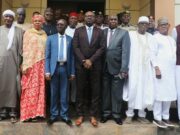
In addition, a big part of our charter is the constitution of an advisory board with members from the different regions of our continent. The plan is to have four board members per region and now we have 12 members on board from west, south and central Africa. We have a bit of work to do in East Africa and the MEENA region in this REGARD. But we are pleased to have received strong votes of confidence from our esteemed board members, each of whom is a captain of industry and a firm advocate of African development.
Q: On a scale of one to ten, how far along would you say the needle has moved towards achieving your goals?
TT: Our management team consists of near perfectionists, I have to tell you that. No one here gets carried away, so I wouldn’t be able to mark our strides. We have moved well, but we are cognizant that there is loads left to do.
The administrative processes are in place. The legal framework that governs multi-lateral, cross border engagements has been well understood and the statutes of these shall be deployed as and when, driven by investment decisions in said country.
The technology that will cobble it all and power the engine is in place. The marketing strategy and tools are in place. The board is in place, to the extent that we can commence and, most pivotally, the project pipeline is in place.
Q: More specifically, what is being done to sell this Initiative to Africans to get the needed and necessary critical mass of investors to get the work done? And is this solely at the level of state actors/big investors or you hope to reach players at the lower levels, especially women and youth led groups?
TT: The message, of its own, is self explanatory. The world is very reliant on the metals and processing industries to build our civilization. This continent, being a significant repository of most of the required materials, has had a big role in powering the world, with the global north the main beneficiaries
I cite an example: over 90% of cobalt exports into China orginates from DRC. Customs data is in striking contrast to the reassurances by some battery, electronics and EV makers that there is no place for DRC’s cobalt in their supply chains. Simply speaking, there are very few places in the world to go to for cobalt apart from DRC. Still, if we give those companies the benefit of the doubt and look at South Korea’s or Japan’s customs data, the only two other countries that play a role of any significance in the production of cathode materials and cathode material precursors for batteries, we will find that they import most cobalt in raw or processed form either from DRC or from China, which, as we have already seen, takes it from DRC itself.
So, the question begs, how much of this African mineral resource wealth created around the world, has filtered down to the African indigines? The answer is, so little it is inconsequential. We however know that with a conduit that facilitates African equity participation in the economically robust mining projects we have on the continent, this age old construct will begin to change. We are determined to create wealth for a critical mass of Africans, borrowing from your words.
The fund’s underlying fabric is built around the demographic of the regular folk. My neighbor and yours are our primary focus group, ahead of corporations and sovereigns.
Q: Though the AMSG is the coordinator agency, the A4A Initiative mostly rests with two implementing organizations – Motimose Metals Limited (MML) and Core International (CI). What is the status of this partnership and how well are the partners working together to meet set goals?
TT: We compliment each other because we bring different skill sets to the table that are inter-dependent whilst our convergence remains strong. We are singing from the same songsheet, bound by same ideologies and same burning ambition, so the relationship has been seamless and long may that continue. You will be amazed at how well we are working together, and this may be due to our understanding of the importance of the project at hand.
Q: Funding is very crucial to this Initiative, naturally. From where are you expecting most of the funding to drive it, from within Africa or from without?
TT: So far, we have funded the various developments from within but we are now lining up some external funding, but we won’t be constrained by that as we have the ability to soldier on from within. You must understand that Africa has a large diaspora that is well resourced. We are talking to these people and they have been excited about what we offer. We are confident that there is enough African resource to make this a success.
Q: The AU Africa Mining Vision also envisages African Mining resources being of primary benefit to Africans. How is this different from the Africans for Africa Initiative?
TT: The AMV is a laudable initiative, in that they identified this Achilles heel very early. If you look at the several initiatives raging in the world today, you will hear of the EU Green deal, China’s Belt and road initiative, the recently jettisoned IRA from the US… these are are growth plans, not degrowth ones, so you can see the trajectory of things. Africans for Africa is a mining fund and thus a growth plan. I think this would be the main distinction between AMV and AForA.

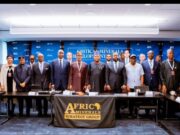
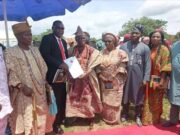
Core International’s Sulaimon Zakari with Mr Moses Engadu of AMSG and Toks Tokun at the launch of A4A at AFNIS 2024
Q: Are you talking to other continental agencies such as the African Minerals Development Centre, for instance, to promote this and avoid a situation of duplication of roles and effort?
TT: Again, we are distinct in our offering and will be leaning on all other channels and platform that promote the African cause and seek to win some levels of equity in the African resource development story.
Q: The scramble for African Minerals, especially for the so-called critical minerals is driven by foreign technology owned by wealthier foreign nations? How can we best navigate this situation to our benefit?
TT: Resistance will bear no fruit and collaboration should be the swan song. Bear in mind, this sector has seen lifelong dominance by these foreign nations you refer to and, as such, their footprint is supremely immersed in all aspects of the project development cycle. What we must be seeking is an equitable and respectable collaboration of all things value adding, at least on African soil. The current state of global affairs – with the pivot toward renewable energy and heightened demands for metals that command the supply chain of military applications – there’s no more opportune period than this, for Africa to cement its place in this commercial paradigm shift.
Q:Still in relation to the precious question, we now have a refocus on so-called rare-earth minerals by industrialized nations. Do you see a situation where we can have continent wide policy on this – and others. Such that we harmonize our positions and negotiate with these foreign powers in unity, rather than say, Sierra Leone or Togo facing off against the EU or the US individually?
TT: You must keep in view that mining for the most part is a private sector business and traditionally, government’s role is limited to permitting, regulation and tax/resource rent collection. With the advent of battery/critcal metals as new energy source, government has entered the fray as that new investor. In the current climate, we would be found wanting if we participated in what you suggest here as we don’t have critical mass representation in our own resources holding companies. And this is one of the top deliverables for AforA to gradually adjust.
Q: You have been in this sector for close to three decades. Which would you say are the top three lessons you have learnt, that is assisting you on this assignment?
TT: The technical fabric of the business will always be the most critical. Others are patience, and world class management team.
*What, say in three years, would have happened with this Initiative to make you feel fulfilled?
TT: Great question.. and there are many things that can give rise to a sense of achievement and hitting certain game-changing milestones. So I shall narrow that down to saying, if in three years we are able to have advanced on the funding of an indigenous promoter project toward declaring a feasibility study, which would ultimately lead to mine construction, then we would have done well. This is a major target for us.
Q: Many players in the sector lament about its huge risk factor – especially in an environment that lacks testing facilities and the buyers – who are mostly abroad – dictate most of the terms including pricing without sharing any of the risks. How does Motimose Metals navigate this and what advice do you have for smaller/newer entrants into the business?
TT: Patience and realism. This business will never be a get- money – quick scheme. There is a long gestation period to maturity. But if you weather those storms, you will enjoy long periods of nearly unrivalled financial returns, given you are guided by an experienced management team.
Try to get some real education on the fundamentals of the business. Do not attempt to reinvent the wheel.
You will be amazed how many people call me to propose yet another supposed scheme that will allow them usurp the fundamental first principles. Listen, this will always be an exercise in futility. Mineral resource is the most rigid business I’ve ever come across, augmented by the fact that it is a very inexact science. So you fiddle with its make-up at your peril. We are all captive to the science, so let’s follow.