




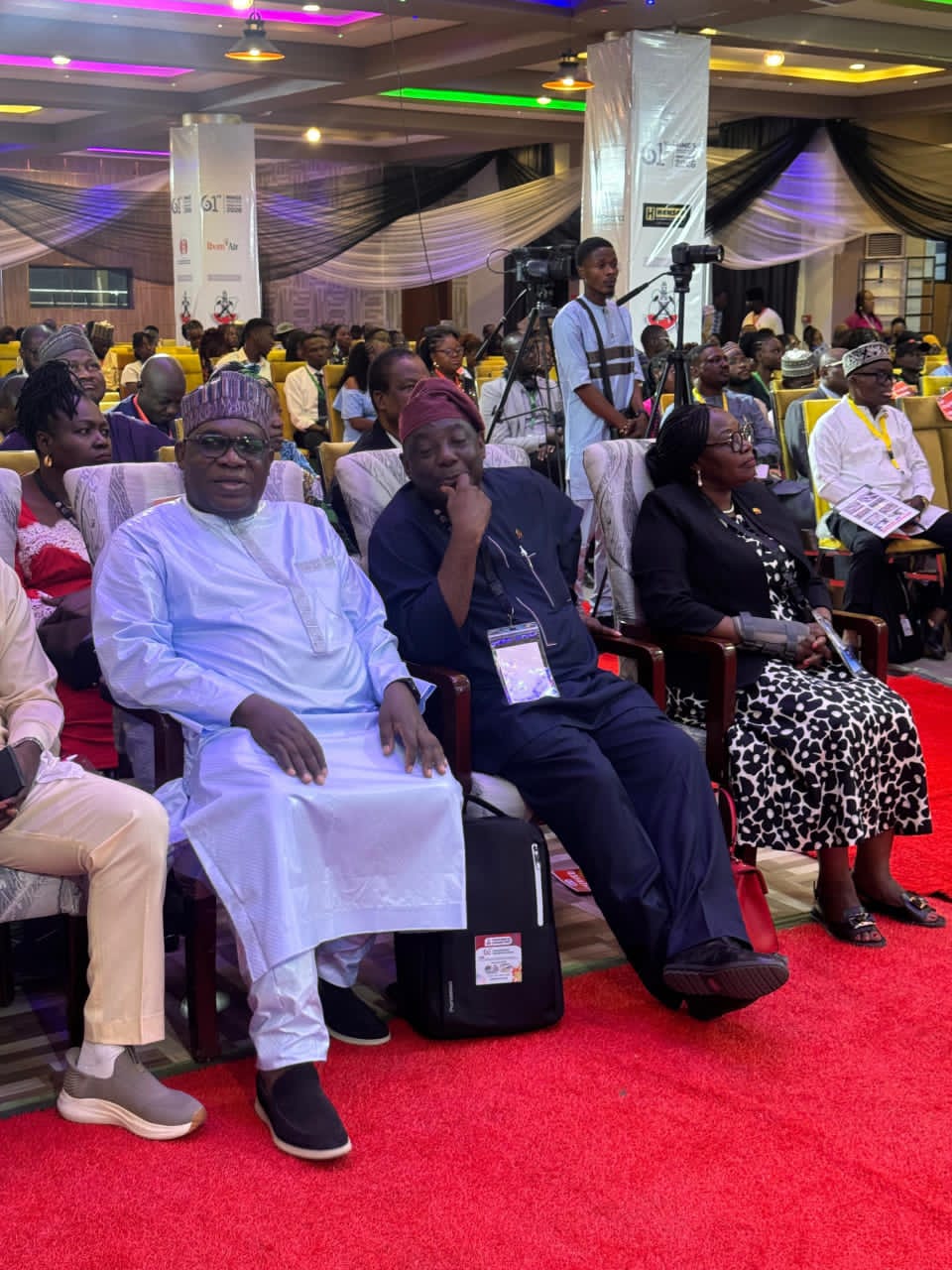

R-L: NMGS national president, Ms. Rose Chundung Ndong (FNMGS); immediate past president, Prof Akinade Olatunji and DG Of the Nigerian Mining Cadastre Office, Engr Obadiah Simon Nkom
The Federal Government should vigorously pursue a diversification policy of the nation’s energy mix, even as it continues to improve on processes that would promote optimisation of efficiency in Nigeria’s oil and gas production to sustain and improve on current levels.
These calls were part of recommendations made this week by the Nigerian Mining and Geosciences and Society (NMGS) during its 61st Annual International Conference and Exhibition holding in Uyo, Akwa Ibom State.
The organisation, in a communique signed by its National President, Ms. Rose Chundung Ndong (FNMGS), also called for the encouragement and support of the Indigenous Oil Companies by all Nigerians and government, saying these new IOC’s are well-positioned to guarantee Nigerian’s energy sufficiency and sovereignty.
It also canvassed a need for collaboration amongst the new IOC’s as this would allow for optimisation of resources and allow for lower cost of operation that would ultimately leads to better profitability and sustainability.
The NMGS conference, holding at Ceedapeg Hotel, Uyo, from 22nd to 27th March 2026, recorded an impressive attendance of over 1,000 participants from within and outside Nigeria, including senior government officials, industry leaders, academia, development partners, private sector representatives, and the general public.
The conference was formally declared open by the executive governor of Akwa Ibom State, Pastor Umo Bassey Eno.
Distinguished guests included the Ministers of Solid Minerals Development, Steel Development, Works, Water Resources and Sanitation, Environment, Education, Minister of States (Oil and Gas), several Directors General, regulatory agencies, captains of industry, NGOs, and international partners.
The theme of the conference was:
Optimizing Efficiency, Sustainability and Resilience in Resource Management and Infrastructure Development.
The sub-themes included: Maximizing benefits of interdisciplinary approaches to energy and mineral development; Geoscience and flood control; Geospatial analysis and remote sensing in mineral exploration and extraction; Current trends in geoscientific discovery and innovation; and Role of geoscientists in the construction industry.
A total of 192 technical papers were presented, alongside a highlevel panel discussion and a preconference panel discussion session on the theme and sub-themes.
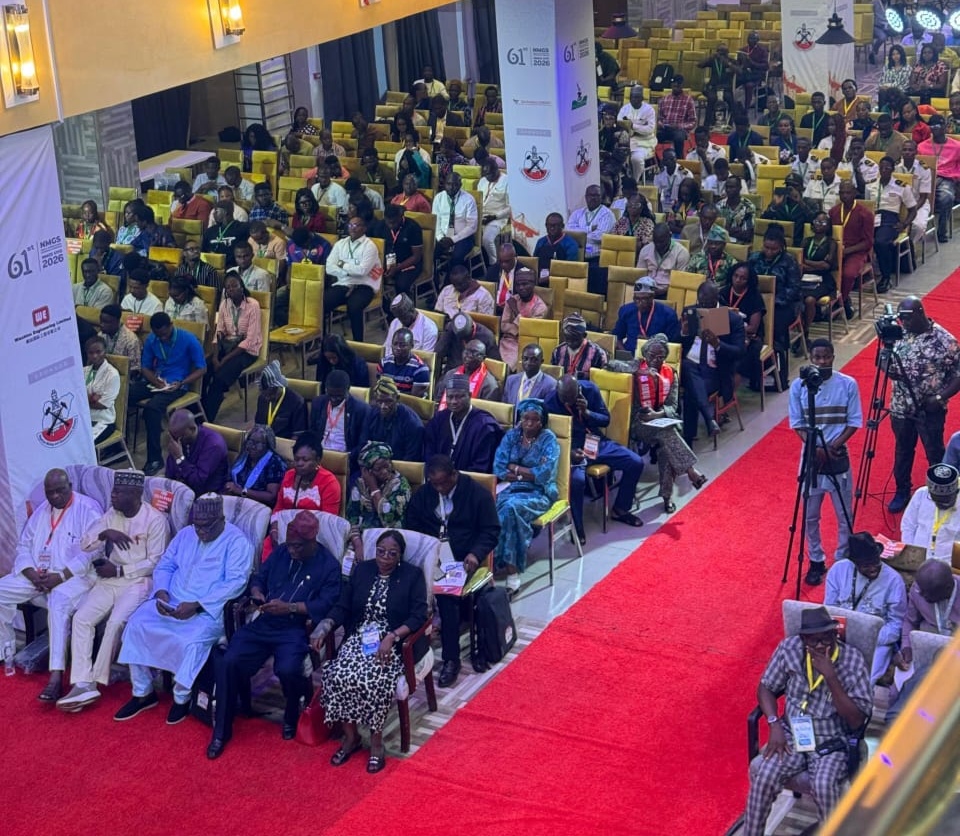
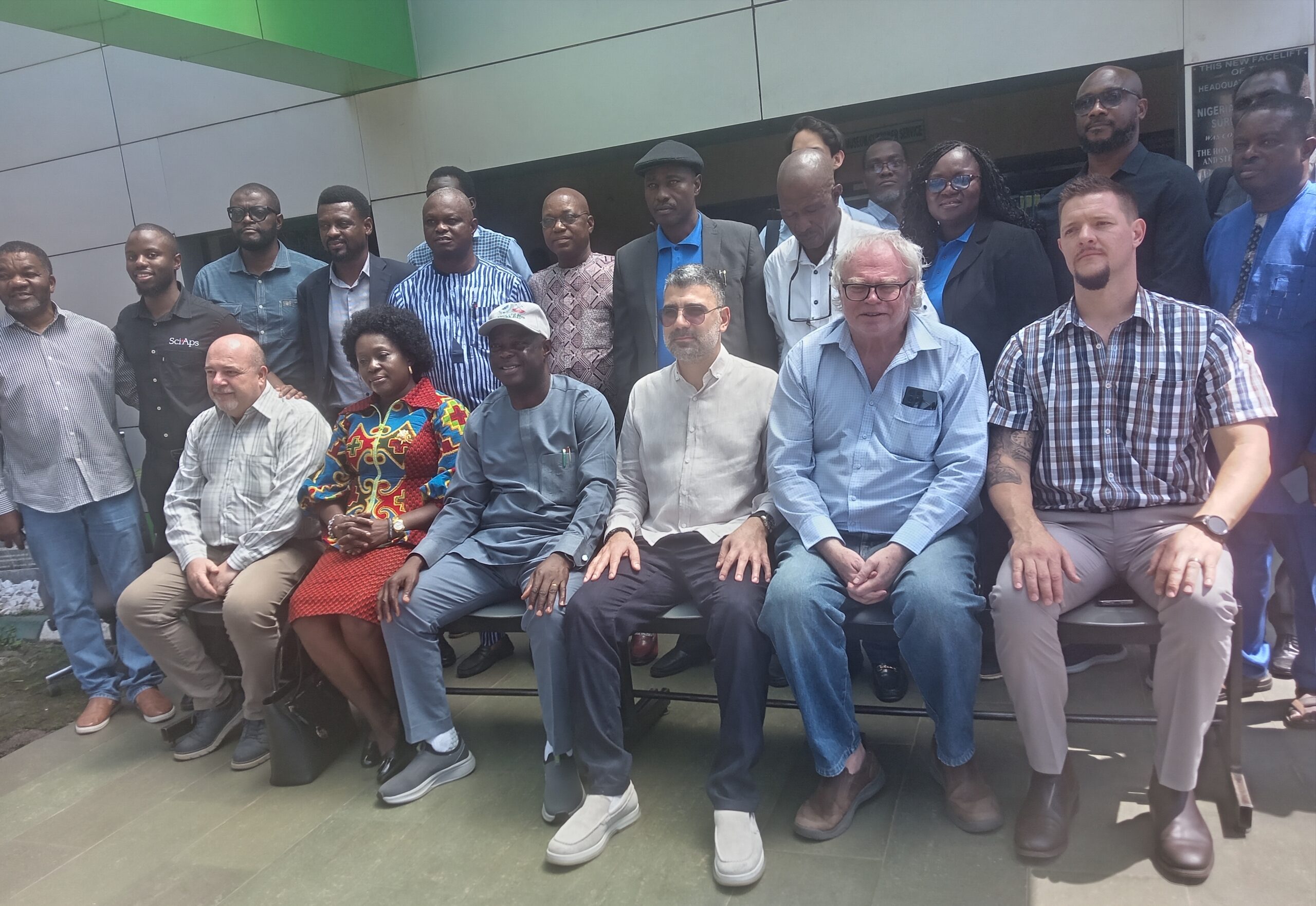
*Cross section of participants at the NMGS AIC&E
As part of the deliberations, participants noted that Oil and gas currently supply about 65% of Nigeria’s total energy consumption, while contributions from other sources remain low.
They also note that Nigeria still possesses significant exploration upside with major opportunities in deepwater plays and stratigraphic traps within the Niger Delta and the Frontier Basins, all of which hold substantial untapped potential for future discoveries.
Participants celebrate the growing strength of Indigenous Oil Companies which are increasingly emerging as major players in Nigeria’s oil and gas industry, taking on roles once dominated by international operators.
They also noted that Climate resilience begins with understanding the Earth beneath our feet, while geosciences provide the knowledge that transforms vulnerability into sustainability.
With the case of Akwa Ibom an an example, where the state government is reclaiming an erosion site to turn it into a residential community, participants noted that gully erosion continues to pose a severe environmental and socio-economic threat across many parts of Nigeria, leading to loss of farmlands, infrastructure damage and degradation of critical ecosystem.
Participants also expressed worry that though Artificial Intelligence is rapidly reshaping global geoscience workflow, its adoption in Nigeria remains limited.
The NMGS therefore called for the genuine pursuit of deliberate policies to ensure that our training and research centres become world-class to guarantee the continuous training and retraining of the necessary human resources needed for managing the critical sectors of the economy.
The organisation also seek a review of the curricula of the geoscience and mining engineering programmes in the various tertiary institutions, saying these should be upgraded to reflect modern technological advancements, alongside sustained investment by government in the training of the future geoscientists and mining engineers for a competitive future workforce.
The need for continuous focus on how to consolidate all geoscience data available in a framework that would allow access to would-be users was canvassed with a call to Government, institutions, and communities to partner in ensuring this.
The centrality of geoscience information to data-driven governance initiatives in climate-change mitigation and understanding of tectonic control on geo-hazards was also canvassed as basis for proactive measures and mitigation.
The organisation equally called for the adoption of emerging AI-driven platforms in the optimisation of efficiency in resource management was canvassed by participants.