






By Yunus Olawale
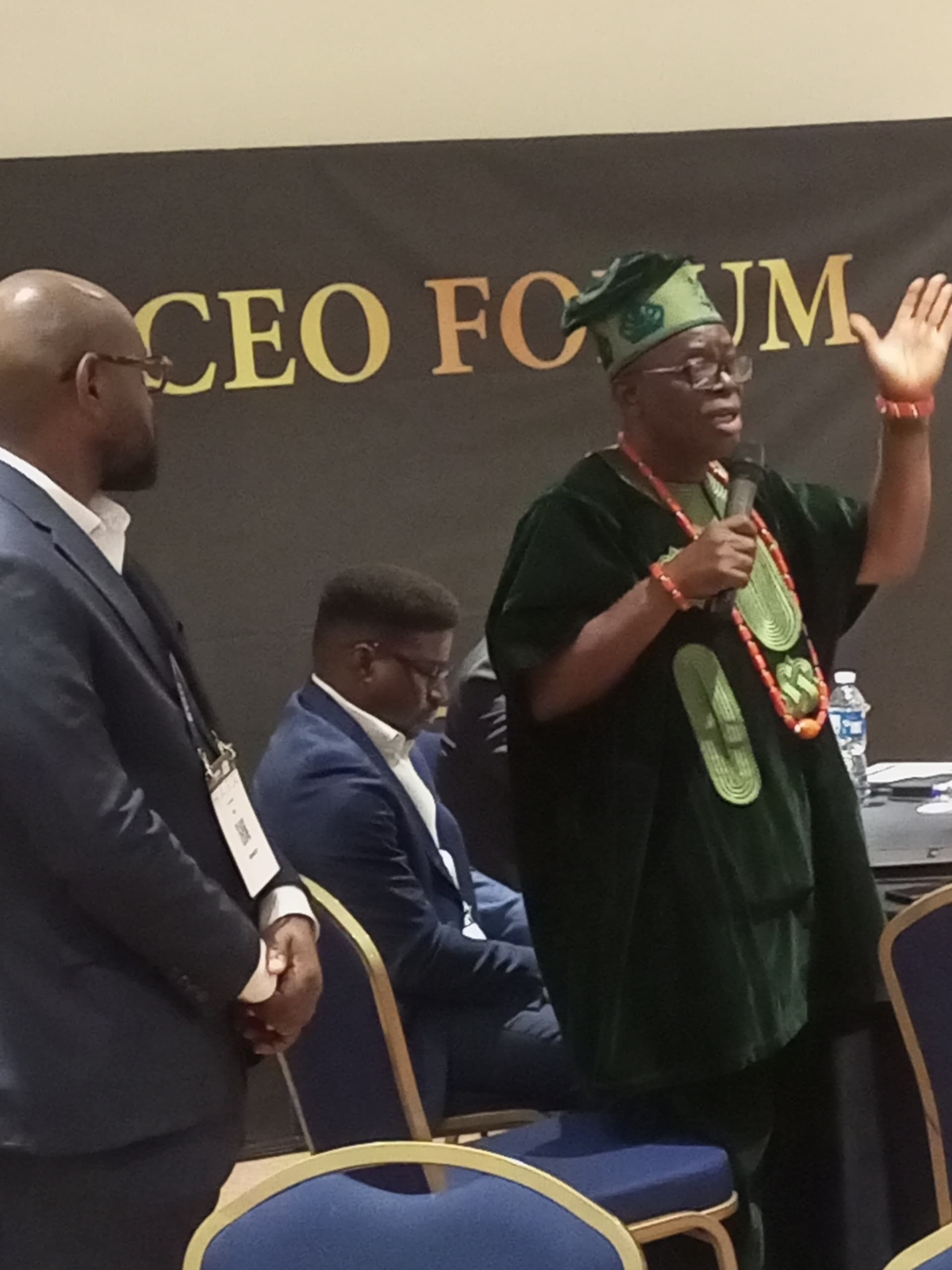
*President of the Miners Association of Nigeria (MAN),Oba Ayandele Ayanleke.
Chief executives of mining companies have called for harmonised taxation, regulatory consistency and improved technical training in Nigeria’s solid minerals sector, warning that multiple levies, overlapping licensing arrangements and persistent skills shortages are undermining investment and business growth.

The concerns were raised at the Chief Executive Officers’ Forum during the Nigeria Mining Week 2026 in Abuja, where industry leaders examined the challenges confronting mining operators and the policy reforms required to unlock the sector’s investment potential.
Speaking during the forum, the executives expressed frustration over what they described as multiple taxation and demands for additional fees by federal, state and local government authorities, despite payments already made to the relevant federal agencies.
They warned that the situation increases operating costs, creates uncertainty for investors and exposes mining companies to the risk of operational disruptions.
According to the participants, some operators face additional financial demands from state and local government authorities after obtaining licences and paying statutory charges to the Federal Government.
The executives questioned the rationale for such overlapping demands, arguing that the situation could discourage investment in solid minerals at a time when Nigeria is seeking to diversify its economy and reduce dependence on oil revenues.
They also raised concerns about threats of shutdowns by local authorities, alleging that some mining companies encounter pressure from multiple government institutions over licensing and fees.
The participants called for clearer boundaries between the responsibilities of the different tiers of government, alongside an effective mechanism for resolving disputes over regulatory authority and revenue collection.
MAN Calls for Collective Industry Action
The President of the Miners Association of Nigeria (MAN),Oba Ayandele Ayanleke, urged major mining companies to unite in addressing inconsistent laws, taxation and regulatory practices affecting their operations.
He stressed the importance of a coordinated industry response, noting that collective engagement with government would strengthen the sector’s ability to articulate its concerns and push for reforms.
According to him, the Federal Government is increasingly recognising MAN as a significant voice in the mining industry, creating an opportunity for the association and major operators to engage policymakers on the challenges facing the sector.
He indicated that the association would present the concerns raised at the forum to the government for consideration and appropriate action.
The MAN president’s position underscored the need for mining companies to move beyond individual complaints and adopt a unified approach to advocacy, particularly on taxation, licensing and regulatory enforcement.
Industry participants argued that a more predictable regulatory environment would improve investor confidence, encourage long-term capital commitments and support the development of commercially viable mining projects.
Kaduna Mining Development Company Backs Collective Advocacy
The Kaduna Mining Development Company and the entire MAN also emphasised the need for mining operators to work together to address what participants described as excessive charges and burdensome regulatory demands at both federal and state levels.
The company’s intervention reinforced calls for coordinated engagement between industry stakeholders and government authorities to establish a more transparent and consistent framework for mining operations.
Participants maintained that excessive and overlapping fees could weaken the competitiveness of Nigerian mining companies, particularly those investing substantial resources in exploration, equipment, infrastructure and mineral processing.
They called for greater transparency in the assessment and collection of statutory charges, as well as a clear definition of the fees legally payable by operators.
Skills Shortage Threatens Mining Development
Beyond taxation and regulatory challenges, the CEOs identified the shortage of adequately trained mining engineers and other technical professionals as a major constraint on the sector’s growth.
They called for expanded professional training, specialised education and capacity-building programmes to strengthen the local mining workforce.
According to the participants, finding competent mining engineers with the technical expertise required for modern mining operations remains difficult, creating a gap between the industry’s needs and the availability of qualified personnel.
They stressed that sustainable growth in the sector would require stronger collaboration among mining companies, universities, technical institutions and relevant government agencies to develop a pipeline of skilled professionals.
The executives also emphasised the importance of technical competence across the mining value chain, from exploration and geological assessment to extraction, mineral processing and commercial production.
They noted that mining investments require specialised knowledge and careful project management, warning that inadequate technical expertise could expose investors to financial losses and operational inefficiencies.
The forum therefore highlighted workforce development as an essential component of efforts to attract investment, improve productivity and build a competitive domestic mining industry.
Overlapping Regulatory Demands Raise Questions
One of the most contentious issues raised at the forum was the reported involvement of different government authorities in licensing and regulating mining activities.
Participants alleged that some local government authorities in parts of the South-South region, including areas around Port Harcourt, issue licences or make demands on miners in addition to the licences issued by federal authorities.
The allegations prompted questions about the extent of regulatory overlap and the need to clarify the legal powers of the different authorities involved in mining administration.
The executives said operators who have invested millions of naira in securing federal approvals should not be subjected to additional demands or threats of closure without a clear legal basis.
They contrasted their experiences with what they perceived as a more coordinated regulatory environment in the oil and gas industry, arguing that the solid minerals sector requires greater institutional clarity and consistency.
However, the specific licensing arrangements and legal authority of the various agencies and tiers of government were not independently established at the forum. The concerns raised by the executives point to the need for government clarification and a transparent review of the applicable legal framework.
Participants also expressed frustration over what they described as the repeated appearance of different enforcement and regulatory bodies at mining sites, creating uncertainty about which agency has primary responsibility for particular aspects of compliance.
They called for better coordination among relevant institutions to prevent conflicting directives, unnecessary interruptions and avoidable compliance costs.
Calls for Legal Clarity and Regulatory Reform
The CEOs urged stakeholders to examine and clarify the legal framework governing the mining industry, arguing that inconsistencies in implementation must be addressed if Nigeria is to realise the sector’s economic potential.
They called for a more orderly system in which operators understand their licensing obligations, applicable taxes, statutory fees and the respective responsibilities of regulatory authorities before committing capital to mining projects.
The participants stressed that investors require certainty from the exploration stage through mine development, extraction, processing and eventual commercialisation.
They warned that without clear rules and predictable enforcement, investors could face avoidable financial losses, undermining confidence in the sector.
The forum consequently placed regulatory reform, taxation and institutional coordination at the centre of discussions on leadership, investment and transformation in Nigeria’s mining industry.
Industry Awaits Government Response
The MAN president’s pledge to convey the concerns to the government emerged as a key outcome of the discussions, offering an avenue for industry stakeholders to seek policy changes through organised engagement.
The proposed intervention is expected to focus on the reported burden of multiple levies, inconsistent regulatory practices, licensing disputes and the need to strengthen technical capacity within the sector.
For mining operators, the issues extend beyond the cost of doing business. They touch on the broader question of whether Nigeria can establish a stable, transparent and competitive investment environment capable of attracting the capital and expertise needed to develop its mineral resources.
As the Nigeria Mining Week 2026 discussions continue to draw attention to the sector’s opportunities and constraints, industry leaders have made clear that investment growth will depend not only on the availability of mineral deposits but also on effective governance, skilled personnel and predictable regulation.
The challenge before government and industry stakeholders is to translate these concerns into practical reforms that protect legitimate public revenue interests while ensuring that multiple charges, unclear regulatory mandates and shortages of technical expertise do not impede the development of Nigeria’s solid minerals sector.