





Welcome, esteemed readers, to the very first article of ‘The Miners Legal Column’!
Our commitment here is to engage in and facilitate interactive conversations on topics related to mining and the law. The idea is to inform and be informed, to proffer and receive suggestions, and to mutually educate ourselves, all for the further development of miners, the mining sector, and our country.

Just as the classic musical, “The Sound of Music” reminds us that “when you read, you begin with A-B-C,” and “when you sing, you begin with do-re-mi,” in this first column, to set the tone, grasp the present, and jointly shape the future of Nigeria’s mining sector, we must first understand the history of mining in Nigeria and the way laws have shaped the industry.
Long before formal statutes and codified English laws arrived on our shores, mining in what is now Nigeria was inherently tied to deeply ingrained customary practices. Property rights invariably reflected communal ownership of land and resources.
Access to mineral sites and the resolution of any disputes were primarily managed by traditional authorities – elders, community
leaders, and chiefs, under local traditional leadership, all under a King or Suzerain, as applicable to a specific community.
The “right to mine” in these times was a communal affair, inextricably linked to lineage, discovery, and, critically, the social license granted by the community. Historical accounts reveal robust local activities, from the famed 19th-century gold mining in the Hausa enclaves, referred to as the “golden lands of Wangara” (parts of which are in present-day Nigeria), to the advanced
metalworking of the 15th-century Benin Kingdom, known for its legendary bronzes and skilled metallurgy.
Beyond these prominent examples, numerous indigenous communities engaged in the small-scale extraction of minerals like salt, soda, potash, or galena for local consumption. These diverse activities reflecting Nigeria’s ancient mineral heritage were all governed by unwritten and respected traditional laws.

The late 19th and early 20th centuries ushered in a monumental shift, driven by the “Scramble for Africa.” European powers, hungry for raw materials, imposed colonial rule and foreign legal systems that fundamentally altered indigenous resource rights. A cornerstone of this colonial framework was the declaration of “Crown ownership” over all minerals.
In the Nigerian context, “Crown ownership” referred to the British colonial government’s assertion of absolute legal title over all minerals found “in, under or upon any land” in the territory, regardless of who owned the surface land. This principle, codified in laws, meant the British Crown became the sole owner, expropriating and stripping indigenous communities of their customary rights to ancestral sub-surface wealth.
This concept, fundamentally alien to traditional Nigerian land tenure, was formalized through various ordinances. The Minerals Ordinance of 1902 marked an early step, but it was the Minerals Act of 1945 that established a comprehensive legal framework for mineral exploration and exploitation under British colonial rule.
This Act introduced formal licenses, leases, and royalties, centralizing mining administration. Its primary aim was to maximize raw material extraction for the benefit of the British economy, simultaneously cultivating a local market for foreign-manufactured goods. As noted by Walter Rodney, ‘African nations were effectively programmed to specialize in the production of raw materials for export to the factories of the North.’
This policy profoundly disempowered indigenous communities, alienating Nigerians from their ancestral resources and consistently prioritizing external economic interests.
Upon gaining independence, Nigeria, like many newly sovereign nations, moved to assert its control over its natural wealth. The 1960 Constitution, and subsequent ones, enshrined the principle that all minerals belong to the Nigerian State.
Early post-independence legislation, such as the Minerals Act of 1958/1964 (as amended),
largely maintained inherited administrative structures but transferred ownership and control to the Nigerian state. While the Petroleum Act of 1969 introduced a distinct framework for oil and gas, solid minerals continued to grapple with an inherited system not optimized for local growth.
This period, marked by economic diversification attempts and persistent illegal mining, struggled with limited investment and the enduring legacy of colonial legal structures.
The need for a robust, investor-friendly, and more comprehensive legal framework for solid minerals became increasingly clear. This led to the enactment of the Nigerian Minerals and Mining Act (NMMA) 2007, a landmark piece of legislation designed to unlock the sector’s immense potential. The NMMA 2007 introduced several key principles: private sector-led development, streamlined licensing, environmental protection, compulsory Community Development Agreements (CDAs), the establishment of the Mining Cadastre Office (MCO) and Mining Inspectorate Department, and a renewed focus on value addition. This Act is further
supported by the Nigerian Minerals and Mining Regulations, 2011.
In this current Era, African nations are increasingly clamoring for greater control of their lands, mineral resources, and the diversification of their economies. Countries like Burkina Faso, Niger, and Mali are making significant strides in optimizing their mining sectors for national development, generating ripple effects across the continent.
Today, Nigeria stands at a pivotal moment. There’s a palpable sense of optimism driven by the current administration’s declared commitment to repositioning solid minerals as a cornerstone of economic diversification.
This renewed political will is underscored by the elevation of the sector through the establishment of a separate and empowered Ministry of Solid Minerals Development, a significant upgrade from previous combined portfolios. This distinct focus, coupled with a visibly more robust budget, signals a determined effort to achieve bold advancements.
This focus is manifest in new legal and policy initiatives: Annual Finance Acts introducing tax incentives; the Companies and Allied Matters Act (CAMA) 2020 modernizing corporate governance; Executive Orders specifically aimed at formalizing Artisanal and Small-Scale Mining (ASM), curbing illegal activities, and promoting responsible investment; deepening local content requirements across the value chain; increased investment in geo-scientific data; and enhanced inter-agency collaboration for a secure operating environment.
Under the leadership of Dr. Dele Alake, the Minister of Solid Minerals Development, Nigeria’s mining sector is undergoing a strategic reorientation, prioritizing domestic value addition to boost national revenue and attract vital investments. His “no raw material export” policy is a cornerstone of this transformation, already yielding substantial increases in processing-related investments and national earnings.
Beyond this policy pivot, the Ministry is actively building robust foundational frameworks, including initiatives for geological data generation, intermodal transport, and the establishment of the Nigeria Solid Minerals Corporation designed for efficient, private sector driven development.
Furthermore, Dr. Alake, in acknowledgement of the sector’s critical needs, has expressly
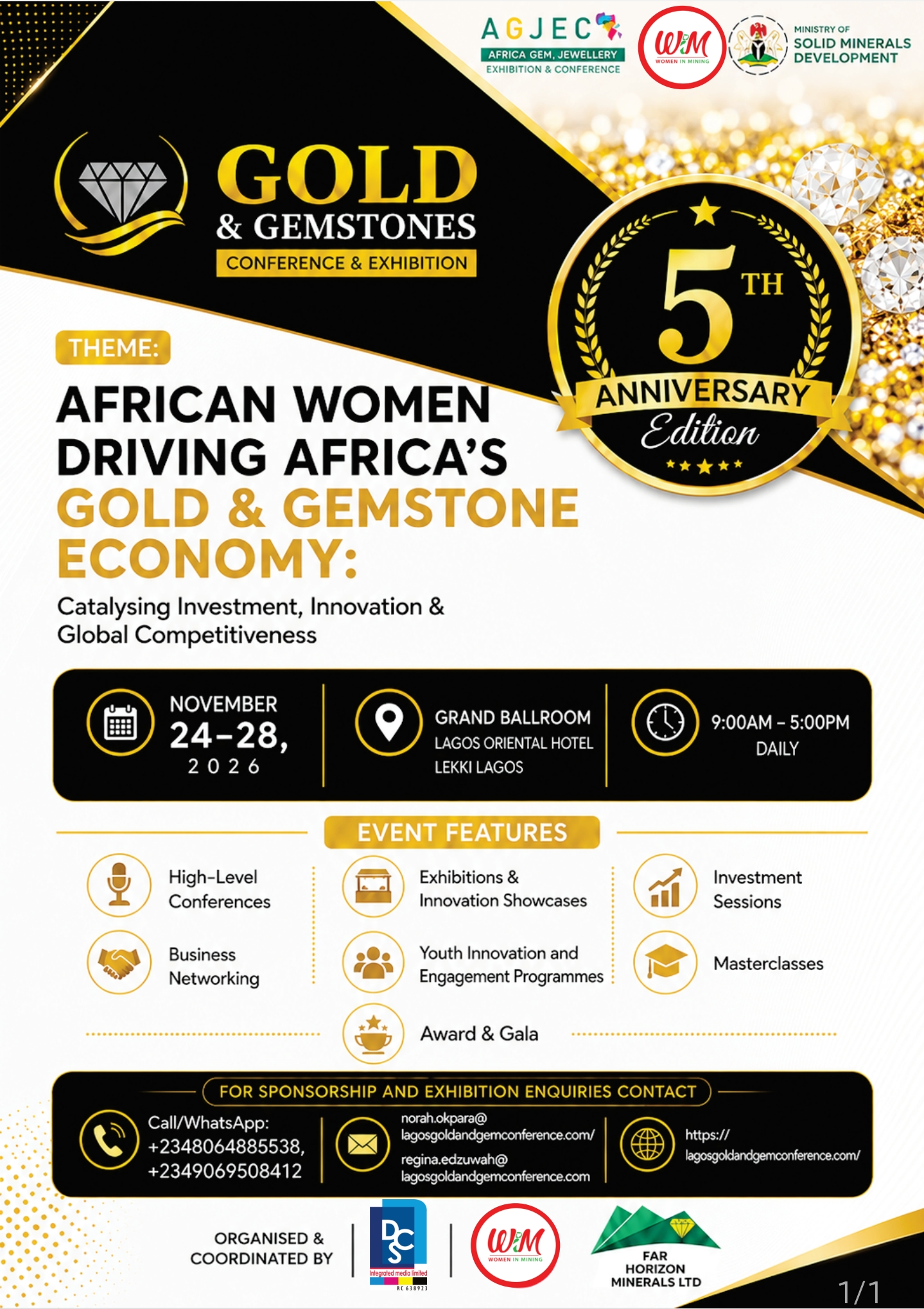
committed to fostering women’s inclusion, participation, and leadership. His robust endorsement and support for Women In Mining In Nigeria’s (WIMIN) flagship event, GGCE 2025, which serves as a vital platform for driving value addition and engaging all industry stakeholders, is already yielding tangible results.
From the communal wisdom of pre-colonial times to the imposition of colonial rule, and now to a period of asserting national interest and fostering growth, Nigeria’s mining legal landscape is undergoing profound transformations.
Understanding this historical journey is a vital, useful tool for every miner, investor, and stakeholder. It helps us appreciate the origins of current regulations, anticipate future changes, and navigate today’s complexities. It is helpful to understand that these changes in claims of ownership and impositions of laws were not arrived at by consensus or negotiations, but by force and attendant grumbling acquiescence.
Weighty challenges remain; however, purposeful efforts are being made at improvement, implementation, and enforcement of the body of foundational laws for a vibrant, responsible, and economically impactful mining sector. Indeed, the current administration’s heightened focus on
solid minerals, if diligently pursued and sustained, is set to deliver tangible results that could substantially impact job creation, boost the nation’s GDP, and foster essential economic diversification.
*Please feel free to ask questions, make comments, proffer useful insights, and suggestions, or to send other relevant articles. Your readership is appreciated.
Adesuwa Dan-Princewill (Mrs