



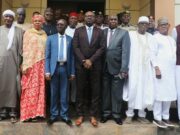


*Photo:Governor Abba Kabir Yusuf of Kano State *
For centuries, Kano, Nigeria’s ancient commercial heart, has thrived on the hustle of its markets and the flow of international trade, its identity cemented as the “Centre of Commerce.”


*Hon Hamza Safiyanu Kachako, Kano State Commissioner for Mineral Resources*
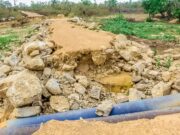
Yet, beneath its sprawling metropolis and the farmlands of its surrounding Local Government Areas lies a geological heritage of immense value, a treasure trove of solid minerals that has largely been ignored or exploited only through informal, unregulated channels.

In the contemporary context of a nation urgently seeking economic diversification and a stable non-oil revenue base, the story of Kano’s subterranean wealth is no longer one of quiet potential, but of a pressing geopolitical and economic imperative.
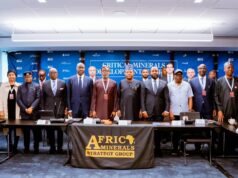
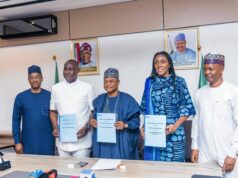
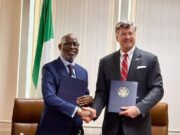
This narrative has now reached a critical turning point under the leadership of Governor Abba Kabir Yusuf, whose administration has demonstrated a remarkable speed and decisiveness in its commitment to the mining sector, a commitment crystallized by the swift establishment of a dedicated Ministry of Mineral Resources.
This bold policy move marks the definitive end of Kano’s complacency toward its natural endowments and heralds the beginning of a structured, sustainable exploration era designed to fundamentally reshape the state’s fiscal future.
The establishment of this new ministry transcends mere administrative rearrangement; it is a policy declaration of the highest order. It signifies a strategic recognition that the state’s future prosperity cannot be sustained solely on traditional commerce and an unpredictable share of federal oil revenues.

By fast-tracking the creation of this cabinet-level structure, Governor Abba has effectively dismantled bureaucratic inertia, signaling to local and international investors alike that the solid minerals sector is now a Tier-One economic priority. The urgency reflects a pragmatic assessment of the global demand curve for specific, high-value minerals found within Kano’s schist belts and geological formations, minerals such as Tantalite, Columbite, and the highly coveted battery mineral, Lithium. These are not archaic resources; they are the essential building blocks of the 21st-century technological economy, critical components for smartphones, electric vehicles, and renewable energy infrastructure.
The speed with which the administration acted demonstrates a clear understanding of the time-sensitive nature of this global industrial transition and the need for Kano to establish its position in the supply chain without delay. The window of opportunity to attract significant foreign direct investment (FDI) into the exploration and eventual processing of these strategic minerals is narrow, and the Governor’s action shows a clear intent to seize the moment.
Before the creation of the ministry, the vast potential for minerals like Tin, Kaolin, Gold, and industrial metals was often fragmented across various governmental departments, leading to a lack of coordinated oversight, revenue leakages, and environmental degradation. The vacuum in state-level policy created a fertile ground for unregulated artisanal and small-scale mining (ASM), operations which, while providing immediate income for local communities, frequently operated outside the ambit of environmental and safety standards, often fueling social and security challenges. The new Ministry, headed by a Commissioner with a specific mandate, is intended to act as a centralized regulatory and promotional authority, functioning as a “One-Stop-Shop” for all mining and natural resource activities in the state. This consolidated approach is critical for streamlining the licensing process, facilitating technical data sharing from historical geological surveys, and ensuring that all mining operations adhere to best global practices in Environmental Impact Assessment (EIA) and community development agreements.
The focus has decisively shifted from mere extraction to value addition, a vision to integrate backward linkages by encouraging the establishment of local processing plants for crushing, concentrating, and refining minerals, maximizing employment opportunities, and ensuring a higher share of the final product’s value remains within the state.
The administration’s speed is therefore not reckless, but rather a calculated, strategic acceleration designed to formalize a chaotic sector, attract capital, and ultimately, lay the secure economic foundation for a more resilient and industrialized Kano State.