



By Kayode Ogunbunmi
The Investing in African Mining Indaba (MI26), Africa’s most influential and transformative platform for mining leadership, investment, and innovation, opens in Johannesburg with the theme,“Stronger together: Progress through partnerships.”
Event organizers say the theme reflects the urgent need for collaboration across the continent to fast-track untapped growth opportunities across the entire mining value chain and unlock downstream industrialisation industries.
“The African mining sector cannot afford to operate in silos. The challenges and opportunities ahead demand collective action,” said Laura Nicholson, Product Director of Investing in African Mining Indaba in a recent press statement.
“Our mission is to unlock transformative solutions through partnerships. Only a united, forward-looking industry can embrace innovation, secure investment, and build a resilient, inclusive future.”
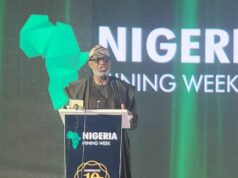
It is clear that Africa is no longer a passive supplier, thanks to the effort of groups such as the African Minerals Strategy Group, under the chairmanship of Nigeria, ‘s Minister of Solid Minerals Development Dele Alake.
The continent holds the keys to global decarbonisation, industrialisation, and security. As geopolitical tensions, new trade blocs, and resource nationalism reshape supply chains, This has become even more important due to what is now known as the “Trump factor”, which had seen minerals become a national security issue.
Mining Indaba 2026 is expected to be another platform where Africa speaks with one voice as it moves to derive maximum benefit from what is at present a sellers market.
“The convening power of Mining Indaba is unmatched,” Nicholson said. By bringing every stakeholder – governments, investors, miners, buyers, communities and innovators – into one room, we can shape the future of mining together. And the future starts now.”
The world’s transition to clean energy presents clear opportunities for Africa. The continent holds approximately 55% of global cobalt reserves, with the DRC producing 70% of the world’s supply, nearly half of global manganese reserves, and an estimated 90% of platinum group metals. Nigeria is fast building several lithium processors that would add to making Africa indispensable to the global energy transition.
Mining Indaba organisers note that demand for critical minerals is surging – it defines those as materials needed to industrialise and fuel African economies.”
It also noted that for Africa to benefits from this opportunity requires visionary partnerships that align diverse interests and deliver inclusive, equitable progress. The correct choices made today will ensure Africa leads the next era of sustainable mining development.
“The Mining Indaba 2026 theme resonates with the South African philosophy of Ubuntu, which values humanness and unity. When we work together as stakeholders, we can shape industries for the betterment of all, including the environment. Together, we can build the future now,” says Frans Baleni, Chairman, Executive Advisory Board, Investing in African Mining Indaba.
This is echoed by Gwede Mantashe, Minister of Mineral and Petroleum Resources, South Africa. “Our strength lies in building partnerships that recognise the mutual value of investment. At the Department of Mineral and Petroleum Resources, we understand that investors seek returns, and rightly so, but we are equally committed to ensuring that the benefits of growth and development are shared with workers, communities, and the country at large. Progress is only meaningful when it lifts all stakeholders,” he says.
According to the organisers, the key themes for MI26 include:
*Community engagement and indigenous voices: Genuine partnerships with local and indigenous communities ensure equitable benefits, while preserving cultural heritage and environmental integrity.
*Critical minerals: Africa’s mineral wealth positions it as a leading provider of inputs for the technology sector, as well the renewable-energy industries.
*Disruptive technologies: Innovations like AI and green-energy technology are transforming mining into a smarter, more environmentally sustainable and resilient industry.
*Downstream buyers: The industries that drive demand for minerals – automakers, renewables, manufacturers etc – are major stakeholders in the sector, and have valuable perspectives to share.
*Governance, regulation and policy: Harmonised regulations and intra-African collaboration create stability and attract investment to unlock the continent’s mining potential.
*Infrastructure and industrialisation: Strengthening transport and energy networks enables local beneficiation and transforms Africa into a hub for value-added manufacturing.
*Investment and economic growth: Strategic collaborations between governments, investors, and mining companies drive sustainable development and unlock Africa’s mineral wealth.
*The just energy transition: Building a new energy dispensation that slows emissions and halts climate change will require a range of critical minerals, which means new partnerships in the mining sector.
*Leadership and visionary thinking: Clear-eyed leaders are essential to fostering resilience, driving innovation, and positioning Africa as a global mining powerhouse.
*Sustainability: The mining sector will provide the materials for a more sustainable world, while also evolving its operations to manage its own impact on the natural and social environment.
“This year’s theme reflects our commitment to fostering partnerships that not only drive investment but also ensure shared prosperity for all stakeholders. Mining Indaba is the platform where transformative ideas and collaborations come to life, showcasing joint ventures, public-private partnerships, community-driven initiatives, and disruptive technology adoption that demonstrates how collaboration can unlock opportunities and overcome challenges,” says Laura Nicholson, Content and Communities Director, Mining Indaba.
Investing in African Mining Indaba 2026 has introduced a refreshed visual identity inspired by the event’s core theme. The new fingerprint motif symbolises how unique individuals and organisations, when united, can make a powerful, lasting mark on the industry. Just as overlapping fingerprints form a seamless imprint, so too do strong partnerships.
The 2026 Mining Indaba holds from 9–12 February 2026 at the Cape Town International Convention Centre. It will convene governments, mining companies, investors, downstream industries, communities, and leading service providers to forge the partnerships needed for a prosperous, resilient future.
“The theme ‘Stronger together: Progress through partnerships’ is a call to reimagine partnerships in Africa’s journey towards minerals for inclusive prosperity, not as tools of convenience, but as instruments of collective empowerment”, says Dr Marit Kitaw, Economic Affairs Officer, United Nations Economic Commission for Africa, and Mining Indaba Executive Advisory Board.
“It’s a reminder that Africa’s transformation through minerals can only be achieved when we all, especially women, youth, marginalised communities, artisanal and small-scale miners, governments, industry, civil society, academia, cooperating partners, sit at the table as equal partners. Through bold partnerships and a commitment to equity, we can rewrite the story of our mineral wealth, not as a curse, but as a catalyst for justice, prosperity, and dignity for all Africans. Stronger together, we rise.”
“Stronger together: Progress through partnerships means uniting governments, private sector, communities, and civil society in a powerful and enduring partnership that will transform mining into a shared triumph for Africa’s future,” says Kwasi Ampofo, Head of Mining and Metals, BloombergNEF and Mining Indaba Executive Advisory Board
Tony Carroll, Mining Indaba Executive Advisory Board, adds that: “We can no longer operate as before. Neither bulk exports of unrefined ore nor export bans are durable solutions. Rather, the industry has to pivot toward practices that provide more value and technology transfer in African nations. This transition will be aided by the introduction of more nimble and economically viable refining technologies and the provision of supportive infrastructure undertaken via public-private partnerships.”