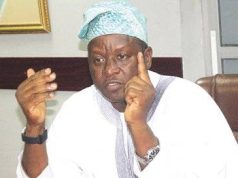





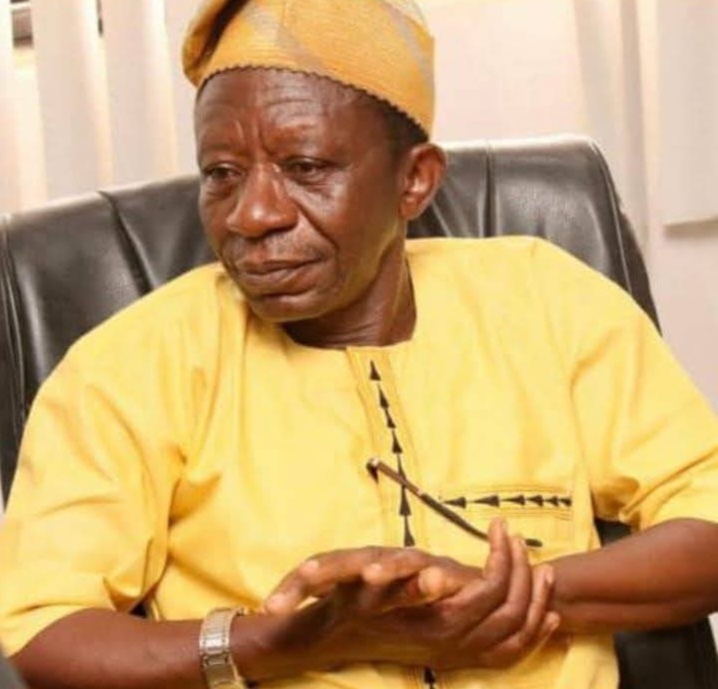

Mr Olubisi Ojeyinka is the Chairman of the Miners Association of Nigeria, Oyo State chapter. In this interview with TheMiners’ BANKOLE SHAKIRUDEEN, he spoke about the mineral wealth resources of Oyo state and how the government is positioning to utilise it to change the economic trajectory of the people of the state.
Introduction
My name is Olubisi Ojeyinka. I am a Geologist by training. I left the University of Nigeria, Nsukka in 1985. I practiced for some time before joining the government in 1994 and retired as a Director in April 2019 from the Oyo State Ministry of Mines, now known as the Oyo State Mineral Development Agency. After my retirement, as a Geologist in mining, I joined the Miners Association of Nigeria (MAN) and I rose to become the state Chairman by the grace of God.
Q: What are your duties and responsibilities as Chairman of Miners Association, Oyo Chapter, and what would you say are the intersections between mining and geology?
A: To start with, as a Geologist, my interest was in exploration, known as economic geology. Geology is literarily about searching, which is the same as exploration. It is the technical and guided search for resources buried under the ground. There is water, crude oil, gold, diamond, nickels, coppers, lithium, bitumen, laterites, e.t.c. However, in other to know the extent of the deposit, depth, amount and how long it would last, we have to search. This is called geological exploration. So this is basically what I do. Anything under the ground, I am interested in it, whether solid or liquid minerals.
So, when I retired as a director, it was only natural for me to transition into full-scale mining. It is so interesting for me because I was interested in Economic Geology in the first place, which is the type of geology that focuses on the exploration and utilization of the solid mineral wealth. So, now as an operator, talking about the mining sector as an operator and as professional on the side of the government brings unique and an all-encompassing perspective.
Talking about my duties as a miner and the leader of the miners in the state, my primary job is to lead, provide support and serve as a bridge between the miners, the government, and the critical stakeholders in the sector. My responsibilities encompasses fighting for the interest of the miners, the communities and influencing policies and frameworks that shapes the development of the industry and the sector as a whole.
Q:What exactly can you point at as the greatest accomplishment of your time in the civil service?
A: When I joined the service, good a thing, it was about the same time the state started agitating for more money from the mineral sector. I was part of the people that started working on the haulage system.
The system focused on how to get more money out from the people that carries minerals around and through the state, using your roads. How do you take tax from them to maintain the road. For instance, Dagote Group trucks move everyday on the road. Bua the same thing, and many other business corporations. They carry cement, granites, fabricated irons, sand, and all sorts of things, using the road networks provided and maintained by the government. The system brought about what we know today as the Oyo State Haulage Tax.
Thereafter, I was part of those who pushed for the idea that each of the states of the federation should know what each of them have beneath their soil. And the geology of Oyo State says there are solid minerals in Oyo State. We started working with the then Nigerian Geological Survey Agency. NGSA were trying to collect data about the minerals in Nigeria. We were working with the institution then to achieve the state goal.
At about that time, there was a boom in the acceptance of Gemstones. There was a place called Baba-Ode where people were rushing to pick what is known as gemstones and make a lot of money from it. This development ultimately opened the government eyes. It led to meetings, strategies and policy and strategy formulations, leading to the restructuring of the sector. The structuring led to the state creating a Unit of Geology under the department of Industry. From there, things moved up and the unit became a department, and thereafter, into a full blown agency. So, the trajectory have passed through layers of governance.
Q: What are the actual mineral resources beneath the soil of the Oyo State lands?
A: Except two things – Diamond, that we don’t have in Nigeria, geologically, and Bauxite coal, that is available in the Northern part of the country, Oyo State has virtually almost all other solid minerals under its soil. We have gemstones in a very good quantity, located at Oke-Ogun and Ibadan area. We have gold, located at Oke-Ogun, Ibadan and Ogboso areas.
We are blessed, in large quantity. Marble and Dolomite in Igbeti at Olorunshogo and at Ikoyi in Orire Local Government Areas. And then we have granite all over the state. It is everywhere in the state. Then, in that granites, you have Feldspar and the derivatives of feldspar. The derivatives include lepidolites, and others that are lithium-based minerals. So the lithium minerals we are making so much noise about, these minerals are found in large quantity in our state.
Q: With these resources, how could Oyo State ensure these mineral wealth are used for the good of the people?
A: First, you have to acknowledge the human factor at play. Don’t forget that mining is still on the exclusive list of the Federal Government. What that means is that just like the Crude Oil in the Niger Delta Region, the FG is still superintending the economic activities around the exploration and conversion of these minerals to wealth.
For example, the gold mineral in Osun State, just as you mentioned, belong to the Federal Government. However the states are just coming along to find their ways around it. Like I was talking to you earlier, the Mineral Act of 2007 saw the FG conceding that the states could go and establish what it called Special Purpose Vehicle (SPV), which allows for establishment of companies, on behalf of the state, to get license and mine.
And that is why most states now have agency in mineral and ministries of energy and something like that. Before now, the states only get royalties from these minerals from the Federal Government. For now the basic revenue that comes from mining to the states is still the 13% royalty and comes from the FG.
Q: How do we better utilise the mineral resources wealth found in these states for the good of the states and its people?
A: Data acquisition would help. Let states work on their data, what they have, how much, which location, what condition and all. After the data, people will be open to investing in mining the minerals. Thereafter, there would be the need to invest in enhancing the value of the minerals. This is call Exploration and Exploitation (E&E).
The minerals belong to the Federal Government, fine. But the surface belongs to the states. Realizing this, the FG then conceded that states should go and find ways to do business in it. So, Oyo and Ogun States, so far, are currently changing the narratives by creative mining agencies to take advantage of the opportunities. Oyo state in particular has now established what is called Oyo State Mineral Development Agency. Keying into the SPV directive, the state has equally established a body known as the Pacesetter Mineral Development Company Limited (PMDCL).
The responsibilities of the Oyo State Mineral Development Agency and the Pacesetter Mineral Development Company Limited (PMDCL), is to go in, acquire mining license, get operators and investors to come and work in your state. So, as a license owner, your operators and investors are answerable to you as a state as well as the FG. Returns go to the federal government but your royalties come to you also. By this, as a state, you are adding value to the mineral deposit, creating jobs and making more revenues. There is this thing called Community Development Agreement. When you are making more money, you develop the communities. This becomes a win-win for everybody. And when you indulge in value-addition for the minerals, you sell more.
Q: Between your time as a director, and now as a full time operator, how has the governance template regarding the mining sector evolved?
A: What happened is that Nigerian governance was actually based on minerals in the past. During the pre-colonial era, the colonial era, and the First and Second republics, the nation’s economy was largely powered by mineral resources. The economies were largely funded by mining activities, exploration of Tin from Jos, Plateau State, coal mining in Enugu. That was the base of the nation’s economy then. Then, Agriculture was rich and formed the mainstay of the country, from both West and Northern region. So, what I wanted to establish is that the government has always engaged in exploration.
During the Second World War, most of the materials used – Columbine, tantalite, kalacitarite and others , were searched for in Nigeria. Remember at Oloibiri, Nigeria’s first Oil well was discovered in 1958. That discovery, and that of gold deposit in the North and South part of the country, among others, are some of the major wins for geological exploration. Research also brought about coal in the east, and crude oil in the south-south among others. Just as there was a search for oil in the past and even present, there was also search for other solid minerals too, as it is now.
But when the oil boomed, we forgot about other explorations and focused only on the crude oil. We even forgot about the Agriculture. But when there is glut in the oil industry, we are now trying to find our way back to mining.
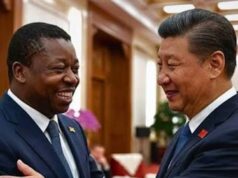
But unlike then, government is now more interested. Besides issuing licenses, it is also collecting royalty, monitoring safety, organising remedial programmes for communities, and the entire value chain. Besides, we are also returning to Agric too. Not just in Oyo State. You see the President just returned from Brazil, China and Japan, marketing mining and Agriculture to these countries.