




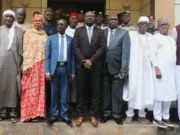

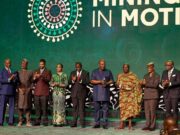


*Photo: Halima Imam*
Nigeria sits on a solid minerals endowment that has, for decades, been discussed more than it has been developed. Lithium, mica, feldspar, quartz, tin, and a growing list of critical minerals lie beneath our soil, and the conversation has finally shifted from whether to exploit them to how, and with whom.
China’s growing footprint in Nigeria’s minerals sector deserves a fair hearing, because the model it brings is different from the extractive patterns Africa has grown weary of.
Chinese partners increasingly arrive with more than capital. They bring processing technology, infrastructure financing, and a demonstrated willingness to co-locate value addition close to the resource, rather than simply shipping raw ore offshore.
This matters because Nigeria’s minerals strategy is not just about revenue from export. It is about industrial sovereignty, building the refineries, the processing plants, and the skilled workforce that turn a mineral deposit into a national industry. China, having walked this exact path from resource-dependent economy to manufacturing powerhouse in a single generation, has practical lessons and existing infrastructure capacity that few other partners can match at comparable speed and scale.
The scepticism around Chinese investment in Africa is not baseless, and no honest advocate for the partnership pretends otherwise. But the more instructive comparison is not between China and an imagined ideal partner, it is between China and the alternatives actually on the table. Western capital has been famously cautious about African mining infrastructure, citing risk profiles that Chinese state-linked and private financing has, in practice, been more willing to absorb. Where others have offered feasibility studies, China has more often offered financed projects, roads, rail spurs to mine sites, and processing facilities that would otherwise remain on paper for another decade.
There is also the matter of timing. Global demand for the minerals Nigeria holds, especially lithium and rare earths, is accelerating as the world electrifies. Nations that can move from exploration to processing quickly will capture disproportionate value. China’s minerals-linked industries, from battery manufacturing to electric vehicle production, are precisely the demand centres Nigeria needs as offtake partners and co-investors. A relationship with China is not charity; it is Nigeria positioning itself inside the fastest-growing segment of global minerals demand rather than waiting at the margins of it.
None of this means Nigeria should negotiate carelessly. Every partnership, Chinese or otherwise, must be structured to protect local content, environmental standards, and community welfare, and Nigerian negotiators have every right and responsibility to insist on terms that build domestic capacity rather than simply extract it. But structuring good terms is a negotiation challenge, not a reason to view the partnership itself with suspicion.
What Nigeria needs from any minerals partner is speed, technology transfer, and a genuine stake in local value addition. China has, on balance, shown more appetite for exactly this combination than most alternatives currently available to African resource economies.
The task ahead is not to romanticise the relationship, but to manage it with the discipline it deserves, so that Nigeria’s mineral wealth finally becomes Nigeria’s industrial capacity.