





By Shakirudeen Bankole
In the vast arc of Africa’s development story, no force is more defining or more urgent than its youth. Home to the world’s youngest population, the African continent stands on a demographic threshold that could either propel it into prosperity or plunge it deeper into crisis.
At the heart of this delicate balance lies a critical but underexplored opportunity: building African talent for the green economy, with the mining sector as a launchpad.
As nations reposition mining in response to the global energy transition, the call for a new generation of skilled African workers – geologists, metallurgists, ESG auditors, data scientists, mine rehabilitation experts, and green-tech innovators — has never been louder.
In Nigeria, where over 60 percent of the population is under the age of 25 and youth unemployment has hovered above 40 percent for years, the mining sector could offer a fresh path forward. Yet the pipeline from potential to opportunity remains blocked by systemic neglect.
Most of Nigeria’s technical and vocational education institutions are outdated, underfunded, and disconnected from industry needs.
University geology and mining departments still rely on analog survey tools, even as the world moves toward drone-based exploration and AI-driven mine modelling.
Young people who graduate from these programmes face a stark reality: the skills they possess are not those the new economy demands.
This gap is not merely a training issue, it is a policy failure too.
Nigeria’s National Energy Transition Plan (NETP), launched in 2022, recognises the need for workforce transformation but offers little clarity on how to integrate youth into mining’s green evolution.
The Solid Minerals Development Roadmap likewise speaks to employment generation but lacks a concrete framework for youth-skilling, apprenticeships, or industry-academia collaboration.
Without a deliberate strategy, the country risks being a spectator to the very future it seeks to shape.
Experts are warning of a double risk: a mineral boom without local talent and a demographic surge without economic absorption.
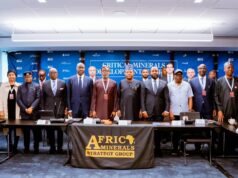
At AFNIS25, the youth agenda is expected to be brought into the front burner, with high expectations around actionable resolutions that go beyond mere rhetorics but a national exigency.
Across the continent, green minerals are fuelling new value chains, lithium for electric vehicles, cobalt for batteries, rare earths for wind turbines. But to harness these opportunities, Africa must first nurture the minds that will engineer, regulate, and commercialise them.
For Nigeria, this means radically rethinking how it educates, trains, and empowers its youth for a sustainable mining future.
The global precedent is instructive. Countries like Australia and Canada have developed mining schools that integrate ESG, technology, and entrepreneurship into their curricula.
In Botswana, the Okavango Diamond Company runs internship and leadership programmes to develop local talent across the gemstone value chain.
In Rwanda, coding bootcamps are preparing engineers for jobs in digital mining analytics. These models demonstrate what is possible when governments, industries, and academic institutions work in concert.
Nigeria has begun to make small but significant moves.
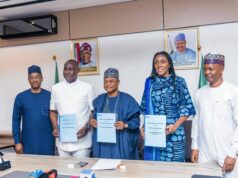
The Ministry of Mines and Steel Development has signed MoUs with select Polytechnics and Universities to upgrade their mining departments.
The Nigerian Content Development and Monitoring Board (NCDMB) is exploring ways to localise skills in mineral processing, while the Ministry of Youth is advocating for green skills inclusion in the revised National Youth Policy. But these efforts remain fragmented, underfunded, and poorly monitored.
Besides, eyond formal education, there is a growing need to formalise the informal.
Thousands of Nigerian youths are already engaged in artisanal mining, often under unsafe and exploitative conditions. With proper training, cooperativisation, and access to finance, these youths can become legitimate entrepreneurs in the formal sector.
Civil society organisations such as the Frontline Advocacy Initiative and Alimosho Youth Development Association of Nigeria (AYDAN), for instance, are leading campaigns to train local youths in environmental monitoring, safety practices, and cooperative governance, especially in mining-prone areas.
Youth voices themselves are rising. At state forums, mining conferences, and community dialogues, young Nigerians are demanding to be seen not as passive beneficiaries but as active architects of their future.
They are calling for policies that fund youth-led mining cooperatives, support innovation hubs, and create green industrial zones with guaranteed youth quotas in employment and leadership.
This is not just about mining, it is about what kind of economy Nigeria wants to build.
Will it be one where foreign firms extract, profit, and depart, or one where local talent transforms raw materials into value-added products and globally competitive solutions?
Will it be an economy that perpetuates cycles of unemployment and exclusion, or one that incubates green entrepreneurship and local innovation?
The answers lie in the choices being made now. Investing in youth for a sustainable mining sector is not a side issue, it is the main issue to be focused on. And this intervention touches on education, employment, environmental justice, and economic transformation. At AFNIS25, the youth agenda will be reintegrated yet again, with a loud call for action.
The question is whether Nigeria and Africa at large will respond with vision, urgency, and resolve.