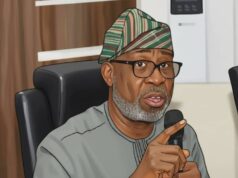


*Sam Madlabane
The Nigerian Mining Week, organized by the Miners Association of Nigeria in partnership with PwC and the Vuka Group, and held under the auspices of the Federal Ministry of Solid Minerals Development, is arguably the biggest mining event in Nigeria. In this interview, the Event Director – Mining at the VUKA Group, Mr Samukelo Madlabane, spoke on the reasons why the event is a must participate in for any organization or level of government serious about deriving value from their minerals resources. Excerpts:
MINERS: So, let’s get to know you. What does the VUKA Group do?
Madlabane: My name is Samukelo Madlabane, and I am the Events Director – Mining Portfolio at the VUKA Group.
I’ve been in the events business for 16 years, producing high-profile shows across a wide range of industries, including banking, high finance, infrastructure, logistics, transport, and rail. In the past, I ran one of the largest power shows in Africa and the largest rail infrastructure conference and exhibition, Africa Rail. Today, I specialize in the mining sector, managing the largest mining events in two critical African markets: Nigeria Mining Week, DRC-Africa Battery Metals Forum and DRC Mining Week. The DRC Mining Week is the biggest one in the portfolio. This year, we hosted around 16,500 attendees and secured top-tier government participation. We had to extend the show by a day to accommodate the attendance of the Prime Minister of the DRC, along with the Minister of Mines, the Governor of the province of Haut Katanga, and the Advisor for Mining to the state President. We also hosted Ministers from countries such as India, Zimbabwe, and Botswana.
MINERS: In a nutshell, it has been a success.
Madlabane: It’s been a very big success. So, that show has been running for the past 20 years. And then, this particular one (Nigeria Mining Week) has been running for 10 years, as you know, and what I look forward to when I look at the mining sector in the DRC 10 years ago, and where the show was 10 years ago, it’s almost where Nigeria is. Okay, they were slightly more advanced, but it gives me hope that in the next 10 years, the sector would have also grown off the back of Nigeria Mining Week as well.
MINERS: Now, from your experience organising mining events in Africa, which country would you say has really advanced in exploring their mining resources?
Madlabane: When I look at African countries that have truly advanced in capitalizing on their mineral resources, three nations—Botswana, the Democratic Republic of Congo (DRC), and South Africa—stand out, each with its own unique successes and challenges. Ghana also provides a great model, especially in the gold sector.
Botswana: The Success Story
I believe Botswana is arguably the best model on the continent for prudent resource management.
Historically, Botswana was one of the poorest nations, but they managed to successfully grow their economy off the back of diamond mining. They partnered with De Beers (a company where the Oppenheimers played a central, historical role) to create Debswana, a 50% / 50% joint venture. The government of Botswana continually sought to strengthen its influence, and today, they hold a stable 50% stake in Debswana and even hold a 15% direct stake in De Beers itself, with ambitions to increase that.
Thanks to decades of rapid economic growth driven by this venture, coupled with prudent fiscal policies and good governance, Botswana is now an Upper-Middle-Income country and consistently ranks among the top African nations for GDP per capita. They have leveraged this revenue to lift their people out of poverty, even funding many students to study overseas. Currently, they are focused on building a local diamond polishing and sorting industry, though they are now grappling with the global challenge posed by the proliferation of the synthetic diamond market.
Democratic Republic of Congo (DRC): The Critical Minerals Future
The DRC has been very effective at attracting capital and expertise to mine some of the world’s largest mineral deposits. They are a global powerhouse in critical minerals, being the largest producer of Cobalt and a massive source of high-grade Copper.
While challenges persist, the government is committed to building a downstream economy by putting frameworks in place to ensure more minerals are processed in-country. I see significant potential in infrastructure initiatives like the Lobito Corridor—a major, U.S.-supported transport link that will run through the DRC, Zambia, and out to the coast in Angola. This infrastructure will be crucial for efficiently moving their output and building regional capacity.
South Africa: Maturity and Modernization
South Africa represents the most mature and industrialized mining economy. The country has had major successes in beneficiation, particularly in the platinum sector, where they have been able to process and refine Platinum Group Metals (PGMs) domestically. They also hold the world’s largest reserves of PGMs and Manganese.
However, as an old mining economy, South Africa faces bottlenecks. Some of their deep-level gold mines are approaching exhaustion, and new technologies required to extract remaining deposits are often not viable compared to historical methods. Despite these internal difficulties, their foundational infrastructure and expertise remain unmatched in many areas.
Other Key Models
Beyond these three, I would highlight Ghana, whose management of its gold industry is a great model to emulate, and countries like Burkina Faso, which I think we should keep an eye on for their potential future development.
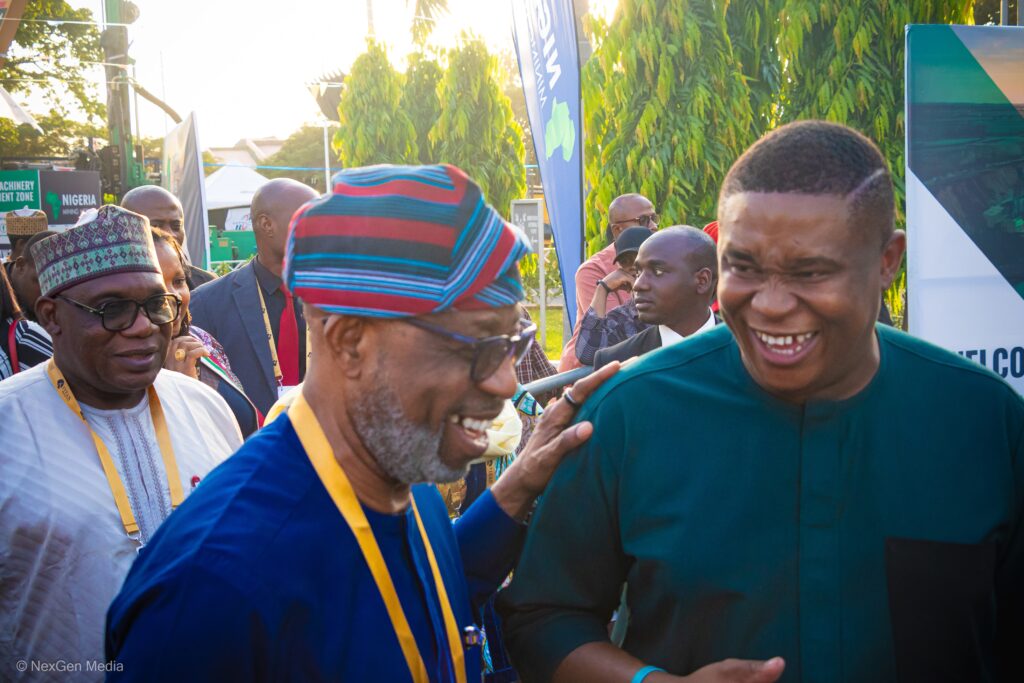
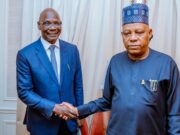
*Dr Dele Alake (middle), Engr Obadiah Nkom, DG of NMCO and Mr Samukelo Madlabane
MINERS: You have mentioned some of the crude methods countries still use. What other challenges do you think the mining sectors in Africa have that they can actually address to shore up their business?
Madlabane: That’s a fantastic question. To me, deciding what African mining needs to tackle first is like figuring out which knot to untie on a really tangled rope. They’re all connected, but I believe the single biggest, most foundational issue that needs immediate attention is Governance and Policy Instability.
Why Stability Trumps All
You see, mining is a game of decades, not quarters. A major project costs billions and takes 10 to 15 years just to go from discovery to production. If an investor knows a government might arbitrarily change the tax laws, renege on a contract, or even seize an asset—what we call resource nationalism—it doesn’t matter how rich the geology is; the money won’t flow.
We have to create that fundamental layer of trust. This means governments must commit to stable, predictable mining codes and honor signed contracts. Simultaneously, they have to stamp out corruption in licensing and revenue collection. That’s why standards like the Extractive Industries Transparency Initiative (EITI) are so important; they force public disclosure, which builds credibility. If we don’t fix stability, any investment we attract will be high-risk, expensive capital.
The Next Priority: Infrastructure and Energy
Once we get stability right, the next knot to untie is the “bring-your-own infrastructure” reality. It’s the primary reason African mines aren’t globally competitive.
Imagine having to build your own road, railway, and diesel power plant just to dig a hole! That’s what many mining companies face. This drives costs through the roof and, critically, it prevents us from moving up the value chain. We simply can’t do beneficiation—that is, processing minerals locally to get more “bang for our buck”—if we don’t have affordable, reliable power.
The answer here is integration. Projects like the Lobito Corridor are crucial because they link mining wealth with regional infrastructure development. Furthermore, we must aggressively push renewable energy (solar and wind) near mine sites. It’s cleaner, cheaper in the long run, and provides the stable supply necessary for processing plants.
The Long-Term Focus: Value and Modernization
Finally, looking ahead, we need a two-pronged focus on getting more value out of what we ship and getting smarter about how we dig.
The first thing we should focus on is value addition: We can’t keep shipping out “raw dirt.” We missed out on past commodity super cycles because we didn’t process enough in-country. Governments need to be intentional about creating incentives for mineral processing and moving away from exporting raw material.
Then secondly, we need to focus on Modernization: We’re competing against automated, high-tech operations in places like Australia. We have to embrace digitalization (AI, automation) to lower operating costs and improve safety. This creates a need for targeted skills development to train a new, high-tech workforce, and it requires strict adherence to ESG standards to maintain our social license to operate.
In short, fix the governance first, and the infrastructure and capital will follow.
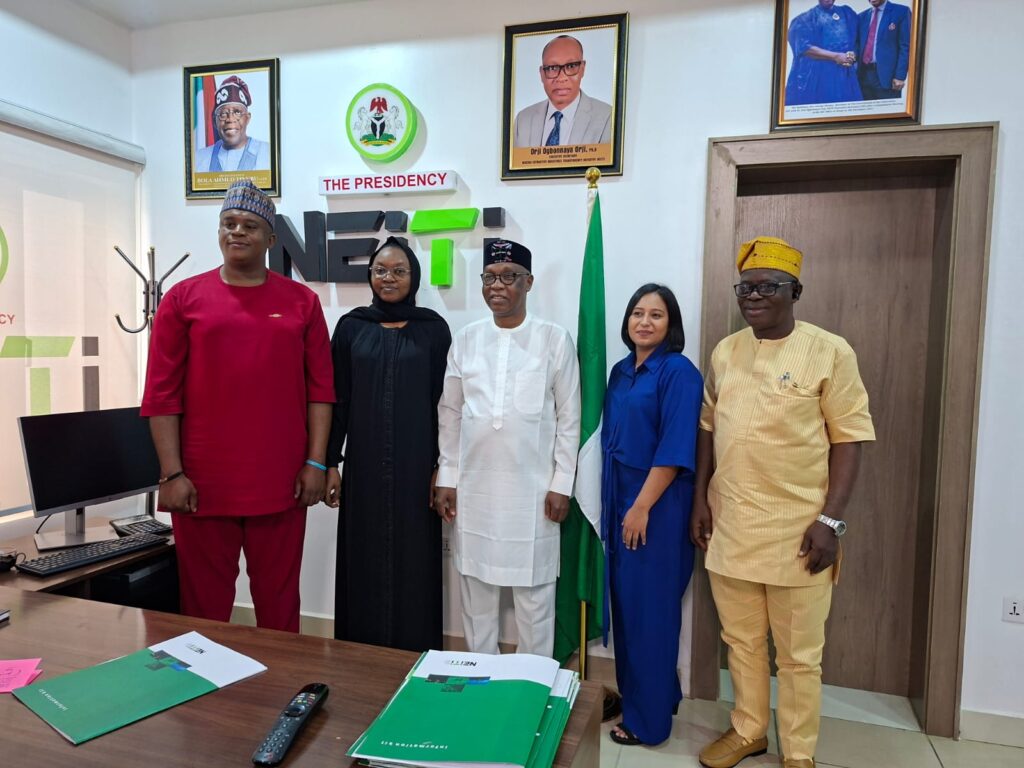
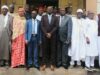
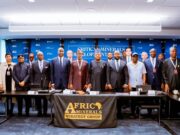
*L – R: Mr Samukelo Madlabane; Administrative Secretary, MAN, Hajia Bilkis Audu; Executive Secretary of NEITI, Dr Ogbonnaya Orji; Ms Nazeerah Solomon, Marketing Specialist – Mining at Vuka Group and Chief Dele Ayanleke
MINERS: Now, Mining Week will be celebrating a decade. What has made it very outstanding?
Madlabane: When we started Mining Week, we had like, some 200 attendees, whereas 10 years later, this year, we’re looking at 3,500 attendees at least and we’ve had some successes in as far as a number of very uncomfortable conversations being heard at Mining Week between government and the industry. And for me, that is a very big plus in the sense that, if you are able as a miner to sit with the minister across the room to say to the minister or whoever, like a senior government official, these are the challenges that we face, this is what we would want to do or see. This is how we want the industry to move and once you’re able to engage at that level, that’s the sort of dialogue that moves the needle. That’s the one.
And then we also had the likes of Mining Cadastre launching eMC+ at Mining Week, right? I can’t remember the exact name of the data that was launched at Mining Week last year, but it’s those sort of things when the industry also knows that we can’t just go to Mining Week and not anticipate some big announcement. We have to work towards an announcement so that when we get to Mining Week, we’ve got something to present to the market, and it’s also one way.
MINERS : So, you mentioned that there are some new features at Mining Week. Can you shed more light on that?
Madlabane: Sure. So, we’ve always had the Women in Extractive Industries, which is all about inclusion of women within the mining industry just so that there’s gender parity and the idea with this particular forum have always been that it’s not just women speaking to women, but it’s women speaking with the industry. Because there’s no point in women speaking to themselves. It’s almost like speaking in an echo chamber. Then, there’s always been the CEO Roundtable, which is the industry at that level, CEO level speaking with the Minister. Where they will speak to challenges that they’re facing, frustrations that they have, opportunities that they want to realise, and then say to the Minister, help us do 1, 2, 3, and this is what we need. The Minister also provides direct feedback to the CEOs, guiding them to redirect their energy where necessary. This is a closed, invitation-only forum..
So, the idea with the Deal Room, we are doing that in conjunction with the Kaduna Mining Development Company, KMDC, and what we intend to do with that particular side event is that we will have projects being pitched to an audience of investors with the view that you want to start having conversations happening around how to direct funding to the mining sector.
So, it’s not just one where we want to be a talk shop. We actually want to realise investment into actual projects and then, we will also have one-on-one sort of like meetings happening in that room, with the view that you want to have promotion of these projects leading up to Nigeria Mining Week, just like whetting the industry’s appetite. And then, when you are at Nigeria Mining Week, that’s when the projects will then be presented to you.
So, at this point in time, we are in the process of identifying the various projects that we want to have and then, we will then put together an investor pack or a project pack, which we will then market to the investor sort of like community, with the view that come Nigeria Mining Week, then these projects will be presented. And we will then facilitate one-on-one meetings between investors as well as the project owners.
The Quarry Forum is a distinct initiative. Our intention is to essentially bring quarrying fully into the mining fold. Quarrying is a very technical field. While we’ve included it in past Mining Week events, we now want to be more intentional by holding specialized technical discussions that also have a strong investment focus.
The goal is to ensure that Mining Week acts as a true umbrella body, comprehensively covering the various sectors within the broader extractive industries in all their shapes and forms.
Similarly, the new Steel Forum aims to fill a gap: there’s no dedicated steel conference in West Africa. While the Ministry of Steel recently hosted a government-led policy summit, our forum is an investment-focused, commercial event. We want to engage the entire West African steel industry and give them a permanent home at Nigeria Mining Week.
We’ve also created the Power to Mines Forum. Since mining can’t thrive without electricity, this event focuses on solving the power deficit by channeling investment directly into the energy industry. This is essential for unlocking Nigeria’s full mining potential.
Finally, we have focused events like the Nigeria West Africa Gold Day and the Gemstone Forum. We want to highlight the significant potential of these key minerals, ensuring that every segment of the mining community finds a home at the event.
Crucially, this event creates powerful linkages. An investor might not want to fund a mine, but they may have an appetite for power or supporting infrastructure. This dynamic changes the conversation, connecting various investment interests across the board.
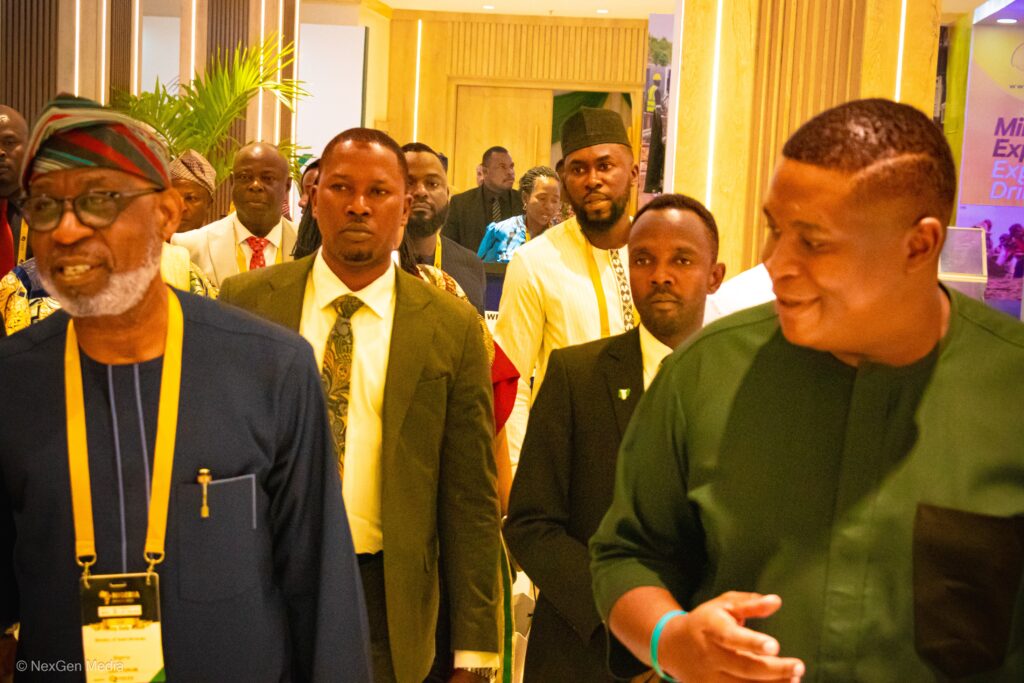
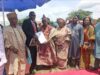
* l-r: Minister of Solid Minerals Development, Dr Dele Alake, with Event Director for Vuka Group, Mr Samukelo Madlabane and others
MINERS: So, we’re expecting a lot of businesses. So what business do you think would stand out from the list you mentioned?
Madlabane: We need to leapfrog the old ‘pit-to-port’ model. Investment will increasingly flow not just into digging up the ore, but into the verticals that process it—refineries, smelters, and manufacturing inputs. This forward-thinking approach, asking ‘Who’s the off-taker?’ and retaining value domestically, is the new standard. The gold market, which is already seeing strong investor interest, is a prime example of where this local processing focus will yield major returns.
MINERS: You mentioned some topics. What other topics are we going to expect from the Mining week?
Madlabane: That’s a comprehensive look at the upcoming agenda! Here is a clearer, more structured way to present those ideas for your interview:
We’ve designed this year’s Nigeria Mining Week agenda to be much more investment-focused and forward-looking. Last year, we focused heavily on policy improvement; this year, we’re taking those lessons and channeling them toward capital and global relevance.
The primary goal is to make Nigerian mining globally relevant through sustainable investment and scaling. Our key topics reflect this, covering everything from ESG Compliance and Reporting Standards to building investor-ready business models. We’re focusing heavily on Financing Mechanisms for small and mid-tier miners and discussing market access for capital. We also have critical discussions on Local Value Addition through mineral processing and essential supporting sectors like the Power-To-Mines Forum. It’s fundamentally all about investment. We recognized that having only one opportunity a year to discuss progress isn’t enough. We want to build a framework for continuous market conversation.
To support this year-round focus, we’ve launched new digital services on our hub sites. These platforms, which also host our other events like the Angola Mining Conference, now offer a Supplier Directory where companies can list their services. I’m especially excited that we’re launching an Investment Project Portal very soon. This will allow project owners who are actively seeking funding to upload their detailed investment packs, which we can then market to our global investor community. We’re doing this to directly support the industry by making it easier to secure capital.
MINERS: Okay, so it seems like you’re focused on big companies. What about the artisanal miners? You know in Africa, Artisanal Mining (ASM) is everywhere. So, how are you going to mainstream them in the mining week activities?
Madlabane: Nigeria Mining Week is organized by the Miners Association of Nigeria (MAN). They are the ones essentially running the show, and the majority of their members are ASM miners.
It would be unproductive to build an entire agenda around major international companies when we don’t have many of them currently operating in Nigeria. Our agenda needs to directly address the needs of our actual audience, which is overwhelmingly the ASM community.
MINERS: So what kind of businesses should we expect to see during the conference`s exhibition during the conference?
Madlabane: So essentially, what you would typically see is you have companies across the entire mining value chain where, for instance, you would look at companies that would typically be in mining services, you also look at advisory firms. You look at your finances, your investors. You would look at companies that are equipment suppliers. You’d look at supply chain companies. You’d look at companies in transport, logistics, mining operators. You’d look at companies within renewables, the energy space. You’d look at facility management companies. You’d look at companies that are in health and safety, Geological Services, exploration equipment and suppliers, waste and water, ICT. We spoke about laboratories earlier on, mapping, GPS, digital services, EPCs, commodity trading, ESGs. The entire value chain, legal, insurance, you’d look at finance.
MINERS : You’re organising this conference with partners. Why do you need them and how have you been able to organise smooth operations with different partners over the years?
Madlabane: Every partner has a role to play, Our expertise is putting together world class events. Our expertise is in marketing and sales because we’ve got a massive database, a Pan- African database, not just in mining, but across the five verticals that I mentioned to you earlier. And then at the same time, we’ve got publications such as Mining Elites, we’ve got Mining Review Africa. We’ve got ESI, which is a power publication, We’ve got the hub sites, so we’ve got access to an engaged mining audience, not just mining, but across the vertical that we spoke about earlier. PwC is an advisory firm that is respected across the world. So, PwC`s role is on the content front. They are content partner. PwC is very instrumental in helping the partners put together the content.
The Ministry of Solid Minerals is the host ministry, and as the host ministry, they essentially give the event political credibility to say to the market, you know, the government is behind this event, and then you’ve got the Miners Association of Nigeria, who are the organisers of the event. They essentially have what we in my industry call the buyers. So buyers are your primary audience who come into the show. They are the audience that our suppliers, that we bring, want to come and see, because they are the ones that will buy the solutions to use in their mining sites. So every partner has a role to play, and what you typically see is that
shows that have like one sort of industry body organising them tend not to succeed, primarily because they don’t necessarily have the right support or the right mix of industry stakeholders who would then push that particular show at conference to market? So we found a very good flow for Nigeria Mining week in that every partner stakeholder has a role to play.
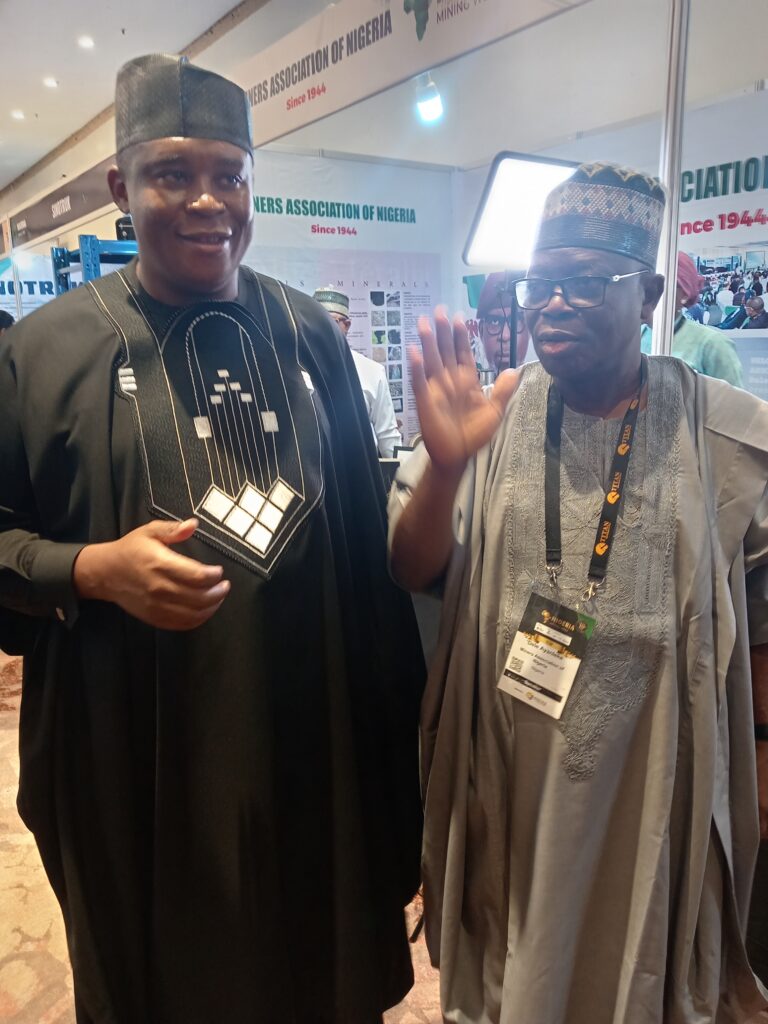
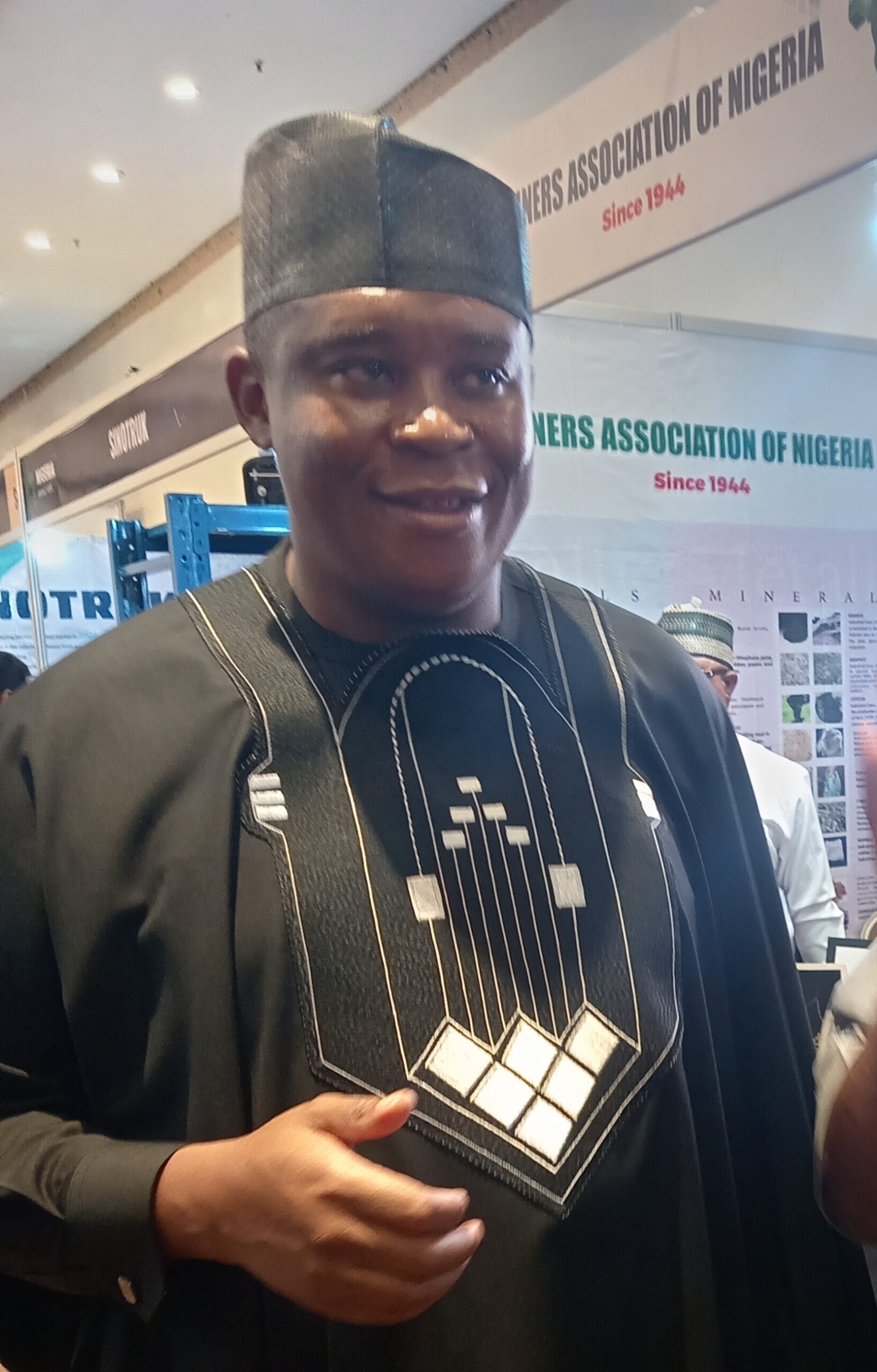
*Samukelo Madlabane with MAN President, Dele Ayanleke
MINERS: So, what would the participant get at the end of the week?
Madlabane: What we essentially want to achieve at Nigeria mining week is primarily, we want to ensure that the industry is able to attract investment. That is like our goal number one. We want to unlock opportunities within the sector. I mean, if you look at topics such as financing mechanisms for small and medium miners, that’s a topic that is very important, because it speaks to the ASM miners that we spoke about earlier on. They need access to capital, and then you also look at access to technology. We’ve got some of the best suppliers within the mining sector, from a technology perspective, exhibiting at our show. How do we then ensure that they partner up with mine operators so that they get access to this technology and the best thing about attending shows is that it also gives you the opportunity to touch fields, play around with technology. What I would also want to do in the future, perhaps not on this particular edition, is we want to start having live demonstrations of technology, and then, essentially, when you attend something like mining week, you also get access to insights that aren’t readily available just anywhere. You can’t even Google them. It’s like you have to be in the room for you to get access to that sort of information. So that essentially, some of the things that an attendee can expect to come away with, it’s also like one where you come to learn best practice, right?
Our aim is to have markets that have succeeded in certain respects. So we want to have best practice being taught.
And then it’s also a great platform for state governments to also showcase their own mineral resources. To say, this is what we have. Come and invest in our state. And just going back to gaining insights. I mean, you think of a topic such as, ESG compliance and reporting standards for Nigerian mines. That topic is important in as far as essentially just getting the mining industry in Nigeria to come to understand what is world class from an ESG compliance perspective. So, we want to essentially elevate mining within the Nigerian ecosystem.
MINERS: Kindly shed light on the different categories of sponsorship for the mining week
Madlabane: We have got our diamond class sponsor for two title minerals, there’s a chief anchor. They’re the anchor sponsor for the show, right? And as you also know, Titan has been very instrumental in development of the sector in Nigeria, where they’ve invested quite a lot of money within the mining space in Nigeria, and in turn, they also then invest in Nigeria Mining Week as a vehicle to drive the growth of the sector. So the tiers are based on the investment levels within the Nigeria mining week. The different investment tiers also result in different sponsorship benefits, where, based on your sponsorship, you get certain benefits because essentially,
think of it as a marketplace.
MINERS:How do you partner with the media in organising the event.
Madlabane: So for instance, we’ve got Mining Review Africa, which is our premier media partner, and we’ve traditionally had Rockpost,
who’s been our premier local media partner for a number of years, and we’ve gone into
a relationship with you, TheMiners as well.
It’s always one way we value the relationship that we have with the media, because without the media, then we don’t have a show. And we essentially want to make sure that we continuously, manage that relationship quite carefully. So what we’ve done traditionally is that our communication with the media has always come through the press office of the ministry and the ministry has always been responsible for that particular relationship.