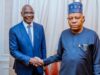


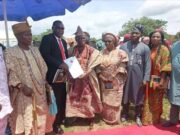
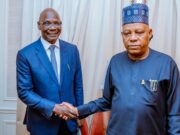



The checks were presented at the Koulouba presidential palace during a ceremony presided over by the head of state, General Assimi Goita, in the presence of the prime minister, members of the government, and officials from the National Transitional Council.
The distributed funds come from the Local Mining Development Fund, a mechanism established by Malian mining legislation to redirect a portion of the revenue generated from natural resource exploitation to local authorities.
This mechanism aims to finance basic infrastructure, social programs, and economic development projects in areas directly or indirectly affected by mining activity.
According to the authorities, the total amount allocated in this phase exceeds 18.4 billion CFA francs. The resources are distributed among local authorities according to a redistribution mechanism defined by mining regulations.
Half of the allocation is earmarked for municipalities located in mining areas, while a portion is allocated to other local authorities in the same areas. An equalisation mechanism also extends the benefits to all regions of the country.
The Local Mining Development Fund is financed by several sources stipulated by law. A portion of mining royalties paid to the state is allocated to it, as is a contribution calculated on the turnover of
mining companies operating within the national territory.
This mechanism is part of a broader strategy aimed at strengthening the impact of the extractive sector on the local economy and territorial development.
Mali is among the leading gold producers in West Africa, and mining is a cornerstone of its economy. The sector represents a significant share of national exports and contributes substantially to state tax revenues. In recent years, the authorities have undertaken several reforms aimed at increasing the sector’s economic benefits, notably through the adoption of a new mining code that strengthens state participation and local content.
Alongside its historical gold mining activities, the country is also developing new projects in strategic minerals, particularly lithium.
Several industrial projects have been launched in this area to diversify extractive resources and meet the growing global demand for metals needed for the energy transition. The redistribution of mineral resources to local communities is one of the key aspects of the current economic policy aimed at improving the extractive sector’s impact on local development.
Malian authorities state that these funds are intended to contribute to the financing of public infrastructure, health and education facilities, and water and energy access projects in the various beneficiary municipalities.
In a country with more than eight hundred municipalities, local authorities play a central role in implementing territorial development policies.
The resources from the Mining Fund are thus intended to strengthen local investment capacity and support projects likely to improve living conditions for populations in the affected areas.
Advertisements