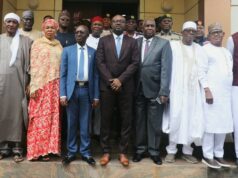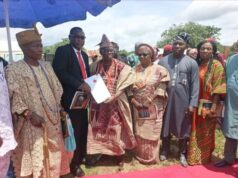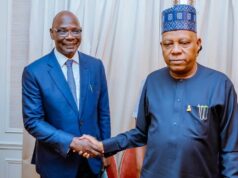


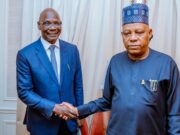

*Photo: Minister of Solid Minerals Development, Dr Dele Alake*
The rampant issue of illegal mining in Nigeria has transcended a simple economic crime to become a critical national security threat. Endemic across various states rich in solid minerals like gold, lithium, and tantalite, particularly in the North-West and North-Central regions, this illicit activity starves the Federal Government of crucial revenue, severely pollutes the environment, and, most alarmingly, provides a potent financial lifeline to bandit and terrorist groups. The sheer scale of the problem is highlighted by estimates suggesting Nigeria loses billions of dollars annually to illegal mining and mineral smuggling.

A dangerous nexus exists between illegal mining operations and the rise of organized violence in Nigeria. For many bandit and terrorist groups, the proceeds from illegally mined solid minerals, especially gold, have become a significant and consistent source of funding, replacing or complementing traditional methods like cattle rustling, extortion, and kidnapping for ransom.
Funding the War Chest: The illicit mineral trade generates substantial cash flows, which are quickly used by criminal elements to purchase sophisticated weapons and ammunition, recruit new members, and establish elaborate logistical networks. This continuous flow of funds enables them to sustain and escalate their violent activities.
Territorial Control: Bandit groups often seize control of lucrative mining sites, particularly in remote areas with minimal government presence. They may either engage in the mining themselves or, more commonly, tax and extort the local artisanal and illegal miners operating under their jurisdiction in exchange for “protection.”
Foreign Complicity: Reports have pointed to the involvement of foreign actors and networks who facilitate the trafficking of illegally mined gold and other minerals across Nigeria’s porous borders. This external demand drives the criminal market and provides the foreign exchange needed by terrorist groups to purchase arms internationally, deepening the link between illegal mining and global illicit financial flows.

The Zamfara Lead Poisoning Crisis
Beyond financing criminality, illegal mining practices have devastating and irreversible environmental and public health consequences. The crisis in Zamfara State stands as the most tragic and severe example.
The Cause: In their unregulated search for gold, artisanal miners in Zamfara were often processing gold-bearing ore that contained extremely high concentrations of lead carbonates. The highly toxic ore was crushed into fine powder using mortars and pestles, or even flour mills, often within residential compounds. This process released a pervasive, highly concentrated cloud of lead dust.
The Tragedy: The dust contaminated the soil, homes, and water sources. Young children, who are prone to hand-to-mouth activity and absorb lead more readily, were the most vulnerable. The crisis resulted in the deaths of over 400 children (predominantly under the age of five) in communities like Bagega and Dareta, with thousands more poisoned and suffering from severe, permanent neurological damage.
Health and Environmental Impact:
Neurological Damage: Lead exposure in children causes a loss of IQ, behavioral disorders, growth problems, and at high levels, convulsions, coma, and death.
Soil and Water Contamination: The uncontrolled dumping of toxic tailings and processing waste contaminates vast tracts of arable land, making it unusable for farming, and pollutes surface and ground water bodies with heavy metals like lead, mercury, and arsenic, threatening food security and safe drinking water across the region.

Habitat Destruction: Illegal operations often involve haphazard deforestation and digging, leading to soil erosion, sinkholes, and the destruction of natural habitats and biodiversity.
Practical Solutions for the Federal Ministry of Solid Minerals
The Federal Ministry of Solid Minerals Development holds a key position in protecting Nigeria’s mineral wealth. Combating this complex issue requires a decisive, multi-faceted strategy focused on Enforcement, Formalization, and Community Engagement.
1. Enhanced Enforcement and Security ️
Empower the Mining Marshals: The Ministry must significantly boost the Mining Marshals (a specialized unit of the Nigeria Security and Civil Defence Corps) in terms of numbers, advanced logistics (drones, surveillance equipment), and specialized training.
Technology-Driven Surveillance: Implement a satellite surveillance system and drone technology to monitor mining sites in real-time, especially in remote areas and forests.
Inter-Agency Collaboration: Formalize and strengthen the collaboration framework between the Ministry, the Military, Police, Customs, and the EFCC to secure sites and track and dismantle the illicit financial networks.
Strict Legal Consequences: Ensure swift and severe prosecution of arrested illegal miners, including foreign nationals and their local sponsors, by enacting stricter penalties and enforcing the “Use it or Lose it” principle for licensed operators.
2. Sector Formalization and Regulation
Formalize Artisanal Mining: Create a clear, expedited, and affordable path for Artisanal and Small-Scale Miners (ASM) to form cooperatives, obtain legal licenses, and operate under regulatory oversight. This removes the incentive for them to align with criminal elements.
Establish Safe Processing Hubs: Crucially, set up government-regulated and technically safe mineral processing hubs (especially for gold). These centers must incorporate safe technologies to separate the metal from the ore without exposing the community to toxic elements like lead, ensuring the cessation of dangerous residential processing.
Establish Buying Centers: Set up government-regulated mineral buying centers in key mining states. These centers would serve as the only legal point of sale, ensuring transparency in transactions, royalty collection, and blocking the supply chain to criminal smugglers.
3. Community Engagement and Health Intervention
Remediation and Health Funding: The Federal Government must ensure adequate and sustained funding for the continuous environmental remediation of all highly contaminated villages and compounds, drawing on the successful (but expensive) cleanup model implemented in Zamfara after the 2010 crisis.
Health Surveillance: Establish a robust public health surveillance system specifically for mining communities to regularly test for blood lead levels (BLLs) and other heavy metal poisoning, allowing for early detection and chelation therapy.
Community Development Agreements (CDAs): Strictly enforce the legal requirement for licensed mining companies to sign and implement meaningful CDAs with host communities. This ensures tangible benefits flow directly to the locals, reducing community support for illegal activities.
By adopting this integrated approach, the Federal Ministry of Solid Minerals can address both the security and devastating human rights dimensions of illegal mining, safeguarding Nigeria’s wealth and its citizens.