




By Martha Agas
Some experts have welcomed the U.S. and Nigeria agreement on solid minerals development, saying it will help reposition the sector and increase its contribution to Nigeria’s Gross Domestic Product (GDP).
The experts told the News Agency of Nigeria (NAN) on Sunday in Abuja that the move would stimulate economic growth and reinforce the solid minerals sector as a viable alternative to oil.
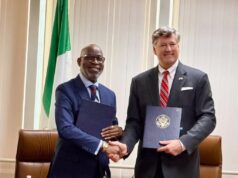
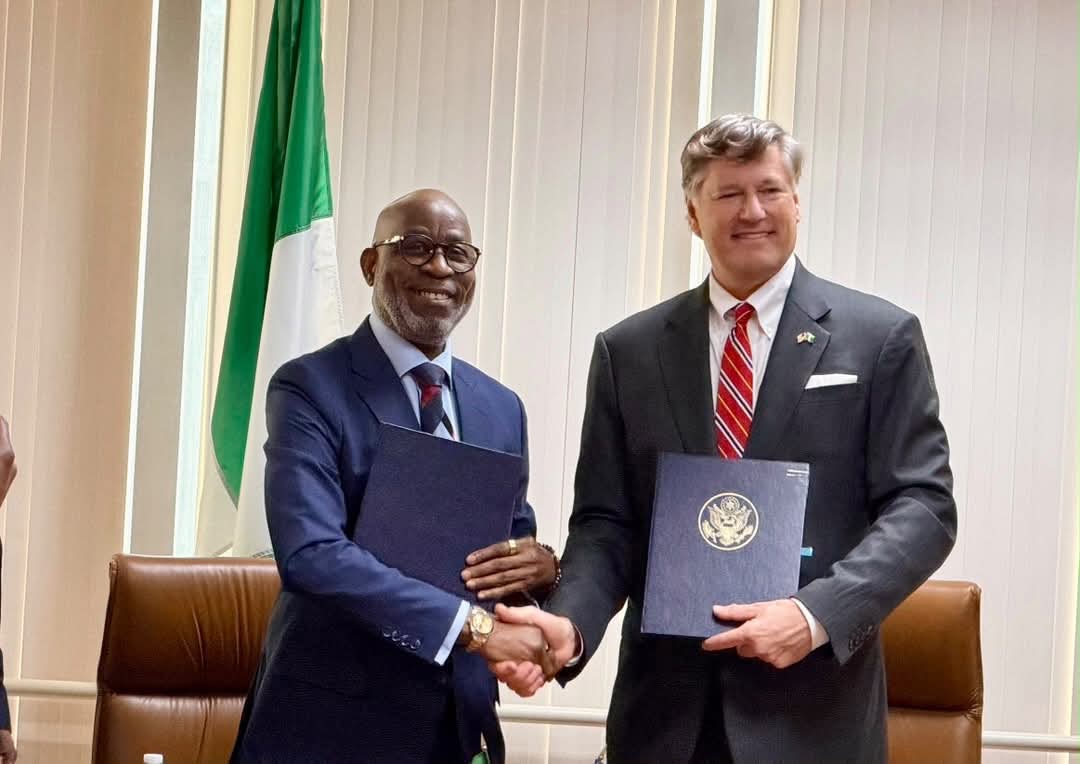
The Minister of Solid Minerals Development, Dele Alake and U.S. Deputy Secretary of State, Christopher Landau, recently signed a key framework agreement to spur American investment in Nigeria’s estimated 700 billion dollar mineral sector.
The agreement, signed on the sidelines of the 81st UN General Assembly (UNGA81), is also aimed at strengthening economic cooperation between both countries.
It is expected to use the Nigeria and U.S. government relationship as a foundation to boost Nigeria’s value-addition-driven value chain.
An economic expert, Dr Abdussalam Kani, said the agreement would assist in reducing poverty in areas or states where mineral resources are available in Nigeria by providing either direct or in-direct employment.
Kani, the Principal Consultant of NexGen Consult Solutions Ltd., said if the projected employment was achieved, it would help improve security, especially in the northern region as well as boost Nigeria’s sources of revenue.
He, however, cautioned the government to be transparent and accountable in implementing the agreement’s provisions and make the content public.
“There is a need to carefully assess the Memorandum of Understanding (MoU) to ensure compliance and to ensure conformity with existing laws in Nigeria,” he said.
He emphasised the need to ensure that communities likely to be affected by the exploration of mineral resources, particularly in northern Nigeria, were incorporated into a component of the agreement.
“There should be a particular component detailing the corporate social responsibility, detailing the communities that are going to be affected, and the measures to be taken in the form of compensation,” he said.
An investment expert, Mr Fife Banks, described the deal as potentially significant, saying its importance should not be measured by the signing itself but by what Nigeria ultimately achieved through the framework.
Banks, the Chief Executive Officer, Brave Investment Global (BIG), urged Nigeria to leverage growing global demand for critical minerals to secure greater domestic value from the partnership.
He said the framework could open opportunities for private capital, but should ultimately deliver processing, technology transfer, jobs and Nigerian enterprise participation.
According to him, Nigeria’s objective, should be broader including attracting capital, while retaining substantially more economic value through domestic processing and beneficiation, technology transfer, skills development and quality employment.
Dr Abdullahi Jabi, Chairman of the North Central Zone of the Campaign for Democracy, Human Rights Advocacy Civil Society of Nigeria, said the deal would bring fortune and shared prosperity to Nigerians.
Jabi said the deal would facilitate increased trade in Nigeria and promote the development and marketing of products derived from the raw materials available in various states of the federation, particularly in Northern Nigeria.
He expressed confidence that the development would create jobs across the formal and informal sectors, facilitate skills transfer and promote the adoption of modern technology and equipment.
“It is going to be win-win situation for the Federal Government because the oil market now is diminishing.
“They should be looking for alternative sources of revenue which will have potential like the mining sector,” he said.
He said the development would give investors assurance about the security of their investments, promote compliance with ethical practices in the sector and create job opportunities.
Bala Wunti, Chief Executive Officer of the World Energy Council Nigeria, said Nigeria needed reliable geological data, credible buyers and other conditions to attract private capital to its critical minerals sector.
Wunti made the remarks at the 2026 Concordia Annual Summit in New York during a panel titled, “Rare Currency: Critical Minerals in a Shifting Global Economy.”
He said Africa must move beyond serving as a source of raw materials and position itself as a competitive processing and manufacturing partner in the emerging global critical minerals economy.