




…Grant programme closes application window, enters technical assessment ahead of Q4 2026 award of beneficiaries
By Yunus Olawale

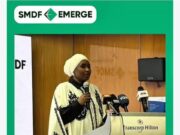
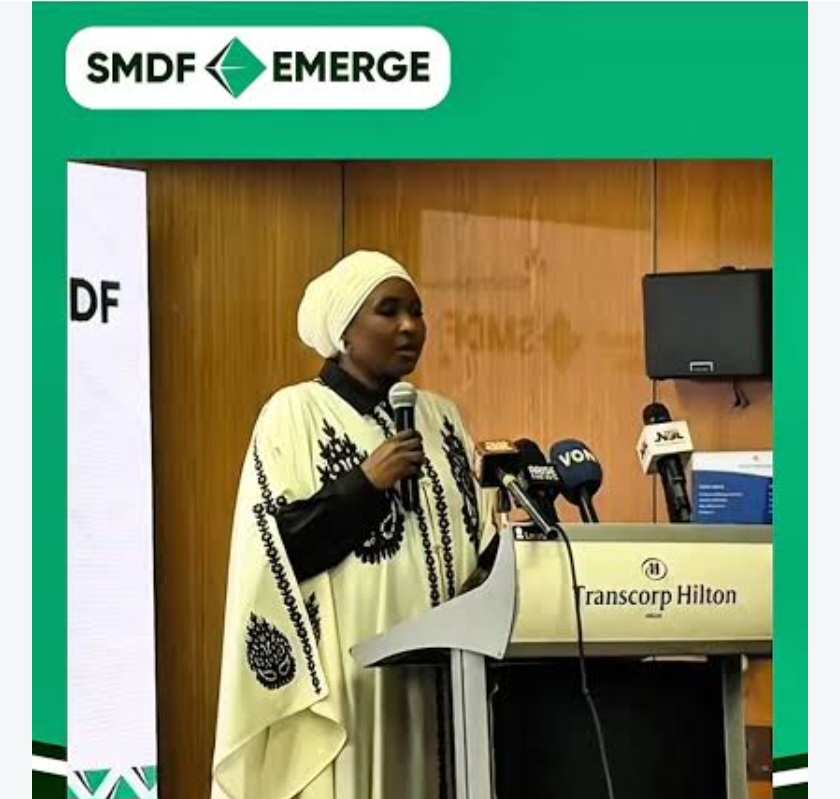
*Executive Secretary/CEO of the Solid Minerals Development Fund, Hajia Fatima Umaru-Shinkafi.
The Solid Minerals Development Fund (SMDF), under the Federal Ministry of Solid Minerals Development, has commenced the next phase of its Early-Stage Mineral Exploration and Research Grant Endowment (EMERGE) programme, following the closure of its application window on September 7, 2026.

The initiative, implemented by SMDF in partnership with PricewaterhouseCoopers (PwC), is designed to address one of the longstanding constraints to the development of Nigeria’s solid minerals sector — inadequate capital for early-stage exploration and the limited availability of reliable geological data.
With applications now closed, the programme has entered an independent technical assessment phase, with final beneficiaries and funding awards expected to be announced in the fourth quarter of 2026.
Launched on June 10, 2026, EMERGE is positioned as a catalytic financing mechanism intended to move promising mineral projects beyond the exploration stage and towards investment readiness, while strengthening Nigeria’s geological knowledge base and promoting domestic value addition. The programme is also expected to contribute to unlocking what the programme impact report describes as an estimated $750 billion in untapped mineral potential in Nigeria.

Three-pronged Funding Architecture
EMERGE operates through three complementary funding streams — Exploration, Critical Minerals, and Research & Development. The Exploration stream supports grassroots and early-stage mineral exploration, including geological mapping, geochemical and geophysical surveys, drilling, sampling and assaying required to advance projects towards the establishment of maiden mineral resources.
The Critical Minerals stream targets exploration and development around strategic minerals such as lithium, tin, tantalum, nickel, cobalt and rare earth elements, while also supporting innovative processing technologies capable of increasing domestic value addition. The Research & Development stream is designed for universities, research institutions and Master’s and PhD researchers undertaking applied geoscience and mineral-processing research.
This structure gives the programme a broader mandate than conventional mining finance by connecting commercial exploration with academic research and the development of technical capacity.
More Than 500 Mineral Locations Targeted Nationwide
The EMERGE impact report indicates that the programme has been designed with nationwide coverage, mapping projects across more than 500 mineral locations in Nigeria’s six geopolitical zones.
The geographical distribution is expected to reflect the country’s mineral endowment, with examples including lithium-related opportunities in the North-Central, gold exploration across parts of the Northwest and Southwest, and bitumen and industrial minerals in the southern parts of the country.
The programme is designed around Nigeria’s identified 44 viable strategic minerals, potentially creating a broad geographic and commodity footprint once beneficiaries are selected.
Smes, Universities And Young Researchers In Beneficiary Pipeline
The programme’s beneficiary structure cuts across corporate explorers, academic institutions and emerging researchers. Small and medium-sized exploration companies and local mining firms constitute a major target group, particularly those requiring support to de-risk early-stage geological work.
Universities and public research institutions focusing on geoscience, metallurgy and related disciplines are also covered, alongside dedicated opportunities for Master’s and PhD researchers.
The inclusion of postgraduate researchers represents an important human-capital component of the programme, with the potential to strengthen youth participation and high-skilled employment within Nigeria’s mining and scientific ecosystem.
Up To 70% Funding For Exploration And Critical Minerals
Under the programme’s funding structure, eligible projects in the Exploration and Critical Minerals streams can receive grants covering up to 70 per cent of eligible project costs, with applicants required to provide at least 30 per cent co-funding.
The funding is intended for activities directly connected with early-stage exploration and mineral development, including geological, geophysical and geochemical surveys, drilling programmes, sampling, laboratory analysis, assays, technical consultancy, geological modelling and data-management systems. For research awards, eligible expenditure includes fieldwork, laboratory testing, consumables, publication and related research costs.
EMERGE does not, however, operate as a general-purpose operating subsidy. Mine development and production activities, debt repayment and refinancing, investment losses, depreciation, recoverable VAT, employee bonuses, donations, membership dues, entertainment and other non-essential expenditure are excluded.
Closing Nigeria’s Geological Data Gap
One of the programme’s central objectives is to tackle the geological information deficit that has historically made it difficult for mineral occurrences to become bankable investment opportunities. The programme has established a digitised portal framework for onboarding grassroots exploration data and is leveraging international partnerships, including relationships involving Turkey and South Africa, to modernise data ingestion.
The emphasis on reliable geological data is significant because exploration risk remains one of the principal barriers to attracting private capital into early-stage mineral projects. By supporting mapping, surveys, drilling, assays and technical analysis, EMERGE seeks to create the evidence base required by investors and financial institutions to make informed decisions.
From Raw Mineral Exports To Value Addition
Another major pillar of EMERGE is the government’s drive to reduce dependence on the export of unprocessed mineral commodities. The programme’s Critical Minerals stream combines exploration support with funding for innovative processing technologies, with the stated objective of encouraging minerals to be processed further within Nigeria. This strategy to ongoing downstream industrial initiatives, including a referenced 1.5 million metric tonnes per annum alumina refinery project.
The broader policy direction is to move Nigeria beyond the extraction and export of raw materials towards refining, processing, manufacturing and other activities that retain a greater share of mineral value within the domestic economy.
Bridging Academia And Industry
EMERGE also seeks to close the traditional gap between academic research and commercial mining. Through its Research & Development stream, applied geoscience and mineral-processing research can be linked more closely to practical challenges within the mining and minerals-processing industries.
The programme’s impact report states that the research component is structured around an independent merit-based review, while successful beneficiaries are integrated into the EMERGE Accelerator, which provides investor-readiness mentoring.
For postgraduate researchers, the programme requires evidence of enrolment, valid identification, a research proposal, supervisor or referee support and institutional affiliation.
Universities and research institutions are required to demonstrate accreditation, research capacity, institutional affiliation and details of the principal investigator and research team.
EMERGE Accelerator To Support Investment Readiness
Successful awardees under the Exploration and Critical Minerals streams will automatically participate in the EMERGE Accelerator, an intensive programme designed to help projects progress from grant support towards private investment.
The accelerator focuses on four areas: Technical Mastery, Investment Readiness, Business Advisory and Network Access. Participation forms part of the conditions attached to awards under the two streams, meaning beneficiaries will receive more than financial support as they develop their projects.
The model is intended to address the so-called “first-mile” financing gap in mining — the difficult period when significant capital is required to establish geological certainty but commercial investors may still consider the project too risky.
From First-Mile Exploration To Project Development
The SMDF’s approach also seeks to create a financing pathway beyond EMERGE. According to the programme impact report, the grant structure is being matched with later-stage financing avenues, including the AFC-SMDF Project Development Facility, to help projects move from early exploration into subsequent stages of development.
This creates a potential financing continuum in which government-backed early-stage support helps establish geological confidence, while later-stage capital can be mobilised as projects become more commercially mature.
What Happens Next?
With the application window now closed, attention has shifted to the assessment and selection process. PwC, as Programme Administration Partner, is responsible for application processing and initial eligibility screening. Eligible applications are subsequently assessed on their technical merit, geological potential, development impact, strategic alignment, financial adequacy, funding plan, risk profile and execution readiness.
Research applications additionally face assessment based on academic and research excellence, innovation, relevance to critical minerals and potential impact. The final beneficiaries are expected to be announced in Q4 2026, after completion of the independent technical assessment process.
Successful applicants will be published through the SMDF EMERGE platform and national newspapers and will also receive direct notification through their registered email addresses. Grant funds will subsequently be disbursed in accordance with the terms of the relevant grant agreements.
A Potential New Financing Architecture For Mining
The completion of the application phase marks a significant transition for EMERGE — from programme mobilisation and stakeholder applications to project evaluation, award and eventual implementation.
The programme’s projected strategic impact extends beyond individual grant beneficiaries. By financing exploration, supporting critical-mineral processing, strengthening research capacity and developing bankable geological data, EMERGE is intended to establish what its impact report describes as a missing “first rung” in Nigeria’s economic diversification drive.
Nigeria’s mining sector currently contributes less than one per cent to national GDP, according to the impact report, underscoring the scale of the opportunity attached to efforts to unlock the country’s mineral resources.
The critical test, however, will now move from programme design to execution: the quality of projects selected, the transparency and rigour of the assessment process, the effective deployment of grant funds, and the ability of supported projects to convert geological potential into commercially viable operations and domestic value chains.
For Nigeria’s mining industry, the next phase of EMERGE will therefore be closely watched as the country seeks to translate its substantial mineral endowment into investment, jobs, industrial development and greater local value addition.