



By Yunus Olawale
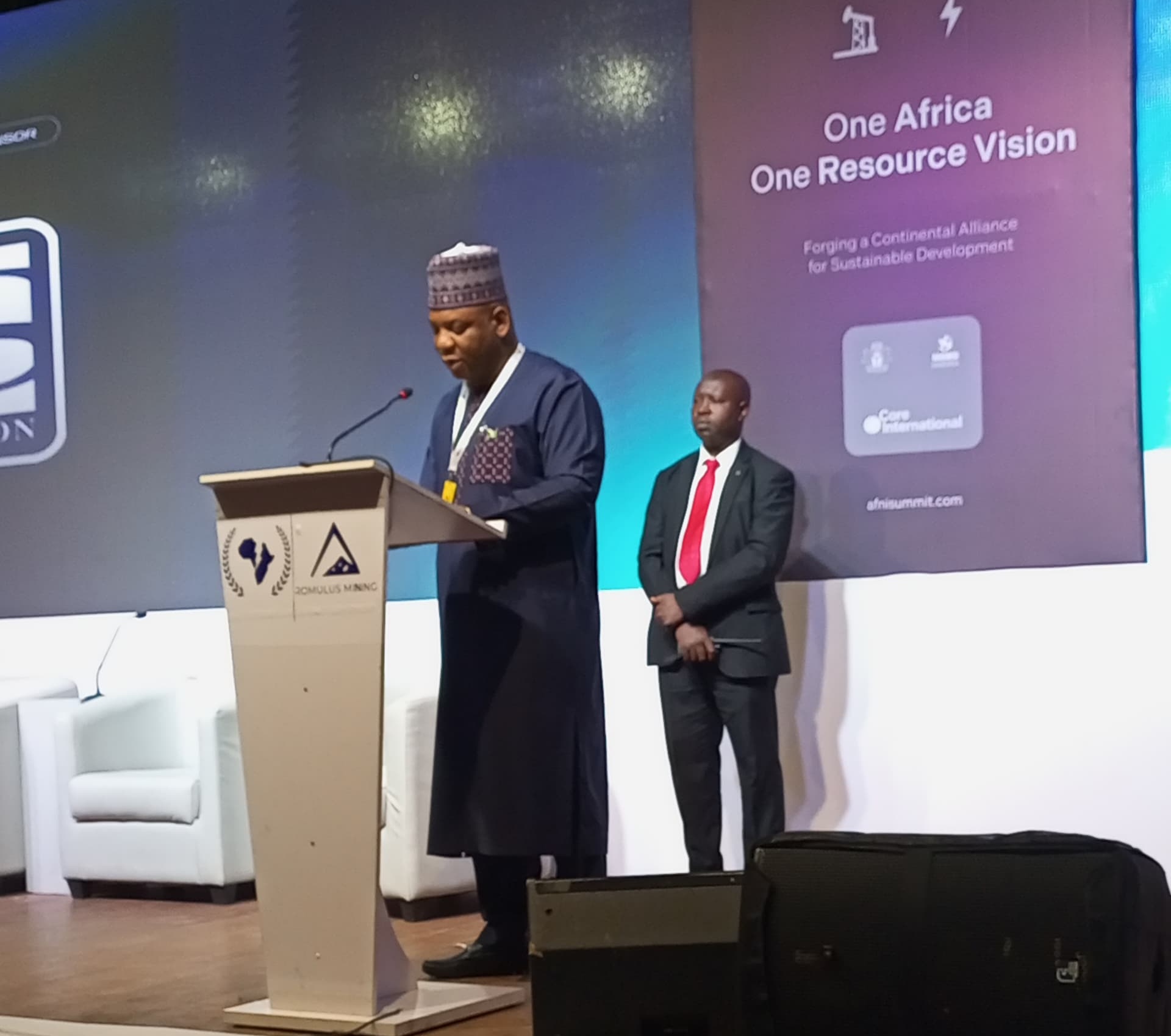
The fifth edition of the African Natural Resources and Energy Investment Summit (AFNIS 2026) witnessed a defining moment for the continent’s industrial aspirations on Wednesday as Nigeria’s Minister of Steel Development, Prince Shuaibu Abubakar Audu, delivered a stirring address that challenged African nations to abandon the centuries-old practice of exporting raw materials and embrace a future of value addition, regional integration, and sustainable economic transformation.
Speaking before a distinguished assembly of ministers, investors, industry leaders, and development partners at the State House Conference Centre in Abuja, the Minister painted a stark picture of the continent’s industrial paradox while unveiling Nigeria’s ambitious blueprint for steel sector revitalisation under President Bola Ahmed Tinubu’s Renewed Hope Administration.
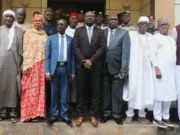
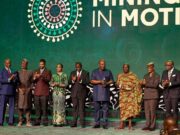
The gathering, which brought together government officials responsible for mining, energy, industry, food economy, and maritime affairs from South Sudan, Uganda, Kenya, Somalia, the Democratic Republic of Congo, Mauritania, and Liberia, alongside the Secretary-General of the African Mineral Strategy Group, Moses Michael Engadu, provided the perfect backdrop for Minister Audu’s impassioned call to action.
He praised the organisers of the summit for creating what he described as a strategic platform that continues to unite governments, investors, development institutions, industry leaders, and stakeholders committed to unlocking Africa’s vast natural resources potential.
The theme of this year’s summit, “One Africa, One Resource Vision,” he declared, is both timely and visionary, reflecting the urgent need for African nations to move beyond the export of raw materials toward industrialisation and sustainable economic growth.
The Minister noted that no country has achieved meaningful industrial development without a robust steel industry, which he described as the backbone of national development worldwide. Steel production, he explained, drives mining and energy consumption while its products support infrastructure development, transportation, construction, defence, agriculture, and technological advancement.
Yet, despite possessing enormous reserves of iron ore and other steel-making raw materials such as limestone, dolomite, clay, bauxite, coal, and various alloy materials, no African country features among the world’s top ten steel producers.
Global crude steel production in 2025 reached approximately 1.85 billion tonnes, with the top ten producers—China, India, the United States, Japan, Russia, South Korea, Turkey, Germany, Brazil, and Iran—accounting for 84 per cent of total output.
This glaring omission of Africa, the Minister stressed, represents both a monumental failure and an unprecedented opportunity.
To provide perspective, Minister Audu presented a summary of major iron ore-endowed African countries and their steel crude production figures for 2025.
South Africa, with estimated iron ore reserves exceeding one billion metric tonnes, produced just 4.5 million metric tonnes of crude steel. Algeria, sitting on over 3.5 billion metric tonnes of reserves primarily in the Gara-Djebilet region, managed only 5.3 million metric tonnes. Egypt, with more than 200 million metric tonnes in the Eastern Desert, produced 10.6 million metric tonnes. Nigeria, possessing over three billion metric tonnes of reserves particularly in the Itakpe and Agbaja regions of Kogi State, produced only between two and 2.5 million metric tonnes using primarily Direct Reduced Iron technology. Guinea, with total reserves exceeding eight billion metric tonnes, reported no significant crude steel production as of 2025. The Minister’s message was unequivocal: the continent’s resource wealth must finally become the engine of its own industrial destiny.
He said the federal government is strongly committed to revitalising Nigeria’s industrial base through strategic reforms, infrastructure development, and investment-driven growth.
The establishment and strengthening of the Ministry of Steel Development, the Minister explained, underscores the importance attached to the sector.
“Today, we are changing the historical narrative of the steel sector, which has primarily been dormant or comatose for the last four and a half decades, primarily when it comes to government-owned steel assets,” he declared.
“The ministry is pursuing strategic initiatives aimed at repositioning Nigeria’s steel industry as a major driver for economic diversification and industrial development.”
Audu outlined several priority areas, including the revitalisation of legacy steel assets such as Ajaokuta Steel Company Limited, the National Iron Ore Mining Company, and the Aluminium Smelter Company of Nigeria; promotion of local value addition and backward integration; attracting both local and foreign direct investment; strengthening mining-to-metals linkages; and building an enabling environment for sustainable steel production.
He then detailed key achievements already recorded under his leadership, including advanced discussions with Chinese partners for the revival of the Ajaokuta Steel Complex. The ministry has completed the procurement process for a technical audit, which is currently ongoing, and conducted a groundbreaking event on 30th January 2025 for the development of five new energy plants within the Ajaokuta Steel Territory, representing a projected investment of over $500 million to meet the gas supply needs of industries in northern Nigeria.
In a significant development for national security, the Minister revealed that the ministry, in collaboration with Ajaokuta Steel Company, signed a Memorandum of Understanding with the Ministry of Defence and the Defence Industry Corporation of Nigeria on 10th November 2025 for the production of input materials for military hardware, including rifles, vests, helmets, and bullets, at the engineering workshop of the steel complex.
For the Delta Steel Company, now operating as Premium-Maintenance and Steel Limited, the ministry has supported the submission of a recommissioning plan worth over $450 million, with production expected to resume within 18 months after financial closure.
The Ministry of Steel Development has pledged to support the operation with iron ore concentrate supply, and the Minister expressed optimism that a positive outcome would be delivered shortly.
Addressing the long-standing challenges at the Aluminium Smelter Company of Nigeria in Ikot-Abasi, Akwa Ibom State, Minister Audu noted that President Tinubu gave the ministry a marching order in July 2024 to resolve all issues, particularly the legal impasse and sustainable natural gas supply constraints that have encumbered operations for over a decade and a half. The process is currently ongoing, with solutions being reviewed alongside the Minister of Justice.
In a major investment breakthrough, the federal government has attracted $400 million from the Indorama Group for the development of a new steel plant at Ewekoro, Ogun State, for the production of hot-rolled coils. The groundbreaking was held on 23rd April 2025, with the first phase of the rolling mill scheduled for completion by November 2026.
Furthermore, the federal government has sealed a $1 billion partnership agreement with Indian company Rashid Metali, covering integrated DRI production, battery manufacturing, and processing of critical minerals across the mining value chain. The ministry is currently engaging relevant stakeholders to facilitate the effective implementation of this investment deal.
In a legislative milestone, the Metallurgical Industry Bill, proposed to provide a comprehensive legal and regulatory framework for the development, monitoring, and regulation of the metal sector in Nigeria, has already passed its second reading at the House of Representatives and is receiving urgent attention at the Senate following stakeholder reviews.
Declaring that Nigeria is open for business and strategic investment partnerships, Minister Audu invited global investors, financial institutions, technical partners, and industry operators to participate in the transformation of the steel sector. He highlighted significant opportunities in iron ore mining, beneficiation plants, steel rolling mills, fabrication industries, logistics infrastructure, energy integration, and industrial parks.
To encourage investment, he outlined several fiscal incentives, including capital allowances of up to 95 per cent of qualified capital expenditure, exemptions from customs and import duties for qualifying machinery and equipment, three to five-year tax holidays, a low corporate income tax rate below 30 per cent, and personal remittance quotas for expatriate personnel.
He also noted Executive Order No. 5, signed by the federal government in February 2018, which mandates that 30 per cent of steel inputs for all government contracts be sourced locally.
The Minister identified critical research opportunities, particularly in unlocking Nigeria’s largest known iron ore reserves of over one billion metric tonnes in Agbaja, Kogi State, which are currently encumbered by high levels of deleterious materials such as sulphur and phosphorus. He appealed to researchers and development partners to help unlock these resources for immediate use.
“The opportunities before us are enormous. The time has come for Africa to deploy these natural resources, not merely for export, but for industrial transformation, job creation, infrastructure development, and long-term prosperity,” he declared. “Nigeria’s steel sector presents immense opportunities for investors and strategic partners willing to participate in this transformative journey. I therefore invite investors, development partners, manufacturers, and industry leaders to collaborate with Nigeria in building a resilient, competitive, and sustainable steel industry that will serve as a catalyst for Africa’s industrial future.”
The AFNIS 2026 summit continues to serve as a critical platform for translating vision into tangible outcomes, with dedicated sessions for investor engagement, project financing, and ministerial dialogues scheduled over the coming days.