


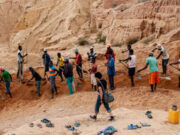
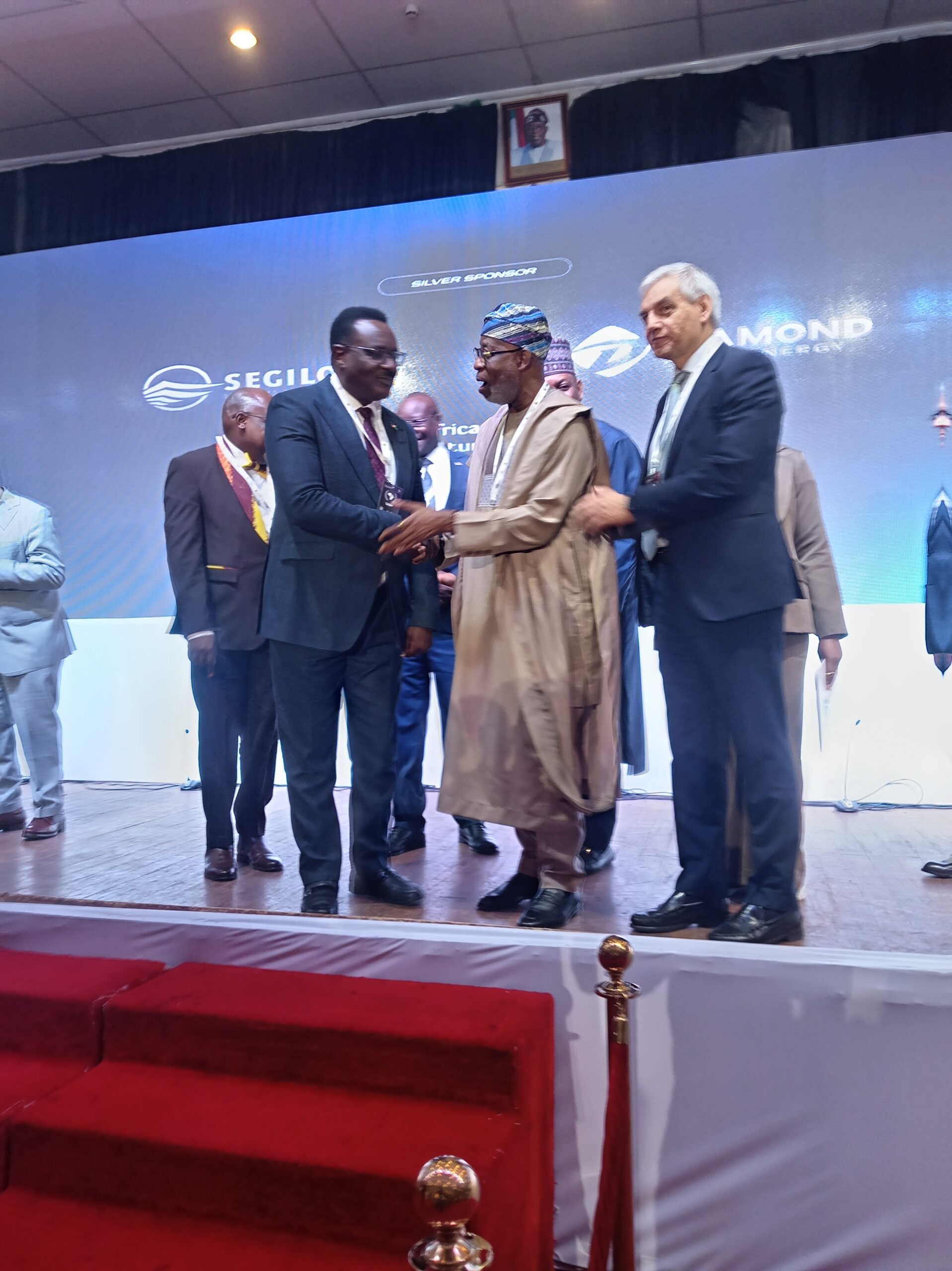
The Minister of Solid Minerals Development, Dr Dele Alake has announced the discovery of world-class rare metal deposits in Kaduna State.
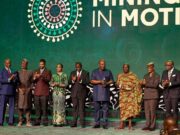
He announced the discovery Wednesday at the opening ceremony of the African Natural Resources and Energy Investment Summit (AFNIS 2026) holding in Abuja.
The Minister said the exploration breakthrough was achieved by the Nigerian Geological Survey Agency and the Kaduna Mining Development Company (KDMC). The discovery include world class platinum and rare earth elements, he said.
Alake also about the successes recorded by the sector under his leadership.
He said: “The sector has witnessed growing interest in local processing projects, particularly in lithium and other strategic minerals. Investments include $800 million in processing-project investment, made up of a $600 million lithium processing plant, a $200 million lithium refinery near Abuja, and additional processing facilities in Nasarawa. Others include $50 million ASBA lithium plant in the FCT, the $600 million Avatar lithium processing project in Nasarawa, and a $1 billion iron ore-to-steel project in Kogi State. These are the kinds of midstream and downstream investments that begin to change the structure of an economy.
“Revenue performance improved from roughly ₦6 billion when this administration came in, the solid minerals sector generated over ₦38 billion in 2024, while 2025 revenue rose to about ₦68.1 billion. These figures do not yet represent the full potential of Nigeria’s mining economy, but they show that reform, enforcement, better administration and investor engagement are beginning to produce measurable results.”
Read the full speech below:
It is my singular honour to address this gathering at the 5th Edition of the African Natural Resources and Energy Investment Summit, AFNIS 2026, convened under the theme: “One Africa, One Resource Vision.”
Permit me, from the outset, to express our profound appreciation to His Excellency, President Bola Ahmed Tinubu, GCFR, for his visionary leadership and for the confidence he has continued to repose in the solid minerals sector as a central pillar of Nigeria’s economic diversification agenda. Under his leadership, the Renewed Hope Agenda has given clear direction to our national development priorities: produce more, earn more, create more jobs, attract credible investment, expand infrastructure, and ensure that the wealth of this nation works for the benefit of its people.
Your Excellency, your presence at this summit is a strong statement. It confirms that Nigeria’s natural resources and energy future is now being treated as a major instrument for industrial growth, continental cooperation and national prosperity. It also gives renewed confidence to our African partners, investors and development institutions that Nigeria is prepared to lead with seriousness, discipline and purpose.
Distinguished Ladies and Gentlemen,
AFNIS has grown from a convening platform into a strategic continental instrument; a place where policy meets investment, where government meets industry, and where Africa’s resource ambition is translated into practical conversations on projects, finance, infrastructure, energy access, value chains and responsible development.
The theme for this year, “One Africa, One Resource Vision” reflects the truth that Africa’s resource future cannot be secured through fragmented action. Our minerals, energy systems, infrastructure corridors, ports, skills and markets must increasingly speak to one another. The mine in one African country should be connected to processing capacity in another. The gas field in one region should support power and industrial growth across borders. The mineral corridor in one country should feed manufacturing, logistics and export opportunities for many.
Africa has reached a point where resource ownership must give way to resource strategy. We have spoken for decades about what the continent possesses. The more urgent question now is what Africa is prepared to do with what it possesses. The answer must be value addition, industrialisation, energy security, local content, responsible investment and shared prosperity.
Across the world, governments and markets are reorganising their priorities around critical minerals, supply-chain security, clean-energy technologies and industrial resilience. Demand for minerals required for electric vehicles, battery storage, renewable energy systems and modern manufacturing is rising sharply. In this new global economy, Africa is central. The continent holds a significant share of the minerals that will shape the future, including cobalt, lithium, manganese, bauxite, graphite, copper, rare earths and other strategic minerals.
Yet mineral endowment alone does not transform economies. Countries are transformed when they combine geological potential with credible regulation, reliable data, infrastructure, finance, technology, local skills and investor confidence. This is the transition Africa must make. The old model, where raw materials leave our shores and return as high-value finished products, has created too little prosperity for our people. That model has limited jobs, weakened industrial capacity and denied our economies the deeper benefits of their own resource base.
For Africa, this is an inflection point and the choice before us is clear.
Under the leadership of President Bola Ahmed Tinubu, we are repositioning the solid minerals sector as a pillar of economic diversification and industrial transformation. Our task is to move the sector away from informality, opacity and low-value extraction, and toward structure, transparency, security, value addition and industrial competitiveness. The objective is to mine better, regulate better, earn more public value, attract more credible investment, and retain more value within Nigeria through processing, jobs, technology and manufacturing.
For too long, Nigeria’s mineral endowment did not translate into sufficient national value. The paradox was clear: vast mineral potential, but limited beneficiation; rising global demand, but inadequate geological confidence; legal authority, but weak enforcement; abundant activity, but too much informality.
That is precisely why the reforms we are implementing matter.
We have focused on restoring discipline in licensing, strengthening compliance, improving transparency and ensuring that mineral assets are held by operators with the capacity and intention to develop them. We revoked 924 dormant mineral titles as part of a broader clean-up that is aimed at discouraging speculation, freeing idle assets and restoring seriousness to licence holding.
We have also made value addition a central principle of our licensing philosophy. We introduced a requirement that applicants for mining leases must submit a detailed value-addition plan deliberately to send a clear message that Nigeria will no longer be satisfied with a pit-to-port model in which raw minerals leave the country with little domestic transformation. We want mining investments that lead to processing plants, refineries, industrial clusters, local jobs, technology transfer and stronger linkages with the wider economy.
This new direction is already producing results. The sector has witnessed growing interest in local processing projects, particularly in lithium and other strategic minerals. Investments include $800 million in processing-project investment, made up of a $600 million lithium processing plant, a $200 million lithium refinery near Abuja, and additional processing facilities in Nasarawa. Others include $50 million ASBA lithium plant in the FCT, the $600 million Avatar lithium processing project in Nasarawa, and a $1 billion iron ore-to-steel project in Kogi State. These are the kinds of midstream and downstream investments that begin to change the structure of an economy.
Revenue performance improved from roughly ₦6 billion when this administration came in, the solid minerals sector generated over ₦38 billion in 2024, while 2025 revenue rose to about ₦68.1 billion. These figures do not yet represent the full potential of Nigeria’s mining economy, but they show that reform, enforcement, better administration and investor engagement are beginning to produce measurable results.
Distinguished Ladies and Gentlemen,
At the continental level, Nigeria’s commitment to Africa’s mineral future has continued to find strong expression through the Africa Minerals Strategy Group (AMSG). The AMSG has become one of the most important platforms through which African ministers responsible for minerals and mining are working to build a common voice on value addition, beneficiation, critical minerals, investment coordination and mineral diplomacy.
This year, during the Future Minerals Forum in Riyadh, Saudi Arabia, that continental resolve was further strengthened. The meeting marked an important step in the institutional strengthening of the AMSG. It advanced the governance structure, created additional leadership roles, adopted a two-year rotational leadership cycle, confirmed secretariat arrangements, approved committee structures and noted progress in country ratification of the AMSG Charter. These steps are important because continental ambition requires institutions that can coordinate action, follow through on decisions and convert policy declarations into bankable projects and practical partnerships.
For Nigeria, this renewed mandate is both an honour and a responsibility. It places on us the duty to continue working with sister African countries to ensure that the continent captures more value from its mineral resources through processing, refining, manufacturing, logistics, technology transfer and skills development. It also strengthens our resolve to use platforms such as AFNIS to connect Africa’s mineral agenda with energy, infrastructure and finance, because minerals cannot create industrial power unless they are supported by reliable energy, efficient transport corridors, credible financing and harmonised markets.
To the investors and financiers in this room, Nigeria’s message is direct and sincere. We are open for serious business. We welcome capital that builds. We welcome partners who understand that Africa is no longer asking to be treated merely as a source of raw materials. We welcome investors who are ready to process locally, employ locally, train locally, transfer technology, respect communities, operate transparently and build long-term value with us.
We also recognise that mining and mineral processing require patient capital. These are capital-intensive sectors with long gestation periods and significant infrastructure needs. That is why innovative financing will be central to the next phase of Africa’s resource development. Blended finance, risk guarantees, development finance, commercial capital, sovereign support and private-sector discipline must work together if we are to unlock the next generation of mineral and energy projects.
Infrastructure remains one of the most important constraints. Across Africa, transport, power and logistics gaps continue to limit the full development of mineral resources. Without rail, roads, ports, power, laboratories and processing infrastructure, resource potential will remain underutilised. This is why we must approach mineral development through corridors and clusters, connecting mine sites to processing centres, processing centres to industrial zones, and industrial zones to domestic and regional markets.
Your Excellencies, distinguished delegates, ladies and gentlemen, the young people of Africa must be at the heart of this agenda. The resource economy of the future will require geologists, engineers, miners, metallurgists, data analysts, environmental experts, fabricators, machine operators, lawyers, financiers, logistics professionals and entrepreneurs. Our duty is to ensure that African youth are trained and positioned to participate meaningfully in this new economy.
Permit me to commend our sister African countries, development partners, private-sector leaders, financial institutions, exhibitors and delegates who have continued to support AFNIS. Your presence here shows faith in Africa’s future. It also places responsibility on all of us to ensure that the conversations held here do not end as speeches, communiqués and photographs. They must become projects. They must become investments. They must become factories. They must become jobs. They must become stronger African economies.
As we proceed with this summit, I urge all participants to be practical, ambitious and bold. Let us identify bankable projects. Let us strengthen financing pathways. Let us support regional value chains. Let us align policy with investment. Let us deepen trust between government and industry. Let us prove that Africa can engage the world from a position of confidence and clarity.
Africa stands ready to be part of the global resource future from the centre, where it belongs. Nigeria stands ready. We seek partnerships that recognise the importance of value creation, industrial development, environmental responsibility and mutual benefit. We seek cooperation that strengthens Africa’s capacity rather than weakening it. We seek investment that expands prosperity rather than extracting opportunity.
The minerals are here. The energy is here. The market is here. The talent is here. The leadership is here. Under the Renewed Hope Agenda of President Bola Ahmed Tinubu, GCFR, Nigeria is determined to use its mineral wealth intelligently, responsibly and boldly to build national strength and contribute to continental progress.
May AFNIS 2026 stand as a turning point in Africa’s resource journey: the moment when partnerships became more purposeful, and our collective resolve to process, power and industrialise from within the continent gained renewed force. Under the banner of “One Africa, One Resource Vision,” let this summit move us closer to an Africa that does not merely supply the world, but shapes value, builds industries and secures prosperity for its people.
Together, let us build a continent that owns more of its value, powers more of its industries, creates more jobs for its people, and takes its rightful place in the world.
May God bless the Federal Republic of Nigeria, and may God bless the African Continent.
Thank you.
Dele Alake
Honourable Minister
Ministry of Solid Minerals Development
Federal Republic of Nigeria