





By Yunus Olawale
Women working in the mining sector should be guaranteed safer working environment, improved access to technical training, family-friendly workplace policies and equal opportunities for leadership positions to maximise their contributions to the sector’s growth and sustainability.
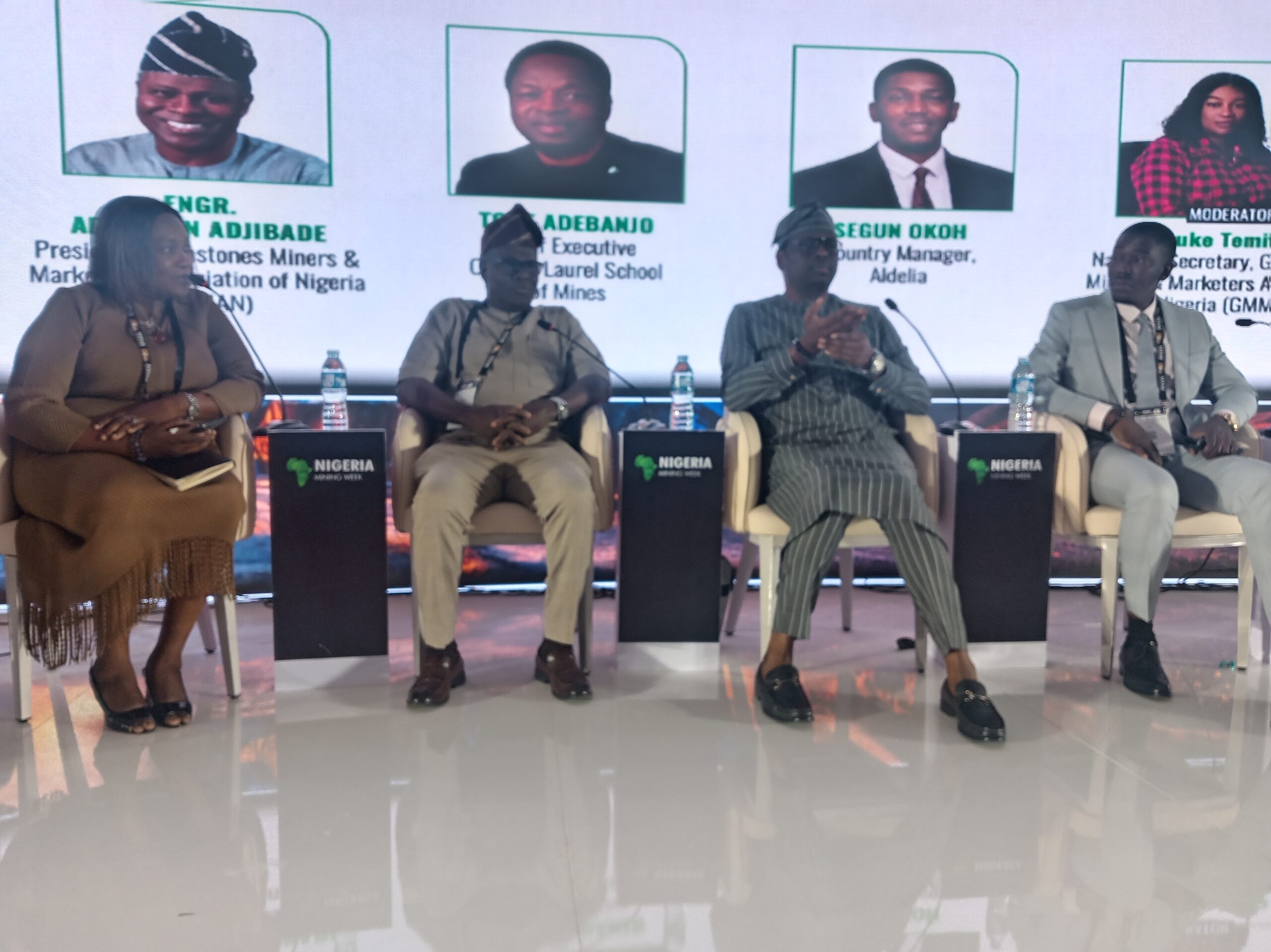
This was the central message at a panel discussion organised by Women in Mining Nigeria during the pre-conference activities at Nigeria Mining Week 2026 which opened in Abuja on Monday.
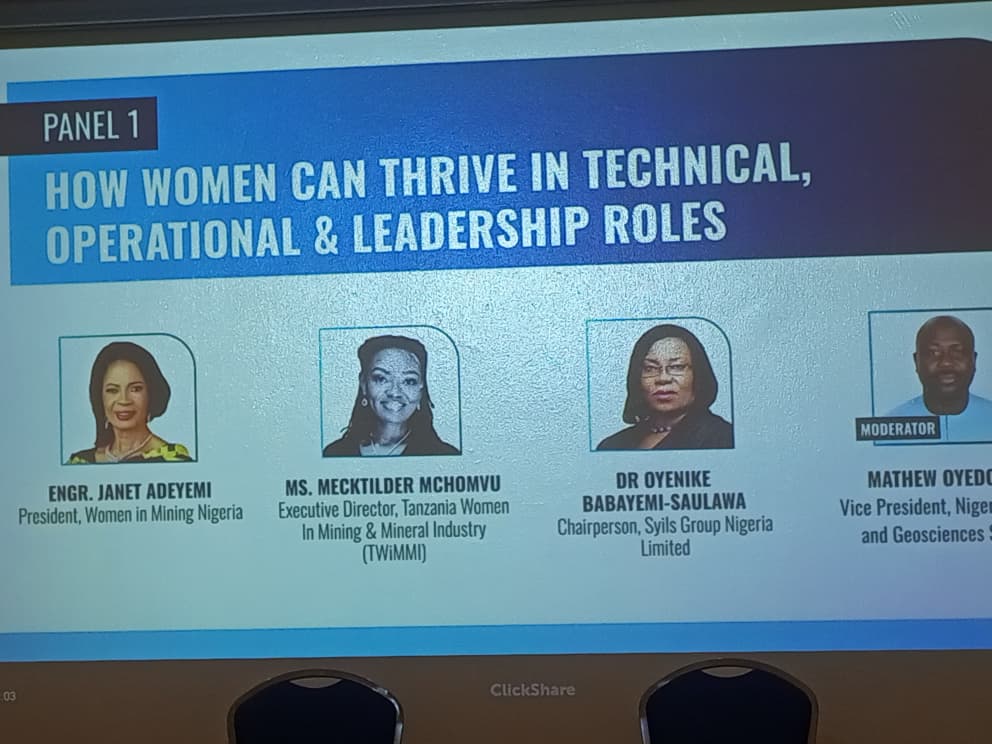
The session, themed “How Women Can Thrive in Technical, Operational and Leadership Roles,” brought together industry professionals to examine the barriers limiting women’s participation in mining and identify practical measures for building a more inclusive and productive extractive industry.
The discussion featured the President of Women in Mining Nigeria, Engineer Janet Adeyemi; Chairperson of Syils Group Nigeria Limited, Dr. Oyenike Babayemi-Saulawa; and Vice-President of the Nigerian Mining and Geosciences Society, Matthew Oyedokun.
Participants stressed that although women have continued to make significant contributions to mining, geology, geosciences and related technical fields, workplace conditions, inadequate facilities and persistent structural barriers remain obstacles to their full participation and advancement.
Speaking on behalf of the President of the Nigerian Mining and Geosciences Society, Ms. Rose Ndong, Mr Oyedokun, who moderated the session, said gender inclusion was essential to innovation, operational excellence, responsible mining and sustainable economic development.
He noted that the industry needed to move beyond declarations of support for women to practical interventions that would create measurable improvements in their professional opportunities.
The moderator also highlighted the growing presence of women in professional leadership, citing women who head geosciences departments in tertiary institutions and those occupying leadership positions in professional associations, including the hydrogeology community.
He said these examples demonstrated that women possess the expertise and capacity to lead in technical and scientific fields when given the necessary opportunities and institutional support.
Oyedokun also recalled women who had built successful careers in mining, emphasising that their contributions predated the current drive for greater gender inclusion.
He maintained that the mining industry could not fully realise its economic, technological and developmental potential if it excluded or underutilised the talents of women.
*Workplace Safety and Gender-responsive Facilities*
A major focus of the discussion was the need for mining companies to recognise and address the specific safety, health and welfare needs of women working in operational and technical environments.
The panel discussion highlighted the importance of providing appropriate sanitation facilities, access to menstrual hygiene products and private spaces where female workers can manage their menstrual needs with dignity.
Participants also underscored the need for suitable personal protective equipment, workplace safety measures and policies that accommodate pregnancy, maternity and childcare responsibilities without unfairly restricting women’s career progression.
The discussion reinforced the view that providing equal opportunities does not necessarily mean treating every worker’s needs identically. Rather, an inclusive workplace should ensure that all employees have the facilities, protection and support required to perform their duties effectively.
For women working at mine sites, in laboratories, exploration teams and other field-based operations, the availability of appropriate welfare facilities and gender-responsive safety provisions can be critical to their ability to remain in the profession and advance into senior positions.
Breaking Barriers to Technical and Leadership Positions
The session also examined structural barriers that can prevent women from entering technical occupations, gaining operational experience and progressing into management positions.
The speakers emphasised the need for deliberate policies that expand women’s access to technical assignments, professional development, mentorship and leadership opportunities.
They identified professional training and sponsorship as important mechanisms for preparing women to assume greater responsibilities, while transparent recruitment and promotion processes could help ensure that competence, qualifications and performance determine career progression.
The discussion further called attention to the responsibilities of mining companies, professional bodies, regulators and policymakers in creating an environment where women can compete fairly and contribute meaningfully across the industry’s value chain.
The representation of women in technical and academic leadership, the moderator noted, offers evidence of the capacity already available within the country. The challenge is to translate that capacity into wider participation across exploration, mine operations, geosciences, engineering and executive management.
Three Priorities for Practical Action
As the discussion focused on solutions, three interventions emerged as critical priorities for increasing women’s access to technical and operational roles in Nigeria’s mining industry.
First, mining companies should strengthen workplace safety and provide gender-responsive facilities, including appropriate protective equipment, sanitary conveniences and menstrual hygiene provisions, as well as policies that support maternity and childcare needs.
Second, companies and professional institutions should expand women’s access to technical training, field assignments, apprenticeships, mentorship and sponsorship programmes. Such initiatives would help women acquire the experience and professional networks needed to compete for specialised and leadership positions.
Third, mining operators, regulators and professional associations should institutionalise transparent recruitment, promotion and leadership-development systems, supported by measurable targets and periodic reviews of women’s participation in technical, operational and management roles.
These measures, the discussion suggested, would help transform commitments to inclusion into tangible improvements in workplace conditions and career opportunities.
Building a More Inclusive Mining Industry
The panel was part of the Women in Extractive Industries Forum at Nigeria Mining Week 2026, which provided a platform for industry stakeholders to examine the role of women in advancing the country’s extractive sector.
The moderator expressed confidence that the exchange would generate useful insights and actionable recommendations for companies, professional institutions and policymakers.
He urged stakeholders to build an industry in which professional competence determines opportunity, safety and equity are prioritised, and women have a fair chance to thrive in technical, operational and leadership positions.
As Nigeria seeks to strengthen its mining industry and unlock the sector’s economic potential, the discussion underscored the importance of treating women’s inclusion not simply as a representation issue, but as a strategic requirement for a safer, more innovative and sustainable industry.