




By MIKI KAMIYAMA
Countries across Asia are stepping up efforts to capture more of the value generated by the recent gold boom, moving to increase refining of the gold production from their own mines or discourage exports through taxes and central bank purchases.
The London spot gold price, which first reached $1,000 per troy ounce in 2008 and surpassed $2,000 in 2020, climbed to a record high above $5,500 in January this year and remains above $4,000.
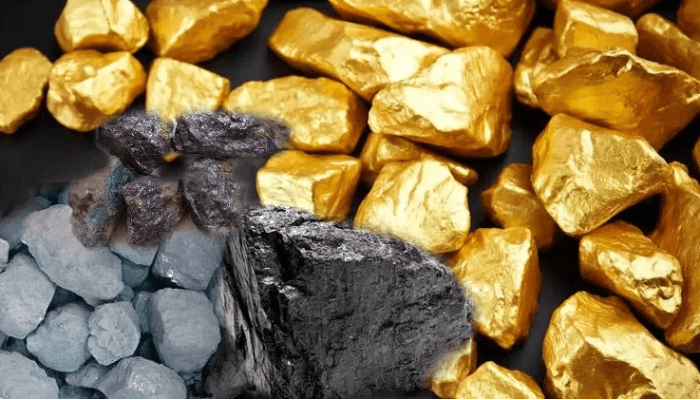
Emerging economies — including Asian nations such as Laos — that long exported low-value ore are becoming more conscious of the wealth beneath their soil. That awakening — a new form of resource nationalism — could exert upward pressure on gold prices over the medium to long term.
In countries without refining capabilities, gold ore is often smuggled out of the country. Although there are no price statistics, it is believed that these prices are significantly below market value.
“The government of [the] Lao [People’s Democratic Republic] considers the development of the gold industry a key priority in strengthening our economic foundation,” Laotian Prime Minister Sonexay Siphandone declared in early September at an event aimed at fostering the country’s domestic precious-metals market.
Laos is expected to graduate from the United Nations’ list of least developed countries as early as 2026, yet income levels remain well below those of neighbors such as Thailand. The Southeast Asian country is looking to its gold deposits as a source of greater national wealth.
Under the government’s vision, gold mined in Laos would be refined domestically, allowing more of the value added to remain within the country.
According to the World Gold Council, an international membership organization representing major gold-mining companies and research consultancy Metals Focus, Laos produced around 12 tons of mined gold in 2025, the sixth-largest output in Asia. The authorities estimate the country’s reserves at 500 to 1,000 tons.
Until now, much of that gold has left the country as ore, through both official and unofficial channels.. In 2024, the government established the Lao Bullion Bank, a specialized gold bank jointly capitalized by local companies.
It is using the institution as the hub of a rapid expansion of domestic precious-metals market infrastructure, including refining capacity. The initiative aims to increase gold’s share in Laos’s foreign-exchange reerves, while giving citizens a trusted venue to buy and sell gold and preserve their savings.
“The speed with which they have put this infrastructure in place in the two years since the LBB was founded is astonishing. You could sense the determination of the entire country behind the effort,” said Bruce Ikemizu, chief director of the Japan Bullion Market Association (JBMA), who attended the event.
“We seek to expand Lao-Japan cooperation into the gold industry,” said Dr. Chanthone Sitthixay, chief executive officer of LBB. By drawing on Japan’s expertise in operating a mature precious-metals market, LBB aims to accelerate the development of the country’s gold-market infrastructure.

Indonesia is equally determined to stem the outflow of its gold. The world’s 10th-largest producer mines more than 100 tons a year, yet domestic supply is still insufficient to meet growing investment demand. The government announced last year an export tax of up to 15% on gold, effective from 2026.
China, the world’s largest producer, is also seeking to keep more of its gold at home. It mines a little over 380 tons a year, roughly a tenth of global output, while remaining a major importer.
“As a rule, taking gold out of the country is restricted,” said market analyst Jeff Toshima.
China’s drive to accumulate gold within its borders is gathering momentum. The People’s Bank of China added 20 tons to its holdings in August, marking its 22nd consecutive month of net purchases, the longest such streak since comparable data began in December 1999.
Resource nationalism surrounding the precious metal is spreading in Africa as well.. Madagascar’s central bank has been buying domestically produced gold since 2020s, while the authorities have established official purchasing channels as part of a national effort to keep more of the metal in the country.
“Given Madagascar’s gold resources, the Gold Purchase Program (DPP) implemented by Central Bank of Madagascar remains the cornerstone of this reserve diversification strategy,” said Jao Rabemananjara, Gold Operations Supervisor of the bank.
In Ghana, the world’s sixth-largest producer, the government signed a memorandum of understanding with the WGC in July to deepen cooperation to curb illegal mining and improve the integrity of gold supply chains.
Emmanuel Armah Kofi Buah, the minister for lands and natural resources, said the government was stepping up its efforts to ensure “that the benefits of Ghana’s gold resources are realized by our communities and our nation as a whole.”
One reason producing countries are taking a closer look at their own gold is waning confidence in the U.S. dollar as the world’s reserve currency. Dollar-denominated assets belonging to countries at odds with Washington have been frozen under sanctions, reinforcing the view that excessive dependence on the currency carries risks.
“As the dollar-centered structure of global financial markets comes under scrutiny, gold is gaining importance as an asset insulated from the political and fiscal policies of any single country,” said Geullim Yum, director of Japan foreign exchange and commodity sales at banking multinational ANZ.
Gold prices have risen roughly 12-fold over the past 30 years. China and other emerging economies accelerated efforts to increase gold’s share of their foreign-exchange reserves, while growing investment demand provided further support for prices.
With so much value at stake, producing nations have a strong incentive to capture more of it for their own development.
Gold trading remains concentrated in Western financial centers such as London and New York, but on the supply side, mines in emerging economies play an increasingly important role.
History offers a precedent. “Gold from the colonies
flowed into London and helped underpin the British Empire’s gold standard,” Toshima noted.
Producer countries are entitled to put their gold to work for their own development, but doing so may also leave less metal circulating in international markets.
“From the perspective of major international refiners … absolutely this trend will have an impact on their ability to source,” said Nikos Kavalis, the Singapore-based managing director of Metals Focus.
As resource nationalism takes a firmer hold among gold-producing countries, the resulting constraint on internationally available supply could, within a few years, emerge as another factor supporting higher prices.
Gold prices have been lackluster recently. It is now weighed down by expectations of U.S. interest-rate hikes and rising long-term interest rates. The price reached $4,110 per troy ounce in trading on Sept. 28. This represents a 12% decline from the recent peak in late August, when the price approached $4,700.
The Federal Reserve raised interest rates in September for the first time in more than three years, and market expectations are growing that it will implement at least one more rate hike before the end of the year.
In situations like the current one in the U.S., where multiple rate hikes are expected, downward pressure on gold prices is likely to persist until the ultimate level of the policy rate becomes clear.
Viewed from a longer-term perspective, however, structural factors that could support gold prices continue to build beneath the surface. Resource nationalism among gold-producing countries and waning confidence in the dollar as the world’s reserve currency are among the forces reshaping the market.
“In the long run, the actions of producer countries could become another factor pushing gold prices higher,” ANZ’s Yum said.
*Culled from Nikkei.com