


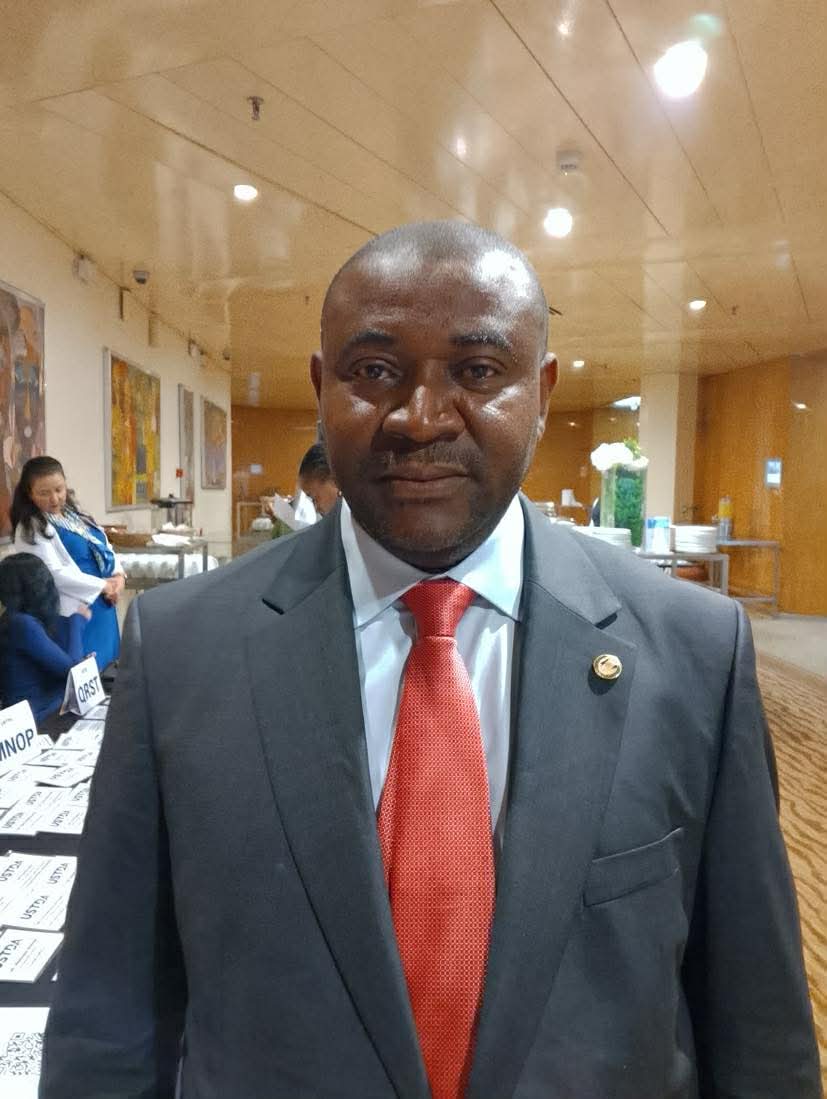

The CEO of Mica Equity Allocation Ltd. and promoter of the annual ACCE, Mr Michael Akueche speaks on the 2026 edition of the event and why industry players cannot afford to stay away. Excerpts:
Que: The 2nd Edition of the Africa Commodities Conference and Exhibition (ACCE) is holding this month in Abuja. What improvement can participants expect, compared to last year’s?
Akueche: Participants would see improvements in organization and attention to specific tasks and stakeholders, for an example the Artisanal and Small Scale Miners and their cooperatives.
Question: The conference has built a name as one of the key industry events for the year. Are we to expect any foreign participation or will it attract mostly local sector players.
Akueche: Yes, we should expect some foreign participation as a few would love to make presentations with regard to their mining equipment and machineries to the operators and local miners, especially the artisanal and small scale miners. It will also attract a lot of local players and stakeholders who are at the core of the activities in the industry. These includes but not limited to the Geologists, Mining Engineers, Mineral Processing Engineers, Health, Safety and Environment Professionals HSE.
Question: You were able to get senior government officials to participate in the conference last year, but many feel there is often a disconnect between policy statements and practice. How does a conference such as yours bridge the gap?
Akueche: We like to design conferences that would be productive and add value to delegates and their firms – especially after the conference. This is the reason why we spent months with the professionals at the Solid Minerals Development Fund (SMDF) and the Artisanal and Small Scale (ASM) Department of the Ministry of Solid Minerals Development trying to crack how to help the artisanal and small scale miners’ cooperatives secure medium sized mining plants/ equipment and machineries, logistics lorries and other very needful resources. What we found wasn’t palatable because the memberships of the existing cooperatives is so small that it wouldn’t encourage government to invest the humongous amount of money that these equipment cost. The quotation we got from the Chinese equipment manufacturing companies after several visits to their office and requesting for a small size copper 50 ton per day mining plant or gold or silver or zinc/ lead or tin or lithium was huge. The cost runs into hundreds of thousands of dollars and in some cases in millions of dollars. Therefore the need to expand the scope of artisanal and small scale miners cooperatives can not be over emphasized. It will enable more youth, women, men and host communities to secure a veritable means of livelihood and also position them to participate in providing important information to the security network of the federal government.
The expansion of the scope of participants will make it worthwhile for the government to invest in these plants/equipment and machineries not withstanding the cost because government would want to touch more lives especially when and where it spends the most financial resources.
Question: What motivated you to start ACCE and would you say last year’s Conference confirmed your assessment there is a need for such an event?
Akueche: Yes, definitely there’s a need for the niche we have caved for this program. Just like the name sounds, Africa Commodities Conference and Exhibition seeks, among other things, to bring together stakeholders in the solid minerals industry to tackle several challenges especially as it concerns mineral commodities and that’s why we partner with both the Investment Promotion and Mineral Trade ( IPMT) department of the Ministry of Solid Minerals Development, Solid Minerals Development Fund (SMDF) and the Artisanal and Small Scale department of the Ministry of Solid Minerals Development and then other pressing issues are also to be discussed.
Questions: What lessons would you say you learnt last year that would this year a better experience for participants?
Akueche: The lesson i learned was that you take it one step at a time. Last. year was our first edition in the solid minerals sector, though I am coming from the background of local content development in the oil and gas industry, having consulted for the Nigerian Content Development and Monitoring Board (NCDMB) for many years. I thought they operate in the same frequency but they are totally opposite of each other and it took me a while to understand that.
Question: Who are your key partners for this event?
Akueche: Our biggest and major sponsor is the Solid Minerals Development Fund (SMDF) and I want to use this opportunity to humbly thank the Executive Secretary of the SMDF and express our profound gratitude for her magnanimity and generosity in supporting our programs, especially as it aligns with their core mandate. Other sponsors include the Ministry of Solid Minerals Development and the Nigerian Geological Survey Agency (NGSA.)
Queation: There is no doubt the Nigerian mining and minerals sector has undergone tremendous growth over the past years. What do you think is responsible for this?
Akueche: Yes, what is responsible is the driver at the helm of the affairs of the solid minerals industry for such as a time like this, by that I mean the Minister of Solid Minerals Development, Sir Dele Henry Alake. He has achieved what those that had sat on that driver’s seat in the past had not been able to do. Who would believe that he could attract the building of four gigantic lithium processing plants in Nigeria in just three years in office and have more than quadriple the annual income in the industry? All these happened in less than a four year term even with all the challenges he has been facing.
Question: As chief executive officer of Mica Equity Allocation Ltd, what kinds of other steps do you think government needs to take towards further unlocking potentials of Nigeria’s solid minerals sector?
Akueche: Investing heavily in the Nigerian indigenous companies. This is what the Chinese have done and today they are virtually ruling in most sectors of the economy. You know many people don’t know the level of the involvement of their government in their firms. Secondly is investment in Geological Survey, generation of seismic data, geological data etc. This is the what holds back investment by lots of foreign players, because they want to know the amount of ore you have in the ground before committing their investments. Government could do these on behalf of firms and recoup their investments when proper business activities begin on the investment. It is only government that has that kind of financial resources to stake so that if there isn’t adequate ores found, the indigenous miners would not go bankrupt. When. this is left for them to do, most of the time they borrow monies from the bank for this purpose.
Question: From your experience and based on feedback, what do you think mining industry players need most to promote their business and how best should they go about realizing this?
Akueche: The mining industry needs funding, plant/ equipment and machineries especially funding. Abroad there are diverse funding arrangements designed for miners, we are beginning to see some of it here and example is the one launched last year at AFNIS last year 2025 for Nigerians. We need more of such interventions.
Question: What messages do you have for investors and trade experts who are still thinking whether they should attend this year’s ACCE.
Akueche: Attend our event, and you won’t regret it! Thank You.