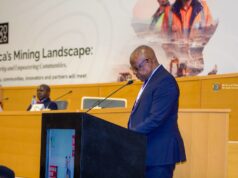


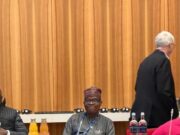

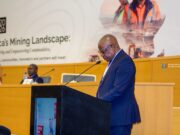
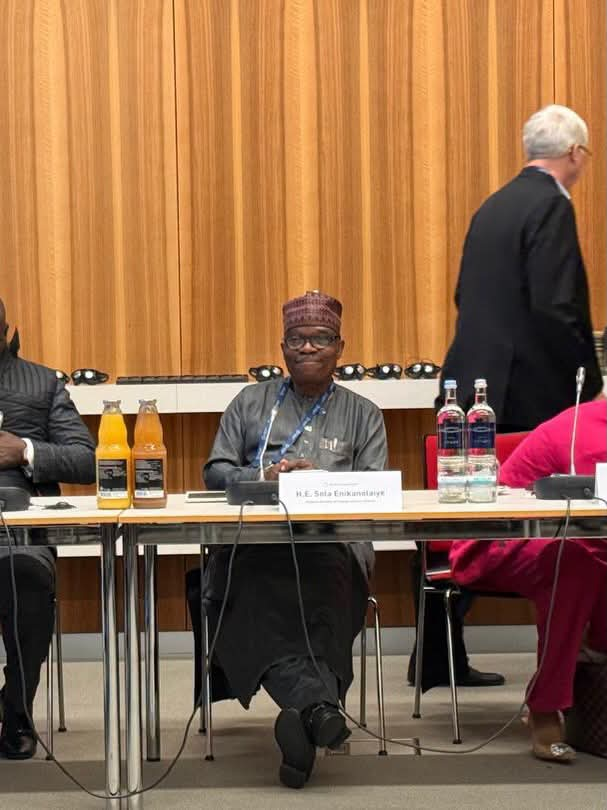

*Minister of State for Foreign Affairs, Amb. Sola Enikanolaiye.
Nigeria has called for increased local processing and beneficiation of Africa’s mineral resources to enable countries across the continent to maximise the economic benefits of their natural wealth.
The Minister of State for Foreign Affairs, Ambassador Sola Enikanolaiye, made the call at the Berlin Global Dialogue 2026, advocating a shift from raw mineral exports to value addition, industrialisation and mutually beneficial international partnerships.
Speaking at a high-level panel on “Foreign Policy by Other Means: Trade, Technology, and Geopolitical Power,” and a Policy Lab on Infrastructure and Investment, Enikanolaiye said Africa’s engagement with international partners must be anchored on national sovereignty, mutual respect and shared prosperity.
He stressed that African countries should have the freedom to pursue their national interests while building partnerships that promote domestic industries, strengthen local economies and accelerate sustainable development.
The minister described Nigeria’s foreign policy approach as one of strategic autonomy, which allows the country to advance its national interests regardless of the ideological orientations of competing global powers and economic blocs.
“It allows us a space of action regardless of ideology or political complexion of the various blocs to advance our own national interest, including those of Nigerian companies,” he said.
On mineral resources, Enikanolaiye called for an end to extractive economic arrangements that leave African countries exporting raw materials without capturing sufficient value from their natural wealth.
He advocated increased investment in local processing facilities, infrastructure and technical skills to promote mineral beneficiation, create jobs and strengthen Africa’s industrial capacity.
According to him, developing bankable infrastructure projects and mobilising long-term capital are critical to unlocking the continent’s mineral wealth, attracting sustainable investments and expanding economic opportunities.
The minister also called for reforms to the international credit rating system to ensure that it better reflects African economic realities and supports the continent’s access to investment capital. He welcomed the establishment of the African Credit Rating Agency as part of efforts to strengthen Africa’s financial architecture.
Citing Africa’s average gross domestic product growth rate of 4.3 per cent against an ambition of seven per cent, Enikanolaiye emphasised the need for policies and investments that would accelerate economic growth and support the continent’s development priorities.
He reaffirmed Nigeria’s commitment to fiscal discipline, transparency, democracy and the rule of law, describing these principles as essential to building investor confidence and strengthening international partnerships.
Enikanolaiye maintained that partnerships with Africa should go beyond the extraction and export of raw materials to promote local processing, industrial development and greater economic value retention within African countries.