




By Yunus Olawale
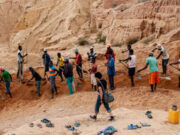
For decades, the mining industry in Nigeria has been visualised through a singular, gritty lens, of men with pickaxes and shovels, toiling under the sun in remote, unforgiving terrain. It is an image so deeply etched into the national consciousness that even today, the mention of “women in mining” tends to invite raised eyebrows and sceptical glances.
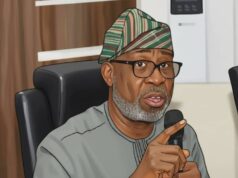
But according to Dr. Janet Febishola Adeyem, founder and national president of Women in Mining Nigeria (WIMIN), that picture is not only outdated, it is an insult to the intelligence and capability of women across the country.
“There’s nothing called management and there’s nothing called difficult,” Dr. Adeyemi declared in an interview during AFNIS 2026 in Abuja. “What is difficult about a job? If you can do it, what makes a woman not be able to do it?”
Her words land with the weight of someone who has spent over two decades challenging the status quo. Recognised among the mining elite for Africa at the 2026 Mining Indaba in Cape Town, Dr. Adeyemi is not merely a voice in the wilderness—she is a force that has reshaped the conversation around gender and mining in Nigeria.
The Technology That Transforms
The mining industry Dr. Adeyemi describes bears little resemblance to the romanticised—and often dangerous—artisanal operations that dominate popular imagination. “We are in the era of technology,” she insists. “The mining you have in your mental thing is the mining where people carry jigger, where people carry cutlass. Do you know that I can be mining by just playing with my joystick here and I’m mining somewhere else?”
This technological revolution has opened doors that were previously sealed shut. Across Nigeria today, women are piloting drones for surveillance operations, generating geological data that mining companies purchase, and participating in every facet of the value chain—from exploration to market. “Some people are exploration geologists. They want to be on the field. I can be interested in data generation and that data generation, mining companies can come and buy it from me,” she said.
The message is unambiguous: mining is not a monolith, and women belong in every corner of it.
The Barriers That Remain
Yet for all the technological progress, the human barriers persist with frustrating tenacity. Dr. Adeyemi lists them with the precision of someone who has lived each one.
Access to the table remains the first and most insidious obstacle. “There’s a barrier because of stereotyping. So we don’t have access to sit at the table and be recognised and our voices to be heard at the table. We are treated as a thing, whereas at the margin, whereas we should be at the centre, like any other person.”
Funding follows closely behind. “Women don’t have access to capital. They don’t have access to funding. When a woman doesn’t have a collateral, what is she going to use to fund?” The question is rhetorical, but the answer is painfully evident. Many women miners remain excluded from formal banking systems, unable to access loans due to lack of collateral or proper documentation.
Education compounds the problem. “When our parents were sending people to school, they prefer to send male children to school. And women are left behind because women are supposed to be in the other room.” The legacy of this discrimination continues to echo through the sector.
Security has emerged as a critical concern. “When security is a major challenge, you don’t go far,” Dr. Adeyemi warns. “Because even me now, if I have a sister who wants to go to the mine site, I will think twice. The environment is hostile. The environment is not friendly.”
Then there are the socio‑economic issues —community development associations that exclude women from meetings, governance gaps, and the biological realities of pregnancy that limit performance in certain roles.
Building Bridges, Breaking Jinxes
It is one thing to catalogue problems; it is another to solve them. Dr. Adeyemi founded Women in Mining Nigeria in 2003—long before gender inclusion became a fashionable corporate talking point. The results speak for themselves.
“Before, if you come to a mining conference at all, you are lucky to see maybe three women. But today you can count the number of women. The place is getting crowded. Women are getting interested. We’ve been able to break some of the jinx.”
The organisation’s approach is multifaceted and relentless. Capacity building remains the cornerstone. The monthly training sessions held every third Thursday (now in its 61st edition) bring in experts to teach members how to navigate and mitigate the challenges they face.
Youth engagement through the “Girls from Mining” initiative builds confidence in young women before the stereotypes can take root.
International networks like the Association of Women in Mining in Africa (AWIMA), which unites 42 national organisations across the continent representing approximately 150,000 women, amplify voices that might otherwise go unheard.
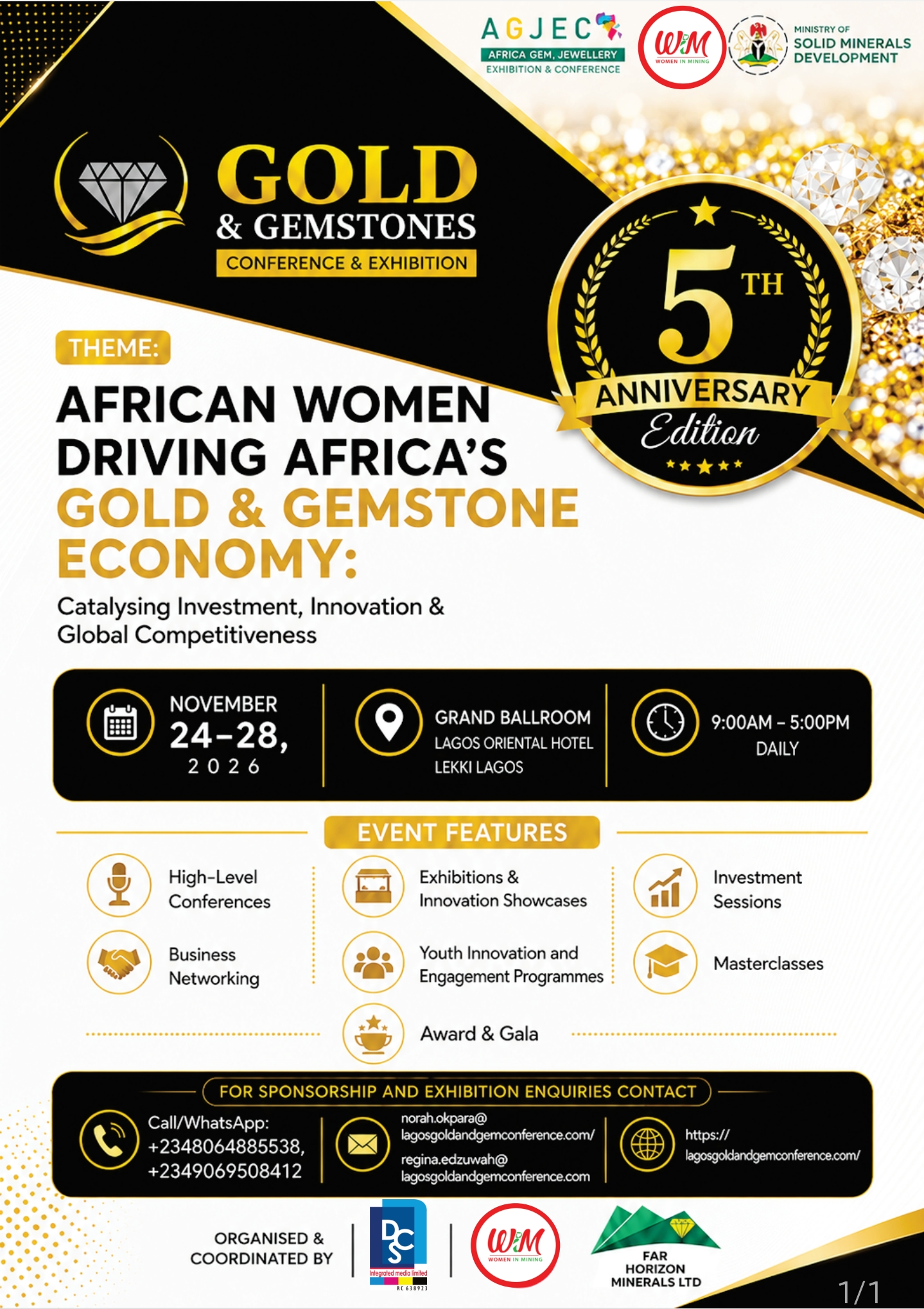
Market creation through the Gold and Gem Conference provides tangible economic opportunities. The jewellery Dr. Adeyemi wears? Made by one of their women. The furniture made from granite that adorns the homes of Nigeria’s elite? A testament to what women can achieve when given the chance.
A Network Across Nigeria
The reach of Women in Mining Nigeria extends far beyond Abuja. As of today, the organisation has established chapters in 30 states, with the latest chapter launched just three days ago. “Some states are strong, some states are not strong. But the good thing is that at least we have somebody we can reach out to and which we are cultivating and building in each of the states,” she said
This expansion has occurred without government funding—a point of pride and frustration for many in the industry. “In some other countries, government gives money. Nobody gives us money. And the donor world has so much shrunk that money is not even coming in. So some of us commit our money because of our passion for it, ” she said.
The Economics of Opportunity
For those who still question the viability of women in mining, Dr. Adeyemi has numbers. According to her, “By the year 2040, the demand for critical minerals will skyrocket beyond imagination. It’s already high.”
She points to lithium—the mineral powering the smartphones in our pockets and the electric vehicles of tomorrow. “As of today, 2% grade of lithium is selling for 350,000 to 400,000 per ton. For the highest grade, 5%, it’s selling about 1.05 million per ton. And women are working on it.”
The message is clear: the mining sector is not just open to women—it needs them. With Nigeria recently announcing the discovery of significant deposits of platinum, lithium, and rare earth elements in Kaduna State, the stakes have never been higher.
Beyond Certificates, Towards Skills
Perhaps Dr. Adeyemi’s most provocative argument is her critique of Nigeria’s obsession with formal credentials. “Let us stop all this misconception about carrying certificates all over. I have two PhDs. I like reading as a hobby. Not because that certificate means anything ”, she said.
She cites examples that challenge conventional wisdom: a doctor in her village who delivers babies; a man from Port Harcourt who defeated trained lawyers at the Supreme Court without a law degree; a graduate of a skills acquisition programme who operates sophisticated soldering equipment without speaking English.
“The world is changing from intellectual to knowledge. Where you acquire is your interest, your ability. Inherent ability is what we put food on your table,” Adeyemi said.
The implication is profound: mining does not discriminate—our attitudes do. “Our laws do not really discriminate. It is our mind, our stereotyping. I’ve searched that all through and through. No law in Nigeria discriminates against anything. Our attitude and perception.”
The Road Ahead
When asked about the prospects for women in mining, Dr. Adeyemi’s response is almost incredulous. “What are you talking? The prospects are numerous.”
From the furniture made from stone that adorns luxury homes to the critical minerals powering the global energy transition, women are already there —mining, cutting, polishing, selling, and leading. The challenge is not capability; it is recognition.
“When you see me and I say, oh, I’m in the mining space, you don’t have to stereotype me to say, oh, what’s she doing in that space? Because it’s a difficult area. No, let her make that decision,” she said.
After more than two decades of advocacy, Dr Adeyemi has made her decision. Now, she is making sure every other woman in Nigeria has the same opportunity.