






*Minister of Solid Minerals Development, Dele Alake
By Martha Agas (News Agency of Nigeria (NAN)
Nigeria is blessed with solid minerals with at least 44 mineral deposits in commercial quantities across more than 500 locations nationwide.
This vast mineral wealth analysts say, offers the country an opportunity to reposition the sector and reduce its dependence on oil revenue.
They say the country’s focus on the oil sector has left solid minerals largely under regulated, resulting in revenue losses, environmental degradation and corruption.
They also link the influx of banditry to “powerful illegal miners” who use proceeds from mineral exploitation to fund the menace.

For decades, stakeholders have observed that the country’s focus on the oil sector has left the solid minerals industry largely neglected and underdeveloped, making a turnaround increasingly necessary, particularly as the global energy transition drives demand for critical minerals.
To actualise the campaign to reposition the sector, efforts intensified during President Muhammadu Buhari’s administration, beginning with the development of the Roadmap for the Growth and Development of the Nigerian Mining Industry in 2016.
The roadmap identified inadequate geoscience data, limited access to finance, poor infrastructure and institutional weaknesses as major constraints to mining development.
The relatively modest contribution of mining to the national economy also highlighted the gap between policy ambition and actual transformation of the sector.
While the Buhari years produced regulatory, institutional and investment changes in solid minerals, converting those foundations into sustained production, domestic value addition and employment and government revenue required commitment and appropriate policies.
To that effect, when President Bola Tinubu assumed office in 2023, his administration emphasised on economic diversification and set a target of growing Nigeria into a one trillion dollars economy by 2030.
The administration identified industrialisation, job creation and value addition as important elements of that ambition, with the solid minerals sector positioned as one of the areas capable of attracting investment and supporting economic diversification.
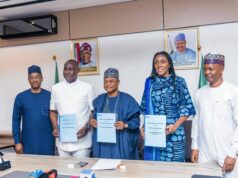
With the appointment of Dele Alake as Minister of Solid Minerals Development, the administration intensified efforts to address illegal mining and improve security around mining operations.
Alake repeatedly linked illegal mining to insecurity and alleged that powerful interests were benefiting from the illicit exploitation of Nigeria’s mineral resources. The government subsequently strengthened enforcement through the establihement of the Mining Marshals.
The Mining Marshals were inaugurated in March 2024 as a specialised unit of the Nigeria Security and Civil Defence Corps (NSCDC) to secure mining sites, enforce mining laws and support the fight against illegal mining.

By March 2025, Alake said the Marshals had arrested 327 suspected illegal miners, while 147 were being prosecuted and 98 mining sites had been recovered for licenced operators.
By July 2026, the NSCDC reported that the Mining Marshals had arrested 671 suspected illegal miners and charged 397 before the Federal High Court, while dismantling illegal operations and shutting down unauthorised mining sites.
The enforcement drive, however, had faced disputes and allegations of interference, including reported attempts to blackmail the Mining Marshals Commander, John Onoja.
Beyond enforcement, the administration has placed greater emphasis on value addition.
In 2024, Tinubu directed the ministry to tie new mining licences to local processing, while describing Nigeria’s lithium and other critical minerals as opportunities for investment and industrial development.
Investors were required to process minerals domestically before export, in line with efforts to meet international standards and retain more value within Nigeria.
The move drove several investments, particularly in lithium processing.
In May 2024, Avatar New Energy Materials commissioned a lithium processing plant in Nasarawa State with a reported capacity of 4,000 metric tonnes per day.
Other projects have also emerged.
The Ministry of Solid Minerals Development reported a 50 million dollars ASBA lithium plant in the FCT, while a 200 million dollars refinery on the outskirts of Abuja was reported to be at an advanced stage.
In Nasarawa, the government also announced a 400 million dollars rare earth and critical metals processing plant by Hasetins Commodities Ltd. The facility, which groundbreaking took place in November 2025 was designed to process 12,000 metric tonnes.
To attract investment and increase the sector’s contribution to the economy, the minister used local and international forums to promote Nigeria’s mineral resources and attract serious investors.
The results have begun to emerge.
The Mining Cadastre Office recorded its highest annual revenue in 2024, generating N12.58 billion, while overall solid minerals revenue rose from N16 billion in 2023 to N38 billion in 2024.
The government also moved to free up dormant mineral titles for active investors. In November 2023, it revoked 1,633 titles belonging to companies that had defaulted on annual service fees.
In April 2024, the government revoked a further 924 dormant licences, comprising exploration, mining, quarry and small-scale mining licences. The ministry said the action was intended to curb licence racketeering and open the affected areas to new investors.
To ease doing business, the ministry operates a one-stop shop where prospective investors can obtain information and support on exploring and exploiting Nigeria’s mineral resources.
The ministry also unveiled the Nigerian Mineral Resources Decision Support System in May 2024, providing investors with access to geo-scientific and geo-economic data on mineral occurrences, infrastructure and other information needed to make investment decisions.
To address the capital-intensive nature of mineral exploration, the Solid Minerals Development Fund introduced the Early-Stage Mineral Exploration and Research Grant Endowment (EMERGE).
The programme provides catalytic grants for early-stage exploration, critical minerals development and geo-science research, supporting exploration companies, universities, research institutions and Master’s and PhD researchers.
Nigeria has engaged in several international partnerships aimed at attracting investment, strengthening cooperation and developing its solid minerals sector.
These include engagements with the United States, the African Minerals Strategy Group and other international partners on critical minerals, investment and value addition.
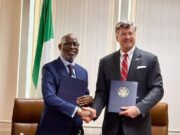
Recently, Nigeria and the United States signed a Critical Minerals Framework Agreement in New York, aimed at attracting American investment and strengthening cooperation across Nigeria’s mineral value chain.
The agreement, signed by the Minister of Solid Minerals Development, Alake, and the U.S. Deputy Secretary of State, Christopher Landau, seeks to use government-to-government relations as a foundation for business-to-business partnerships.
It provides a framework for cooperation in geological data and exploration, mineral development and processing, infrastructure and technical capacity, with emphasis on strengthening value addition within Nigeria.
The agreement is also expected to support investment in Nigeria’s estimated 700 billion dollars mineral resources and strengthen secure and resilient supply chains for critical minerals required for the global energy transition.
While these achievements have been recorded, stakeholders say the 66th Independence anniversary should also be a period of reflection on persistent challenges confronting Nigeria’s solid minerals sector.
One of the major concerns is mine safety, with repeated collapses of mining pits claiming lives across several states between 2024 and 2026.
Beyond mine collapses, the sector recorded another major tragedy in February, when 37 people died at an underground mining site in KampaniZurak, Wase Local Government Area of Plateau after exposure to toxic gases.
They called for stronger enforcement of mining, environmental and occupational safety standards, including regular inspection of active and abandoned mining sites.
Experts have also called for an evaluation of the effectiveness of departments responsible for enforcing these standards at the Ministry, to ensure that they deliver on their core functions.
Prof. Akinade Olatunji, the immediate past President of the Nigerian Mining and Geosciences Society (NMGS), said professionals should be given their rightful role in the sector.
He said this would make solid minerals mining safer, more sustainable and more beneficial to the economy and mining communities.
The Professor of Applied and Environmental Geochemistry said the sector was knowledge-driven and should therefore be driven by professionals with the requisite training, knowledge and experience, rather than becoming an “all-comers” affair.
“This should be done by the best hands. It should not be made jobs for the boys,” he said.
He said the government should commit sufficient resources to geoscience data gathering and ensure that the exercise was handled by competent professionals.
According to him, the government should demonstrate sufficient political will to sanitise the sector and ensure that mining laws and regulations were implemented without favour.
To strengthen value-addition policies, he called for the establishment of a monitoring team or task force comprising experts to ensure full compliance with the policy.
He also called for stricter enforcement of requirements for mine planning, ventilation, the use of protective equipment and the safe closure of abandoned pits to reduce preventable deaths and protect surrounding communities.
Chief Dele Ayanleke, the National President of the Miners Association of Nigeria (MAN) called on the Federal Government to adopt an inclusive approach to policy reform initiatives and strengthen policy implementation.
He also urged operators to embrace best practices, innovation and strict adherence to regulations.